Basic resources and information on building bike lanes and sidewalks, formerly housed on the government’s Complete Streets website, are now gone.


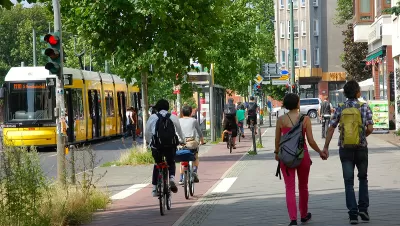
Street safety advocates are scrambling to recover and save critical resources that were deleted in the federal government’s purge of its websites, reports Kea Wilson in Streetsblog USA.
“Since it was first created in just 2022, the portal has brought together decades of largely publicly funded research on the safety impacts of things like bike lanes, sidewalks and road diets, which communities across America rely heavily on to prove to skeptics why those investments are worth making.”
“Far from a hotbed of radical left politics, the Complete Streets website simply gathered resources on how to design roads that feel safe for everyone, no matter how they move, advocates argue.” Now, life-saving guides and tools are less readily available to cities and organizations.
“I can't think of any legitimate reason why you would want to make someone's job harder if they're trying to make streets safer, especially when we know that the numbers are so bad to begin with,” said Heidi Simon, who leads the work of the Complete Streets Coalition for Smart Growth America.

This is the latest example of the U.S. federal government deleting practical information from its websites and the importance of preserving useful information, as discussed in Preserving Essential Information in an Uncertain World.
Read the full story: ‘Complete Streets’ Webpage Falls Prey To Trump Purge


US Street Design Manual Inches Toward Safer Roads
The guiding document for U.S. road design is starting to recognize the needs of people walking and biking, but safe streets advocates say more significant changes are needed to reduce the high number of pedestrian deaths and improve connectivity for all road users.
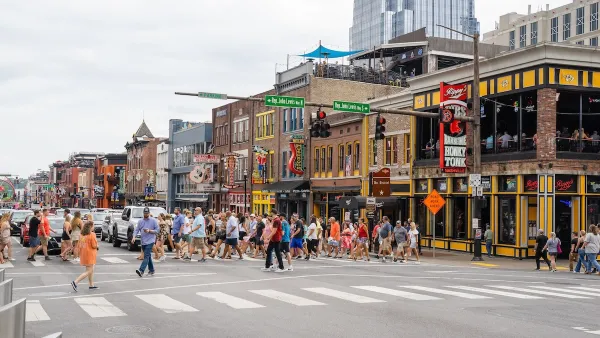
The Best Complete Streets Policies in the US, Ranked
San Antonio and Nashville top the list, with most large cities not making an appearance in the top 40.

How “Proven Safety Countermeasures” Save Lives
A bill named in honor of a U.S. diplomat killed while on her bicycle would let state DOTs access full federal funding for road safety projects.

Planetizen Federal Action Tracker
A weekly monitor of how Trump’s orders and actions are impacting planners and planning in America.

California plans to bury El Niño’s downpour
If the state plays its cards right, it may be able to store a billion acre-feet of El Niño’s water in aquifers.

Chicago breaks ground on $3 billion megadevelopment
The new neighborhood, titled Foundry Park, will one day host 3,700 residences.

California High-Speed Rail Authority CEO resigns after $600,000 scandal
Under Ian Choudri, the authority used taxpayer dollars to fund first class flights and trips to nightclubs.

Want to study the Missouri River? Soon, you may need unanimous approval from 10 states
Legislation would require 10 governors’ permission to study or build projects moving water outside the basin.

Desperate measures: Advocates weigh draining Lake Powell to fill Colorado River
Draining the reservoir could reduce evaporation losses by a couple hundred thousand acre-feet.

FREE Course: Walkable City 1: Why Walkability?
After describing his path towards focusing on walkability as the essence of good planning, Jeff Speck marches through his five principal reasons for making more walkable places.
Reinventing Malls: Planning Alchemy—Turning Gray Fields Into Gold
The course focuses on the opportunities and imperatives that shape reinvention of mall sites.

City of Rosemead
Rutgers University, Edward J. Bloustein School of Planning and Public Policy
One Hundred Miles
Hunter College, City University of New York (CUNY)
The Architects Foundation
University of Cincinnati Online
City of Cambridge
Montrose County
The Pocatello Development Authority