Bike lanes delineated with bollards or traffic cones are most likely to slow drivers and reduce crashes between cars and bikes.


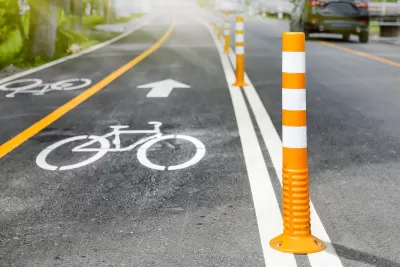
A study of temporary bike lanes installed at an intersection in Asbury Park, New Jersey shows that both painted and delineated bike lanes (those separated with bollards) slow drivers and reduce the risk of collisions with people on bikes.
As Maylin Tu explains in Next City, “For the experiment, researchers temporarily removed nine parking spaces to create 6-foot wide bike lanes with a 3-foot buffer between bike and car travel lanes. Car travel lanes were reduced by at least one foot each, a decrease that has been shown to reduce crashes. In addition, the bike lanes created a sharper turning radius for drivers turning right, another intervention that might force drivers to slow down.”
Delineated lanes made the biggest impact. “For vehicles turning right, top speeds were reduced by 28% and average speeds by 21%. Paint-only bike lanes slowed driver speeds by up to 14% and drivers going straight slowed down by up to 8%.”
The study notes that pop-up, temporary bike lanes like the ones used in the research can help cities understand how bike lanes can improve road safety before making more permanent changes, but “In order to achieve Vision Zero initiatives, planners and policy makers should focus efforts on delineated bike lanes, not merely painted lanes.”
FULL STORY: How Bike Lanes Slow Drivers and Save Lives

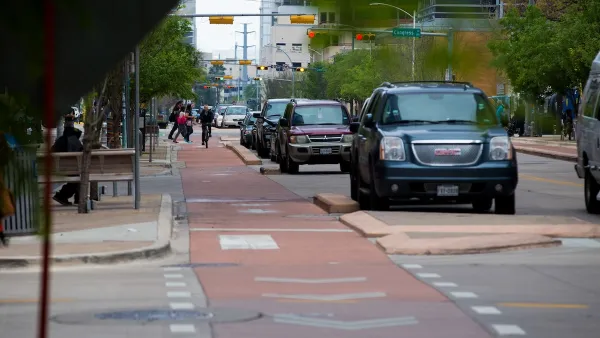
Austin Outlaws Blocking Bike Lanes
Drivers who park in bike lanes will receive citations of up to $300.
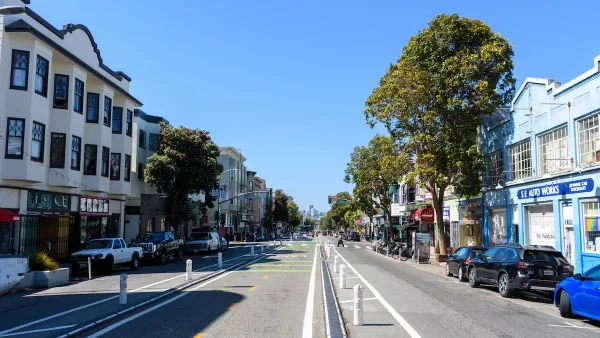
How San Francisco’s ‘People Protected Bike Lanes’ are Moving the Needle on Road Safety
A local bike safety protest has become a global phenomenon.
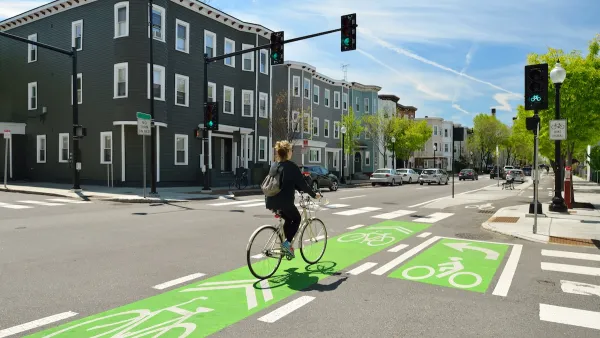
NACTO Releases Updated Urban Bikeway Guide
The third edition of the nationally recognized road design guide includes detailed design advice for roads that prioritize safety and accessibility for all users.

Planetizen Federal Action Tracker
A weekly monitor of how Trump’s orders and actions are impacting planners and planning in America.

The state-sanctioned urbicide of Austin
People don’t kill cities. Freeways do.

US to reduce Colorado River water deliveries to Mexico
A new Colorado Treaty amendment reduces Mexico’s Colorado River water allocation by 250,000 acre feet.

5 New England states march closer to 800 megawatt wind energy project
Securing federal approval for the project may be complicated under the Trump administration, which has historically been hostile towards domestic wind power.

Baltimore to break ground on $50 million Transit Priority Project
The project will bring faster bus trips, safer streets and better bike connections to Baltimore.

Airbnb launches $250 million 'last-dollar financing' housing accelerator, makes first investment in Austin
The company will put $6.4 million towards affordable housing development in Texas’ capital.

FREE Course: Walkable City 1: Why Walkability?
After describing his path towards focusing on walkability as the essence of good planning, Jeff Speck marches through his five principal reasons for making more walkable places.
Reinventing Malls: Planning Alchemy—Turning Gray Fields Into Gold
The course focuses on the opportunities and imperatives that shape reinvention of mall sites.

Eagle County Government
Harvard University Graduate School of Design
Nashville Planning Department
The Architects Foundation
University of Cincinnati Online
The Pocatello Development Authority
The Urban Renewal Agency of the City of Pocatello
Journal of the American Planning Association