Nearly half of pedestrians who died after being hit by the front of a vehicle were struck by SUVs or trucks.


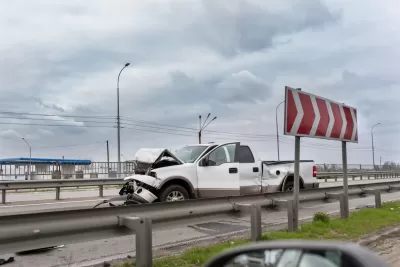
The National Highway Traffic Safety Administration (NHTSA) is proposing a new rule that would require automakers to take pedestrian safety into account when designing cars. According to an Associated Press article by Tom Krisher, the proposed rule would include all passenger vehicles under 10,000 pounds but is particularly targeted at large SUVs and pickup trucks, which have grown larger in recent years, with accompanying larger blind spots.
Almost half of pedestrian deaths when hit by the front of a vehicle are caused by trucks or SUVs, according to agency data. The NHTSA says the rule could save at least 67 lives per year. The rule would set regulations for vehicle testing to simulate ‘head-to-hood impact’ and reduce the risk of head injuries.
The agency recently changed its policy to begin requiring testing with crash test dummies that simulate female bodies after decades of safety tests only using dummies based on male bodies. The proposed rule would require testing with female and child simulations.
FULL STORY: US seeks new pedestrian safety rules aimed at increasingly massive SUVs and pickup trucks

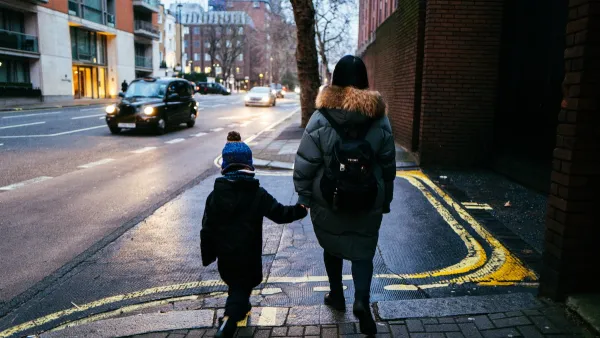
Study: Large SUVs Double Risk of Death for Children Under 10
New research from the United Kingdom reveals the higher risk of larger vehicles for pedestrians and cyclists.
NHTSA Cuts Could Make Roads More Dangerous
The agency is losing almost half of the team that oversees autonomous vehicle safety, among dozens of other key personnel.
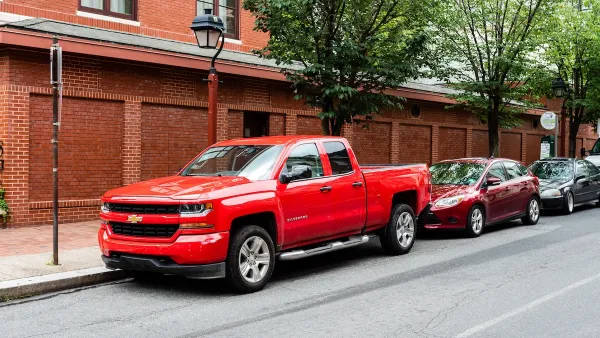
Heavier Vehicles Don’t Keep Passengers Safer
A new study shows that modern safety features are more important than size and weight once vehicles weigh over 4,000 pounds.

The state-sanctioned urbicide of Austin
People don’t kill cities. Freeways do.

US to reduce Colorado River water deliveries to Mexico
A new Colorado Treaty amendment reduces Mexico’s Colorado River water allocation by 250,000 acre feet.

New Jersey’s second-largest city bans standalone data centers
Jersey City will continue to allow co-location facilities, such as those meant for research institutions that store their own data.

Amtrak not solely to blame for New Jersey commuter rail's unreliability, report finds
A new study from the Garden State Initiative found that NJ Transit’s budget grew 20% across a 4 year period, but reliability declined significantly over the same period.

EPA erases limits on planet-warming pollution from power plants
Under Monday’s plan, power plants would still have some limits on how much mercury, arsenic and other contaminants they can emit.

Phoenix announces new on-demand transit service, more frequent RAPID buses
Both new services will launch in October, and are part of Phoenix's Project Effective Access Solutions for Easing Congestion.

FREE Course: Walkable City 1: Why Walkability?
After describing his path towards focusing on walkability as the essence of good planning, Jeff Speck marches through his five principal reasons for making more walkable places.
Reinventing Malls: Planning Alchemy—Turning Gray Fields Into Gold
The course focuses on the opportunities and imperatives that shape reinvention of mall sites.

Eagle County Government
Harvard University Graduate School of Design
Nashville Planning Department
The Architects Foundation
University of Cincinnati Online
The Pocatello Development Authority
The Urban Renewal Agency of the City of Pocatello
Journal of the American Planning Association