The city plans to use the funds to make safety and accessibility improvements at bus stops.


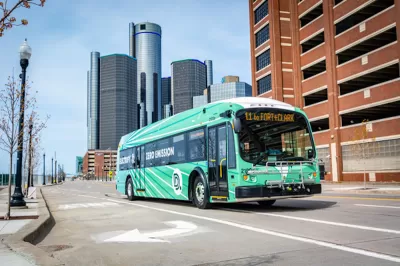
The city of Detroit was awarded $25 million in federal Safe Streets and Roads for All (SS4A) grant funding to improve safety and accessibility at bus stops and intersections, reports Hernz Laguerre for WDET.
“Improvements will include building transit islands for safer transfers between routes, sidewalk widening, high-visibility crosswalks, intersection lighting, signal timing improvements and updated curb ramps in compliance with the American Disabilities Act.” The grant will also fund an analysis of gaps in the bikeway network and updates to the city’s Comprehensive Action Plan.
Other Michigan cities and counties were awarded SS4A grants, including Dearborn, Macomb County, and the Southeast Michigan Council of Governments. All projects are aimed at reducing pedestrian deaths and making road conditions safer through design elements, lighting, and technology.
Elsewhere around the country, the grants will pay for 48 safety projects and 337 planning or demonstration projects ranging from road diets and crosswalk improvements to bike lanes and green infrastructure.
FULL STORY: Detroit Evening Report: Detroit awarded $25M grant to improve bus safety, accessibility

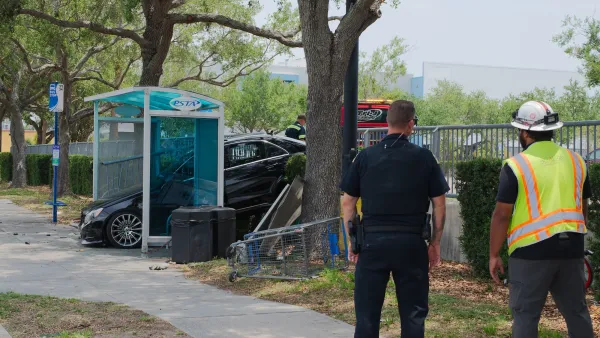
Buses are very safe. The walk to and from stations, not so much.
A disproportionate number of crashes involving pedestrians happen near transit stops.
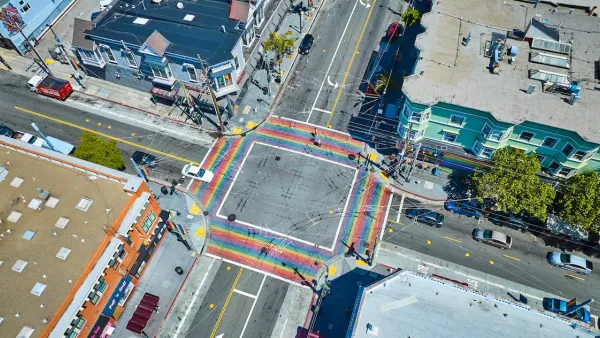
Sean Duffy Targets Rainbow Crosswalks in Road Safety Efforts
Despite evidence that colorful crosswalks actually improve intersection safety — and the lack of almost any crosswalks at all on the nation’s most dangerous arterial roads — U.S. Transportation Secretary Duffy is calling on states to remove them.

Pedestrian-Friendly Cities: The Impact of Walkability Grants
Explore how walkability grants are transforming cities into pedestrian-friendly environments, enhancing urban livability, boosting local economies, and improving public health.

Planetizen Federal Action Tracker
A weekly monitor of how Trump’s orders and actions are impacting planners and planning in America.

The state-sanctioned urbicide of Austin
People don’t kill cities. Freeways do.

US to reduce Colorado River water deliveries to Mexico
A new Colorado Treaty amendment reduces Mexico’s Colorado River water allocation by 250,000 acre feet.

Mamdani overhauls NYC's Vision Zero plan with 100 new policy goals
The overhaul aims to reduce traffic deaths and make streets safer for pedestrians, cyclists and drivers through lower speed limits, new safety infrastructure and more.

Amtrak not solely to blame for New Jersey commuter rail's unreliability, report finds
A new study from the Garden State Initiative found that NJ Transit’s budget grew 20% across a 4 year period, but reliability declined significantly over the same period.

EPA erases limits on planet-warming pollution from power plants
Under Monday’s plan, power plants would still have some limits on how much mercury, arsenic and other contaminants they can emit.

FREE Course: Walkable City 1: Why Walkability?
After describing his path towards focusing on walkability as the essence of good planning, Jeff Speck marches through his five principal reasons for making more walkable places.
Reinventing Malls: Planning Alchemy—Turning Gray Fields Into Gold
The course focuses on the opportunities and imperatives that shape reinvention of mall sites.

Eagle County Government
Harvard University Graduate School of Design
Nashville Planning Department
The Architects Foundation
University of Cincinnati Online
The Pocatello Development Authority
The Urban Renewal Agency of the City of Pocatello
Journal of the American Planning Association