Advocates for ‘seamless’ transit are calling on California state leaders to tie a consolidation study to a one-time injection of funding into the Bay Area’s transit systems.


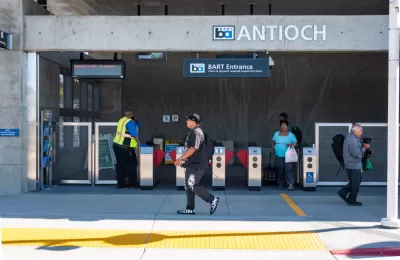
In an op-ed for Streetsblog San Francisco, Ian Griffiths argues for the consolidation of the Bay Area’s multiple transit agencies, which face significant funding shortages and projected service cuts.
Griffiths acknowledges the need for immediate relief: “Legislators must provide significant one-time funding for transit in the upcoming budget to avert service cuts if they are serious about their commitment to transit, equity, and fighting climate change.”
But “If there was ever a time to take a hard look at agency consolidations – combining some of our 27 agencies to both improve decision-making, capacity, effectiveness, and efficiency – it is now.”
Griffiths notes that riders have been calling for a seamless regional system. Advocacy group Seamless Bay Area argues that “Bay Area Transit needs a Regional Network Manager entity with systemwide accountability for public transit – capable of planning and running transit as one network.” Consolidating, for example, BART and Caltrain “would enable speedier implementation of integrated service and fares between the two systems (enabling quicker ridership regrowth), improved capital project planning, faster project delivery, and improved agency capacity.”
Griffiths concludes by pointing out that consolidating the region’s transit requires state action. “As the state considers one-time funding for transit operations in this year’s budget, legislators can help support a seamless transit system by calling for a consolidation study to be completed over the next year that identifies key consolidation options, benefits, and costs for the legislature to consider implementing.”
FULL STORY: Op-ed: Consolidate the Bay Area’s Transit Agencies


California Revives $750M Loan to Save Bay Area Transit
The state approved a $750 million loan as a stopgap measure to fund regional transit agencies until a 2026 ballot measure that could bring more permanent funding.

California Rejects Loan to Save Bay Area Transit
The state’s Department of Finance wants to extend negotiations about the loan, making it unlikely transit agencies will receive any assistance before the end of the year.
Transit and the ‘Big One’
Bay Area transit agencies employ rigorous protocols to ensure they’re prepared for the next major earthquake.

The state-sanctioned urbicide of Austin
People don’t kill cities. Freeways do.

US to reduce Colorado River water deliveries to Mexico
A new Colorado Treaty amendment reduces Mexico’s Colorado River water allocation by 250,000 acre feet.

New Jersey’s second-largest city bans standalone data centers
Jersey City will continue to allow co-location facilities, such as those meant for research institutions that store their own data.

Amtrak not solely to blame for New Jersey commuter rail's unreliability, report finds
A new study from the Garden State Initiative found that NJ Transit’s budget grew 20% across a 4 year period, but reliability declined significantly over the same period.

EPA erases limits on planet-warming pollution from power plants
Under Monday’s plan, power plants would still have some limits on how much mercury, arsenic and other contaminants they can emit.

Phoenix announces new on-demand transit service, more frequent RAPID buses
Both new services will launch in October, and are part of Phoenix's Project Effective Access Solutions for Easing Congestion.

FREE Course: Walkable City 1: Why Walkability?
After describing his path towards focusing on walkability as the essence of good planning, Jeff Speck marches through his five principal reasons for making more walkable places.
Reinventing Malls: Planning Alchemy—Turning Gray Fields Into Gold
The course focuses on the opportunities and imperatives that shape reinvention of mall sites.

Eagle County Government
Harvard University Graduate School of Design
Nashville Planning Department
The Architects Foundation
University of Cincinnati Online
The Pocatello Development Authority
The Urban Renewal Agency of the City of Pocatello
Journal of the American Planning Association