California provides far less in state funding to public transit agencies than other states. Transit advocates say this must change to improve transit service, bring back ridership, and reduce air pollution from the transportation sector.


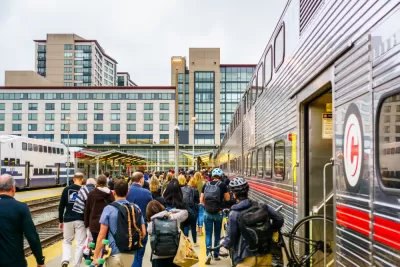
In an op-ed in The Sacramento Bee, Laura Tolkoff, transportation policy director for San Francisco Bay Area Planning and Urban Research Association (SPUR), calls on California state leaders to fund the state’s struggling public transit systems, which face a statewide shortfall of $6 billion. As Tolkoff points out, “Only 4% of BART’s operating budget and 9% of Muni’s operating budget comes from the state.” Meanwhile, “28% of the New York transit system’s operating budget comes from the state.”
For Tolkoff, “The transit system we have is the unfortunate yet predictable result of inadequate funding combined with laws and city planning that favor cars above all.” It’s up to the state to ensure transit can succeed and help California meet its climate goals, reduce carbon emissions, and make transportation more accessible and affordable. “If our current transit systems aren’t good enough, California’s leaders need to help transit agencies do what it takes to deliver higher frequencies, better safety, affordable fares and fix the many barriers that discourage people from riding,” Tolkoff writes.
FULL STORY: It’s decision time for state leaders: save public transit, or consent to its collapse

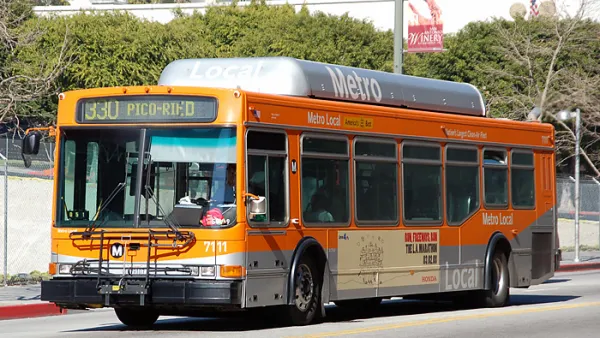
Opinion: Transit Needs to Be Better, Not Cheaper
With many U.S. transit agencies facing severe gaps in service and budget shortfalls, some advocates argue that improved service matters more than free fares.

Milwaukee transit agency plans 25% service cuts
The MCTS system will have to make a difficult choice between service frequency and coverage.
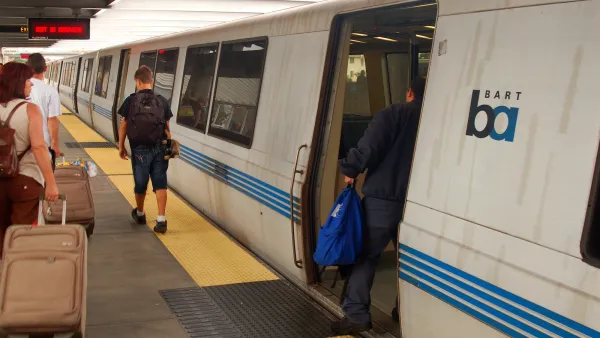
BART Service Cuts, Station Closures Could ‘Set Back the System 50 Years’
The agency could close dozens of stations and eliminate the Blue line between Daly City and Dublin-Pleasanton entirely.

The state-sanctioned urbicide of Austin
People don’t kill cities. Freeways do.

US to reduce Colorado River water deliveries to Mexico
A new Colorado Treaty amendment reduces Mexico’s Colorado River water allocation by 250,000 acre feet.

New Jersey’s second-largest city bans standalone data centers
Jersey City will continue to allow co-location facilities, such as those meant for research institutions that store their own data.

Amtrak not solely to blame for New Jersey commuter rail's unreliability, report finds
A new study from the Garden State Initiative found that NJ Transit’s budget grew 20% across a 4 year period, but reliability declined significantly over the same period.

EPA erases limits on planet-warming pollution from power plants
Under Monday’s plan, power plants would still have some limits on how much mercury, arsenic and other contaminants they can emit.

Phoenix announces new on-demand transit service, more frequent RAPID buses
Both new services will launch in October, and are part of Phoenix's Project Effective Access Solutions for Easing Congestion.

FREE Course: Walkable City 1: Why Walkability?
After describing his path towards focusing on walkability as the essence of good planning, Jeff Speck marches through his five principal reasons for making more walkable places.
Reinventing Malls: Planning Alchemy—Turning Gray Fields Into Gold
The course focuses on the opportunities and imperatives that shape reinvention of mall sites.

Eagle County Government
Harvard University Graduate School of Design
Nashville Planning Department
The Architects Foundation
University of Cincinnati Online
The Pocatello Development Authority
The Urban Renewal Agency of the City of Pocatello
Journal of the American Planning Association