Legislation would fix transportation district issue, allow for greater reach on city bus routes.


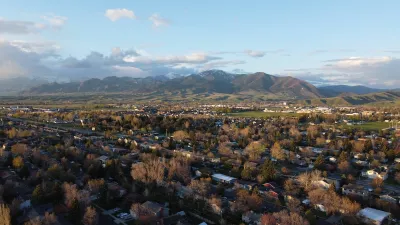
This article by Jordan Hansen was originally published by the Daily Montanan. It has been shortened.
Update: The headline was updated to reflect that House Bill 764 has been signed into law.
Right now, the City of Billings MET Transit buses can’t serve nearby Lockwood because of a 1973 law.
Legislation awaiting a decision by Gov. Greg Gianforte would change that, as well as an issue regarding transportation districts highlighted during the past few years in Bozeman. If signed, House Bill 764 would make changes to Montana’s urban transportation districts and bus systems.
Under current law, transit systems owned by a municipality can’t serve communities outside the city limits. Legislators also used the bill as an opportunity to revisit laws surrounding urban transportation districts.
The new law would open up cities with larger transportation systems — like Billings — to expand their reach outside town. Rusty Logan, an assistant director with the City of Billings who leads MET Transit, said the legislation could potentially lead to new routes.
The bill was brought by Rep. Brian Close, a Bozeman Democrat, whose community was part of the reason the legislation was brought in the first place.
“It’s been 50 years since you looked at these statutes,” Close said during a House hearing on the bill on March 4. “And I think the statutes need just a small amount of reform.”
The 2020 census put the Bozeman population at more than 50,000 people, an important milestone as they were now federally required to create a Metropolitan Planning Organization. It also opens up the city for increased federal funding, including for transportation.
While the Bozeman area already had some transit services run by a non-profit, a new funding structure had to be created in order to continue receiving federal funding.
Gallatin Valley Urban Transportation District was formed in the wake of the changes to Bozeman’s population. Gallatin County voters approved the district, with 79% voting yes. HB 764 will simplify the process by allowing a county commission to put creation of a transportation district directly on the ballot.
The bill also gave a clear definition of “direct transportation service,” saying it was 1.5 miles from the nearest route used by “a vehicle that provides general or special service to the public on a regular and continuing basis.”
Clarity was needed in cases where a property owner wanted to get out of the boundaries of the transportation district, which can be used to generate funding through taxes.
FULL STORY: ‘It’s been 50 years’: Bill to update public transit law awaits governor’s signature

Opinion: California Transit Systems Need State Support
California provides far less in state funding to public transit agencies than other states. Transit advocates say this must change to improve transit service, bring back ridership, and reduce air pollution from the transportation sector.
Opinion: Utah Transportation Bill a Step in the Right Direction
A Utah mayor writes in support of state legislation that tasks state agencies with coordinating major transit projects, citing it as a positive step toward accommodating Utah’s explosive growth.
Transit Agencies Direct Resources to Core Ridership
As commuter ridership continues to lag due to the pandemic, transit systems are adjusting to better serve the essential workers and transit-dependent households who need them the most.

Planetizen Federal Action Tracker
A weekly monitor of how Trump’s orders and actions are impacting planners and planning in America.

The state-sanctioned urbicide of Austin
People don’t kill cities. Freeways do.

US to reduce Colorado River water deliveries to Mexico
A new Colorado Treaty amendment reduces Mexico’s Colorado River water allocation by 250,000 acre feet.

Baltimore to break ground on $50 million Transit Priority Project
The project will bring faster bus trips, safer streets and better bike connections to Baltimore.

Airbnb launches $250 million 'last-dollar financing' housing accelerator, makes first investment in Austin
The company will put $6.4 million towards affordable housing development in Texas’ capital.

Guerilla urbanists are building DIY bus stop benches in Chicago
A before-and-after of one of the bus stops with a new bench. The new benches are not officially sanctioned or permitted, but the residents who placed them hope they will be the start of a network of DIY benches across the city.

FREE Course: Walkable City 1: Why Walkability?
After describing his path towards focusing on walkability as the essence of good planning, Jeff Speck marches through his five principal reasons for making more walkable places.
Reinventing Malls: Planning Alchemy—Turning Gray Fields Into Gold
The course focuses on the opportunities and imperatives that shape reinvention of mall sites.

Eagle County Government
Harvard University Graduate School of Design
Nashville Planning Department
The Architects Foundation
University of Cincinnati Online
The Pocatello Development Authority
The Urban Renewal Agency of the City of Pocatello
Journal of the American Planning Association