A Utah mayor writes in support of state legislation that tasks state agencies with coordinating major transit projects, citing it as a positive step toward accommodating Utah’s explosive growth.



In an opinion piece for Desert News, Troy Walker, mayor of Draper, Utah, explains his support for recently passed state legislation that “authorizes [Utah Department of Transportation] UDOT to manage and oversee transit capital projects that the Utah Transit Authority would then operate and maintain.”
According to Walker, “Utah is doubling in population and leading the country on a number of key economic metrics,” and its public transportation infrastructure should reflect this regional growth. “With a state agency delivering transit capital projects, the Legislature will likely feel more comfortable allocating additional state funding to transit. Over time, this could potentially make hundreds of millions of dollars available for regionally significant transit projects.”
As Walker points out, “Having a state department of transportation manage the delivery of a rail or bus line is not regularly done in other parts of the country. However, UDOT delivers multibillion-dollar infrastructure projects ahead of schedule and under budget all the time.”
On the benefits of the new bill, Walker writes that“HB322 institutionalizes collaboration between Utah’s largest transportation agencies and will ultimately save taxpayer resources through improved coordination and efficient streamlining of our critical transportation resources.”
Walker’s support for better public transit stems in part from Draper’s role as home to The Point, a planned development designed as a transit-oriented 15-minute community that Walker calls “arguably the most significant economic and quality-of-life opportunity in state history.” The goal of The Point, Walker argues, can only be achieved by providing residents with effective transit connections to other parts of the state. For now, while it prioritizes car-free transportation and multimodal travel, current plans for The Point include around 40,000 parking spaces, though developers are looking at ways to reduce this number.
FULL STORY: Opinion: Utah is the fastest-growing state, and public transit needs to catch up


‘It’s Been 50 years’: Public Transit Law Passes in Montana
Legislation would fix transportation district issue, allow for greater reach on city bus routes.
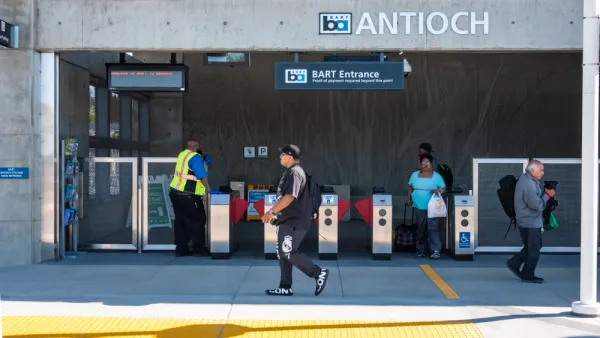
California Lawmakers Withdraw Connect Bay Area Act
The proposal would have merged the Bay Area’s 27 transit agencies into one regional entity.
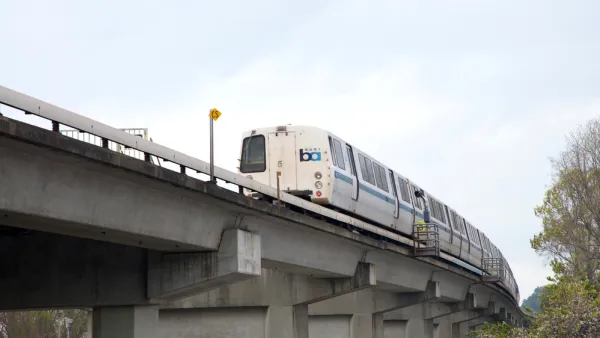
California Could Cut Transit Spending Even as Systems Struggle
Governor Newsom’s proposed budget would cut over $2 billion from transit infrastructure funds.

The state-sanctioned urbicide of Austin
People don’t kill cities. Freeways do.

US to reduce Colorado River water deliveries to Mexico
A new Colorado Treaty amendment reduces Mexico’s Colorado River water allocation by 250,000 acre feet.

New Jersey’s second-largest city bans standalone data centers
Jersey City will continue to allow co-location facilities, such as those meant for research institutions that store their own data.

Amtrak not solely to blame for New Jersey commuter rail's unreliability, report finds
A new study from the Garden State Initiative found that NJ Transit’s budget grew 20% across a 4 year period, but reliability declined significantly over the same period.

EPA erases limits on planet-warming pollution from power plants
Under Monday’s plan, power plants would still have some limits on how much mercury, arsenic and other contaminants they can emit.

Phoenix announces new on-demand transit service, more frequent RAPID buses
Both new services will launch in October, and are part of Phoenix's Project Effective Access Solutions for Easing Congestion.

FREE Course: Walkable City 1: Why Walkability?
After describing his path towards focusing on walkability as the essence of good planning, Jeff Speck marches through his five principal reasons for making more walkable places.
Reinventing Malls: Planning Alchemy—Turning Gray Fields Into Gold
The course focuses on the opportunities and imperatives that shape reinvention of mall sites.

Eagle County Government
Harvard University Graduate School of Design
Nashville Planning Department
The Architects Foundation
University of Cincinnati Online
The Pocatello Development Authority
The Urban Renewal Agency of the City of Pocatello
Journal of the American Planning Association