The federal funding will help move forward planning for an ambitious proposal to cap a downtown Atlanta freeway with a 25-acre park.


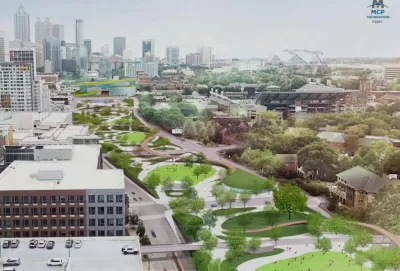
Thanks to funding from the federal omnibus bill signed at the end of 2022, Atlanta can move forward with a design and engineering plan for capping the Midtown Connector, a project years in the works that would help repair the damage caused by the freeway and reconnect surrounding neighborhoods. Josh Green explains the proposal in Urbanize Atlanta.
Green outlines the project’s history, which began. in early 2021 when the MCP Foundation first revealed their vision for “a picturesque, grandiose greenspace larger than Centennial Olympic Park built over the downtown Connector.” The proposed 25-acre park would improve pedestrian access and provide community amenities including a children’s garden, dog park, and café. According to the article, “Project backers said in September private donors had contributed nearly $100 million to the initiative. Georgia Tech, Midtown Alliance, and the Georgia Department of Transportation have all provided technical support and guidance for the project so far, according to the MCP Foundation.”
The $3.2 million allocated to the project is just over half of the $6 million requested by U.S. Congresswoman Nikema Williams and U.S. Senator Reverend Raphael Warnock, and a drop in the bucket for the estimated full cost of as much as $1.2 billion. Warnock said in a statement, “This funding will help create new mobility options and economic opportunities in the heart of our state’s capital, and I’m going to continue fighting to see this critical infrastructure project come fully to life.”
FULL STORY: Effort to cap Connector in Midtown bags millions in federal cash

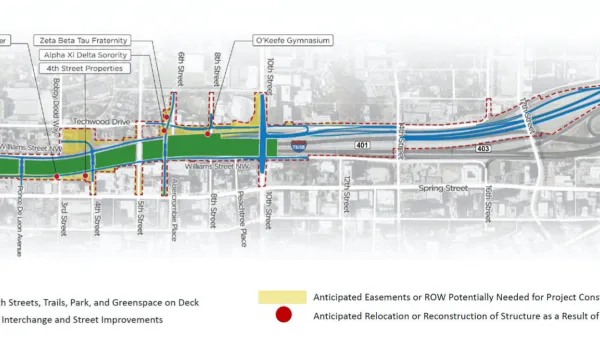
Atlanta Weighs 'Midtown Connector' Freeway Cap
The billion-dollar project would create a 25-acre park and 3.5 miles of new bike and pedestrian routes.
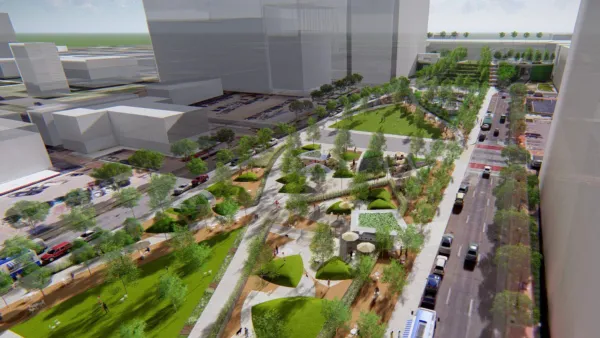
Kansas City Requests State Funding for Freeway Cap Park
The city has been working to raise $200 million to create a 5.5 acre park spanning a portion of Interstate 670.

Atlanta Launches Website for Highway Cap Project
Residents can view plans for the 14-acre project that include public plazas and green spaces connecting local landmarks, employment centers, and transit stations.

The state-sanctioned urbicide of Austin
People don’t kill cities. Freeways do.

US to reduce Colorado River water deliveries to Mexico
A new Colorado Treaty amendment reduces Mexico’s Colorado River water allocation by 250,000 acre feet.

New Jersey’s second-largest city bans standalone data centers
Jersey City will continue to allow co-location facilities, such as those meant for research institutions that store their own data.

Amtrak not solely to blame for New Jersey commuter rail's unreliability, report finds
A new study from the Garden State Initiative found that NJ Transit’s budget grew 20% across a 4 year period, but reliability declined significantly over the same period.

EPA erases limits on planet-warming pollution from power plants
Under Monday’s plan, power plants would still have some limits on how much mercury, arsenic and other contaminants they can emit.

Phoenix announces new on-demand transit service, more frequent RAPID buses
Both new services will launch in October, and are part of Phoenix's Project Effective Access Solutions for Easing Congestion.

FREE Course: Walkable City 1: Why Walkability?
After describing his path towards focusing on walkability as the essence of good planning, Jeff Speck marches through his five principal reasons for making more walkable places.
Reinventing Malls: Planning Alchemy—Turning Gray Fields Into Gold
The course focuses on the opportunities and imperatives that shape reinvention of mall sites.

Eagle County Government
Harvard University Graduate School of Design
Nashville Planning Department
The Architects Foundation
University of Cincinnati Online
The Pocatello Development Authority
The Urban Renewal Agency of the City of Pocatello
Journal of the American Planning Association