The city has gone a full year with no traffic deaths while road violence in the rest of the country continues to grow.


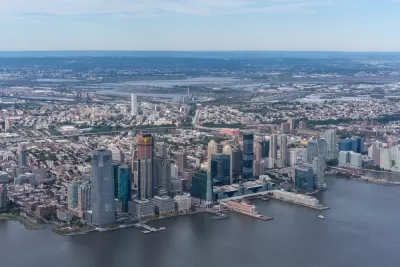
Bucking a nationwide trend, Jersey City eliminated traffic deaths on its city-managed roads for a full year. As John Surico explains in Bloomberg CityLab, the city used innovative tools such as mini-roundabouts to slow down traffic at dangerous intersections and small-scale, low-cost pilot programs to test interventions before making them permanent. “And local leaders are intent on pushing forward with more improvements that will eventually encompass more of the city and region.”
Jersey City is the rare municipality that has embraced the spirit of tactical urbanism — a practice where quick DIY fixes are deployed to nudge officials to make more permanent changes.
Thanks to its targeted investments in improving its bike infrastructure, the city has also seen a rise in cycling. “This last quarter, Citi Bike, which operates in Jersey City, saw usage increase to more than 15,000 peak rides per week on average.”
Jersey City’s success in improving traffic safety could be replicated in other cities, but comes with some caveats. “So far, most of the city’s interventions have been downtown, and largely avoided loss of on-street parking,” Surico notes. But addressing the proverbial low-hanging fruit can lead to increased public support and more political will to engage in more controversial projects in the future.
Read the full story: How Jersey City Got to Zero Traffic Deaths on Its Streets

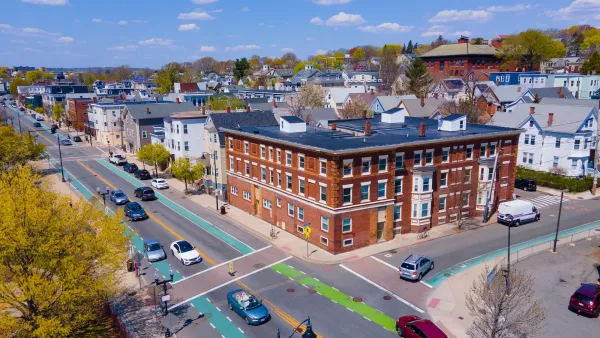
Massachusetts town celebrates 3 years with no traffic deaths
Somerville is following Hoboken's Vision Zero playbook with impressive results.
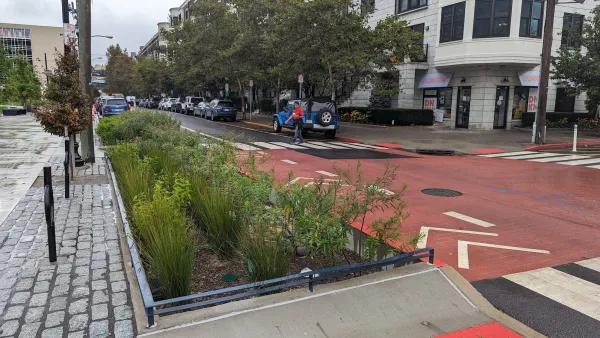
Hoboken's $20 Vision Zero fix
The New Jersey city eliminated traffic deaths for the last nine years in a row.
'Dangerous by Design' 2026 report highlights 72% increase in pedestrian deaths since 2009
Although US traffic deaths dropped in the last two years, the number of people killed on US roads remains much higher than two decades ago.

Planetizen Federal Action Tracker
A weekly monitor of how Trump’s orders and actions are impacting planners and planning in America.

California plans to bury El Niño’s downpour
If the state plays its cards right, it may be able to store a billion acre-feet of El Niño’s water in aquifers.

Desperate measures: Advocates weigh draining Lake Powell to fill Colorado River
Draining the reservoir could reduce evaporation losses by a couple hundred thousand acre-feet.

Chicago Avenue bridge construction delays enrages city leaders
The bridge has been closed since 2025. The city originally aimed to re-open it in December, and now expects to finish construction in 2027.

NYC bus network redesign speeds up Queens buses
Rush routes have seen a 4.6% speed increase after the redesign.

California High-Speed Rail Authority picks trainset manufacturer
The California High-Speed Rail Authority aims to start servicing passengers by 2033.

FREE Course: Walkable City 1: Why Walkability?
After describing his path towards focusing on walkability as the essence of good planning, Jeff Speck marches through his five principal reasons for making more walkable places.
Reinventing Malls: Planning Alchemy—Turning Gray Fields Into Gold
The course focuses on the opportunities and imperatives that shape reinvention of mall sites.

City of Rosemead
Rutgers University, Edward J. Bloustein School of Planning and Public Policy
One Hundred Miles
Hunter College, City University of New York (CUNY)
The Architects Foundation
University of Cincinnati Online
City of Cambridge
Montrose County
The Pocatello Development Authority