Construction is expected to begin on the Southeast Connector highway widening project near Fort Worth in the spring and wrap up in 2027.


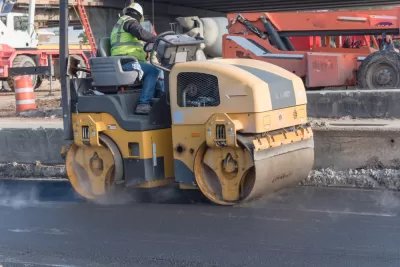
The Texas Department of Transportation (TxDOT) will soon begin construction on the $1.6 billion Southeast Connector, one of the state’s largest-ever investments in transportation infrastructure. The project is intended to ease congestion and improve transportation in Tarrant County on a stretch of highway that sees about 200,000 vehicle trips a day—a number that is expected to increase to 370,000 vehicles a day by 2045.
The project will expand roughly 11 miles of Interstate 20—through Fort Worth, Arlington, Forest Hill, and Kennedale—according to an article by Sarah Bahari for the Dallas Morning News. The widening will vary by location: A stretch from I-820 to U.S. 287 will expand from eight to 10 lanes, according to Bahari. "And Interstate 820, a loop around Fort Worth, will double in capacity, from four to eight lanes."
“As part of the project, the I-20, I-820 and U.S. 287 interchanges will be rebuilt, left exits and entrance ramps will be eliminated and turnarounds will be added at all cross streets,” reports Bahari.
“These improvements will facilitate trade, increase safety and improve efficiency for North Texas,” according to a TxDOT source cited in the article.
While some states, notably Colorado and also including California, have begun to reprioritize transportation investments away from more greenhouse-gas-emissions-causing infrastructure, TxDOT is moving forward with multiple, massive highways projects, including in Austin, Houston, and another project near Fort Worth. TxDOT produced a Finding of No Significant Impact for the final Environmental Assessment published in September 2020. Texas is far from the only state committed to GHG emissions, however. Rhode Island, Maryland, Michigan, and Oregon have also made the Planetizen newsfeed in 2022 for highway widening projects.
Setting side GHG emissions, Texas is also home to one of the nation’s most infamous examples of induced demand and the futility of expanding freeway to reduce traffic congestion—the Katy Freeway in Houston. Still, Texas is deeply committed to widening roads as a response to congestion. The Southeast Connector is part of TxDOT’s “Texas Clear Lanes” congestion reduction program.
Read the full story: One of Dallas-Fort Worth’s most congested highways will get a major overhaul

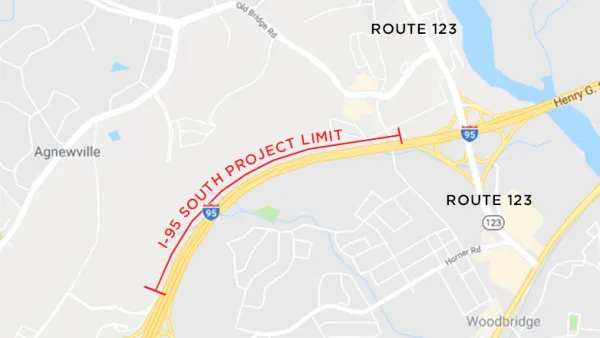
I-95 Widening Breaks Ground in Virginia
A mile-and-a-half-long section of Interstate 95, which handles 80,000 vehicle trips a day, will be expanded in Virginia. The project includes a new shoulder, lighting, and noise walls.
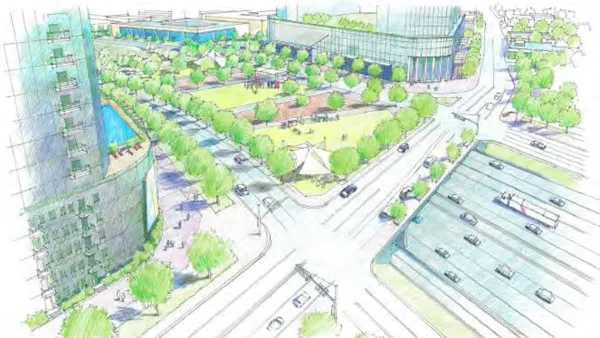
TxDOT Promises to Reverse Some of the Damage Caused by Urban Freeways in Dallas
The Texas Department of Transportation (TxDOT) is in the early stages of planning for two projects that could leverage plans to rebuild two freeways in the city with plan to reconnect the neighborhoods they severed.
101 Freeway in California Slower Than Ever After Widening, Locals Say
Induced demand strikes again.

Planetizen Federal Action Tracker
A weekly monitor of how Trump’s orders and actions are impacting planners and planning in America.

California plans to bury El Niño’s downpour
If the state plays its cards right, it may be able to store a billion acre-feet of El Niño’s water in aquifers.

Chicago breaks ground on $3 billion megadevelopment
The new neighborhood, titled Foundry Park, will one day host 3,700 residences.

City officials are dumping billions of gallons of sewage into the Chicago River
This year, the Racine Avenue sewage pumping station has poured over 10 billion gallons of sewage into the Chicago River.

Move over, LA: St. Louis gears up for Olympics, invests millions in downtown redevelopment
The Missouri city will host the 2028 Olympic soccer group stage and knockout matches.

Satanic place names
From streams and lakes to valleys and canyons, I mapped more than 1,000 places named after the Devil.

FREE Course: Walkable City 1: Why Walkability?
After describing his path towards focusing on walkability as the essence of good planning, Jeff Speck marches through his five principal reasons for making more walkable places.
Reinventing Malls: Planning Alchemy—Turning Gray Fields Into Gold
The course focuses on the opportunities and imperatives that shape reinvention of mall sites.

City of Rosemead
Rutgers University, Edward J. Bloustein School of Planning and Public Policy
One Hundred Miles
Hunter College, City University of New York (CUNY)
The Architects Foundation
University of Cincinnati Online
City of Cambridge
Montrose County
The Pocatello Development Authority