Painting red dedicated bus lanes can improve travel times for bus riders, encourage more people to use public transit, and reduce emissions from transportation.


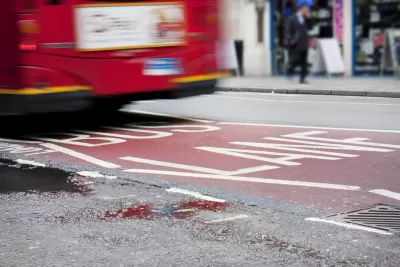
Writing in The Urbanist, Ryan DiRaimo calls on the city of Seattle to install dedicated bus lanes for all of its bus lines, citing evidence of reduced emissions and shorter bus commute times on streets that have done so.
According to DiRaimo, “The problem afflicting many of Seattle’s dedicated bus lanes is that they disappear right when they’re needed most at congested intersections or are clogged with too many cheating motorists. Deploying dedicated bus lanes widely and then enforcing them would fix that, however.”
DiRaimo writes that Seattle doesn’t need drawn-out public meetings to decide the issue. Painting bus lanes, cheaply and quickly, would definitively help the environment, eliminating the need for a SEPA review. When it comes to traffic, DiRaimo notes, “Well, traffic is constant. Traffic was here before the dedicated bus lanes, and it’s there today. Traffic existed before I-5 and I’m sure we are all aware it has never left. Traffic is a gas, not a liquid. You don’t control the flow by changing the size of the pipe, the gas fills up whatever space you give it.”
For DiRaimo, painting dedicated bus lanes is a no-brainer: “cheap, easy and smart.” DiiRaimo concludes, “The cost of paint is less than the cost of Seattle’s deadly year on the roads. This idea isn’t even that bold. It just makes sense.”
Read the full story: Add Dedicated Bus Lanes for Every Route

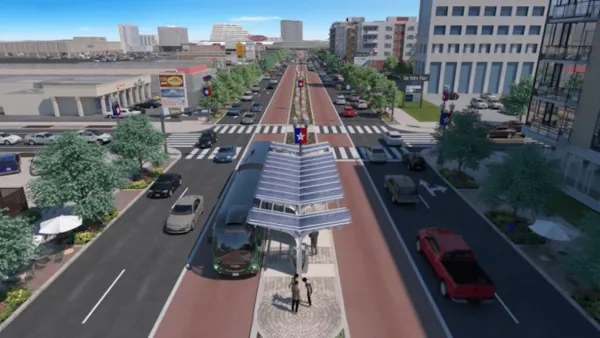
A Look at San Antonio’s Upcoming Rapid Bus Line
A new bus line will bring some of the benefits of bus rapid transit, connecting the city’s airport and downtown.

Philadelphia Bus Cameras Document Over 30,000 Violations
A pilot program tested AI-powered cameras that monitored bus-only lanes for parked vehicles.
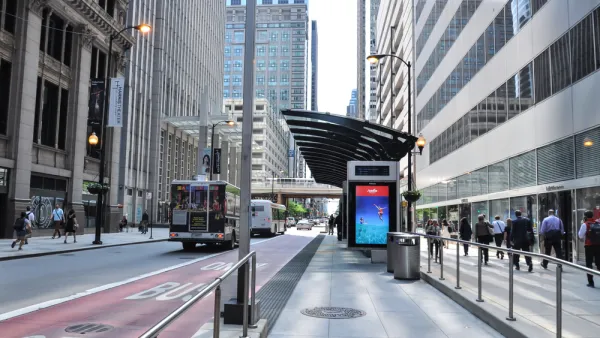
Chicago Makes ‘Pop-Up’ Bus Lanes Permanent
Even with the addition of 3.5 miles of permanent bus-only lanes, Chicago trails other cities in miles of dedicated bus lanes.

Planetizen Federal Action Tracker
A weekly monitor of how Trump’s orders and actions are impacting planners and planning in America.

The state-sanctioned urbicide of Austin
People don’t kill cities. Freeways do.

Colorado’s Largest Data Center Could Rise Next to Homes — Without a Public Hearing
The proposed campus would consume 11 times the power of Denver International Airport; as it has across the country, opposition mounts.

Judges permit Denver to divert 77,000 acre feet from the Colorado River for reservoir expansion
Overuse and climate change have caused the Colorado River’s water levels to plummet.
Amtrak, CN end decades-long dispute with eight-year agreement
The new operating agreement establishes an updated framework for the companies to work together, including processes to resolve disputes.

Raised interest rates may kill financially vulnerable construction projects
The chief economist at ConstructConnect warns that if construction project owners are negatively impacted by the raised rates, it could result in delayed payments to contractors.

FREE Course: Walkable City 1: Why Walkability?
After describing his path towards focusing on walkability as the essence of good planning, Jeff Speck marches through his five principal reasons for making more walkable places.
Reinventing Malls: Planning Alchemy—Turning Gray Fields Into Gold
The course focuses on the opportunities and imperatives that shape reinvention of mall sites.

KFH Group Inc.
Greater Baltimore Committee
Eagle County Government
The Architects Foundation
University of Cincinnati Online
The Pocatello Development Authority
The Urban Renewal Agency of the City of Pocatello