Even with the addition of 3.5 miles of permanent bus-only lanes, Chicago trails other cities in miles of dedicated bus lanes.


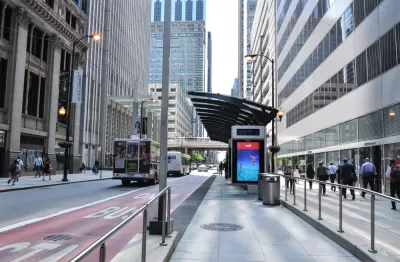
According to John Greenfield, writing for Streetsblog Chicago, a 3.5 mile stretch of “pop-up” dedicated bus lanes on Chicago Avenue between Ashland and Laramie will be made permanent. The red bus-only lanes will be in effect 24 hours a day, unlike other bus lanes elsewhere on Chicago Avenue.
In a statement, CTA president Dorval R. Carter, Jr. said, “The temporary, pop-up essential bus lanes were a useful tool we implemented during the pandemic that have since proven to be vital in ensuring that buses traveling the #66 bus can pass through what has long been a bottle-neck and major source of delays along the route.”
Other safety improvements coming to Chicago Avenue include sidewalk extensions and bollards and speed humps to force slower left turns at dangerous intersections.
Chicago lags far behind other major cities when it comes to dedicated bus lanes, with only 11 miles across the whole city. For comparison, Los Angeles has 107 miles of dedicated lanes, while New York City, which recently began using traffic cameras to crack down on bus lane blocking violations, has 138 miles.
FULL STORY: “Pop-up” bus lanes on Chicago Ave. are now permanent, other upgrades planned citywide

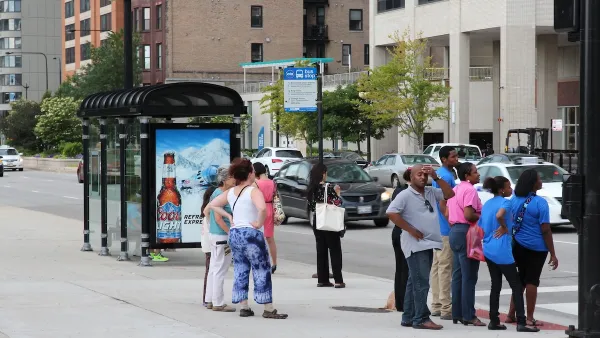
Chicago Transit Authority Plans to Banish ‘Ghost Buses’
The CTA is implementing changes to its tracking technology that will more accurately display bus arrival times and track bus reroutes and delays.
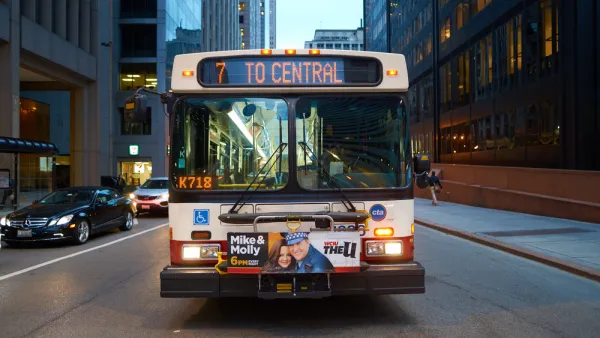
Chicago Announces First Five ‘Better Streets for Buses’ Corridors
The CTA will develop a series of options for improving bus service on key transit corridors.
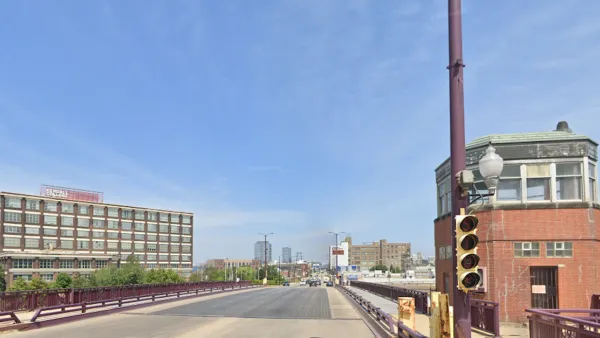
RTA Calls for Bus Lanes on Chicago Bridge Project
The regional authority is asking the city to add dedicated bus lanes to a bridge over the Chicago River that serves a high number of bus commuters.

Planetizen Federal Action Tracker
A weekly monitor of how Trump’s orders and actions are impacting planners and planning in America.

The state-sanctioned urbicide of Austin
People don’t kill cities. Freeways do.

US to reduce Colorado River water deliveries to Mexico
A new Colorado Treaty amendment reduces Mexico’s Colorado River water allocation by 250,000 acre feet.

Guerilla urbanists are building DIY bus stop benches in Chicago
A before-and-after of one of the bus stops with a new bench. The new benches are not officially sanctioned or permitted, but the residents who placed them hope they will be the start of a network of DIY benches across the city.

Mamdani overhauls NYC's Vision Zero plan with 100 new policy goals
The overhaul aims to reduce traffic deaths and make streets safer for pedestrians, cyclists and drivers through lower speed limits, new safety infrastructure and more.

Amtrak not solely to blame for New Jersey commuter rail's unreliability, report finds
A new study from the Garden State Initiative found that NJ Transit’s budget grew 20% across a 4 year period, but reliability declined significantly over the same period.

FREE Course: Walkable City 1: Why Walkability?
After describing his path towards focusing on walkability as the essence of good planning, Jeff Speck marches through his five principal reasons for making more walkable places.
Reinventing Malls: Planning Alchemy—Turning Gray Fields Into Gold
The course focuses on the opportunities and imperatives that shape reinvention of mall sites.

Eagle County Government
Harvard University Graduate School of Design
Nashville Planning Department
The Architects Foundation
University of Cincinnati Online
The Pocatello Development Authority
The Urban Renewal Agency of the City of Pocatello
Journal of the American Planning Association