This year’s historic floods ravaged communities already roiled by spiking housing costs and a shortage of available workforce housing near the nation’s oldest national park.


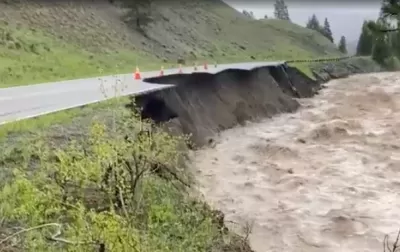
Communities in the American West are facing a double crisis as the rising cost of housing is compounded by historic flooding. In Carbon County, Montana, the median home price outstrips the budget of a low- to medium-income worker by more than $100,000. Writing in High Country News, Nick Mott describes the damage incurred by residents during this year’s catastrophic floods.
To make ends meet, many Montanans live in manufactured housing, which can be much less expensive to purchase and maintain than site-built homes. But “Across Montana, about one in five mobile homes are at a high risk of flooding — higher than the national average of one in seven.” In Fromberg, a small town in Carbon County hit hard by this year’s megafloods, few residents have flood insurance. “Mobile home residents earn roughly half of the median annual income of the average American family living in a single-family home. That makes it even harder for them to prepare for and recover from disasters like floods.” Meanwhile, mobile home park owners have little incentive to make financially costly investments to make communities safer.
Mott points out that the recent floods illuminated a host of other issues straining the communities of workers living near Yellowstone and in similar areas. As climate change exacerbates extreme weather conditions and investors buy up mobile home parks for profit, mobile home residents and low-income workers are increasingly more vulnerable to losing their homes and livelihoods.
FULL STORY: When a housing crisis meets a megaflood

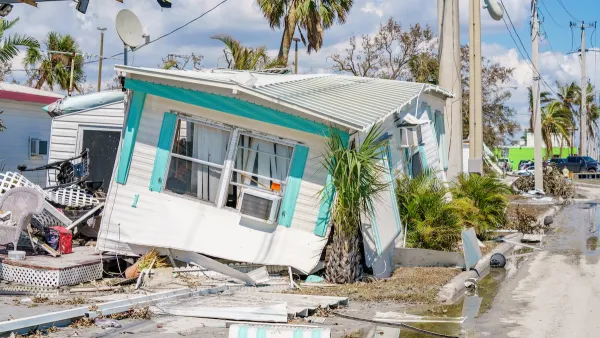
How to Make Manufactured Housing More Resilient
Manufactured housing builders must balance affordability with the need to protect housing against extreme weather events.
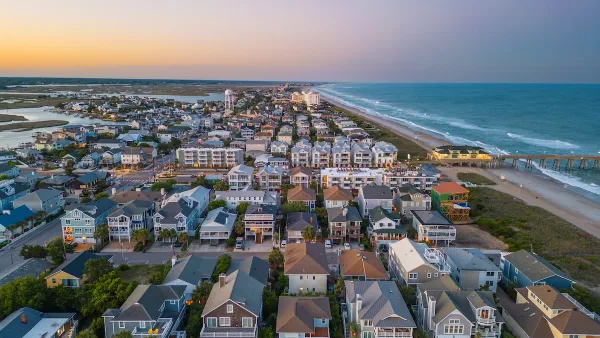
Rising Insurance Rates Squeezing Affordable Housing Developers
Spiking insurance costs in coastal areas prone to climate disasters are making it harder for low-income housing developers to keep building.
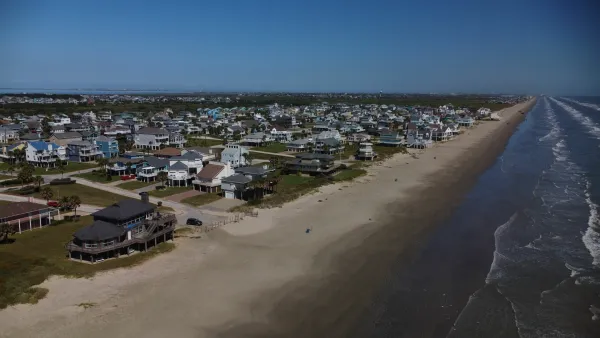
Looking for a Beach House? Check Your Risk First.
A new report from the insurance industry names the historic town of Galveston, Texas as the riskiest place to buy a beach house in the United States.

Planetizen Federal Action Tracker
A weekly monitor of how Trump’s orders and actions are impacting planners and planning in America.

The state-sanctioned urbicide of Austin
People don’t kill cities. Freeways do.

US to reduce Colorado River water deliveries to Mexico
A new Colorado Treaty amendment reduces Mexico’s Colorado River water allocation by 250,000 acre feet.

5 New England states march closer to 800 megawatt wind energy project
Securing federal approval for the project may be complicated under the Trump administration, which has historically been hostile towards domestic wind power.

Baltimore to break ground on $50 million Transit Priority Project
The project will bring faster bus trips, safer streets and better bike connections to Baltimore.

Airbnb launches $250 million 'last-dollar financing' housing accelerator, makes first investment in Austin
The company will put $6.4 million towards affordable housing development in Texas’ capital.

FREE Course: Walkable City 1: Why Walkability?
After describing his path towards focusing on walkability as the essence of good planning, Jeff Speck marches through his five principal reasons for making more walkable places.
Reinventing Malls: Planning Alchemy—Turning Gray Fields Into Gold
The course focuses on the opportunities and imperatives that shape reinvention of mall sites.

Eagle County Government
Harvard University Graduate School of Design
Nashville Planning Department
The Architects Foundation
University of Cincinnati Online
The Pocatello Development Authority
The Urban Renewal Agency of the City of Pocatello
Journal of the American Planning Association