A new report from the insurance industry names the historic town of Galveston, Texas as the riskiest place to buy a beach house in the United States.


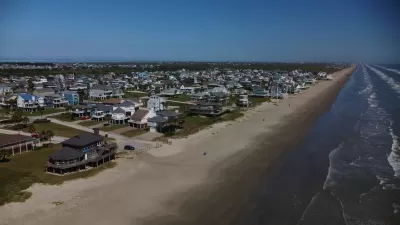
A report from online insurance broker Assurance names Galveston, Texas as the riskiest place to buy a beach house in the nation as insurers reevaluate places with high risk of floods and other disasters, reports Erica Grieder in the Houston Chronicle.
“Galveston stands out, the study notes, because it faces a projected sea level rise of 1.9 feet by 2040 according to Climate Central, a Princeton, N.J.-based policy-neutral nonprofit. That's 58.3 percent higher than the national average, according to Assurance, and the main factor propelling Galveston to the top of this list.”
The historic town was a blossoming port city in 1900, when a devastating hurricane killed more than 8,000 people and led to the construction of a 17-foot seawall. Grieder adds that, while no other Texas towns make the list, “Texas … is the second most expensive state for homeowners insurance in the U.S., trailing only Oklahoma, according to a NerdWallet analysis this year.”
Read the full story: Galveston named riskiest U.S. town to buy a beach house

Will Hurricanes Drive Away Florida’s Retirees?
Some children of Florida retirees are urging their parents to leave hurricane-prone areas for safer regions.
Planning for Future Floods
New climate and flood models are needed to understand growing flood risks.
U.S. Houses Facing Increased Flood Risk Overvalued by as Much as $237 Billion, Study Says
Housing markets are failing to price in climate risks in their assessment of housing values, according to a recent study published by Nature.

Planetizen Federal Action Tracker
A weekly monitor of how Trump’s orders and actions are impacting planners and planning in America.

California plans to bury El Niño’s downpour
If the state plays its cards right, it may be able to store a billion acre-feet of El Niño’s water in aquifers.

Chicago breaks ground on $3 billion megadevelopment
The new neighborhood, titled Foundry Park, will one day host 3,700 residences.

California High-Speed Rail Authority CEO resigns after $600,000 scandal
Under Ian Choudri, the authority used taxpayer dollars to fund first class flights and trips to nightclubs.

Want to study the Missouri River? Soon, you may need unanimous approval from 10 states
Legislation would require 10 governors’ permission to study or build projects moving water outside the basin.

Desperate measures: Advocates weigh draining Lake Powell to fill Colorado River
Draining the reservoir could reduce evaporation losses by a couple hundred thousand acre-feet.

FREE Course: Walkable City 1: Why Walkability?
After describing his path towards focusing on walkability as the essence of good planning, Jeff Speck marches through his five principal reasons for making more walkable places.
Reinventing Malls: Planning Alchemy—Turning Gray Fields Into Gold
The course focuses on the opportunities and imperatives that shape reinvention of mall sites.

City of Rosemead
Rutgers University, Edward J. Bloustein School of Planning and Public Policy
One Hundred Miles
Hunter College, City University of New York (CUNY)
The Architects Foundation
University of Cincinnati Online
City of Cambridge
Montrose County
The Pocatello Development Authority