You might have lost track of the Sunnyside Yard Master Plan—a proposal for 12,000 new housing units in Queens—because it was announced to the public in March 2020 and has since been shelved.


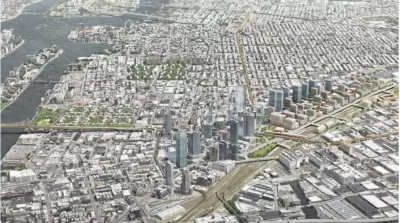
An article by Samar Khurshid for the Gotham Gazette checks-in with the massive Sunnyside Yard Master Plan, announced in March 2020 with plans to spend $14 billion on a railyard deck, tens of thousands of new homes, new public and green space, and a new regional rail hub.
“But the plan was released at the start of the COVID-19 pandemic, just before the city and state went into lockdown, economic activity slowed to a crawl, and every city infrastructure project was put on pause,” writes Khurshid. “The Sunnyside Yard Master Plan, a product of an announcement that de Blasio first made in 2015 during his State of the City address, was shelved.”
There have been a few signs of life for the master plan, according to Khurshid. “The MTA recently included a new ‘Sunnyside Long Island Rail Road and Metro-North Station’ in its 20-year needs assessment of transit infrastructure, beginning the process of studying the proposal before deciding whether it can be funded down the line,” but, adds Khurshid, “the entities involved in the overall Sunnyside Master Plan don’t seem to be making any progress.”
Yet, as detailed, in the article, many advocates and economic development experts say the project is an idea fit for the needs of the city, as shared in the source article, linked below.
FULL STORY: What Happened to the Sunnyside Yard Master Plan?

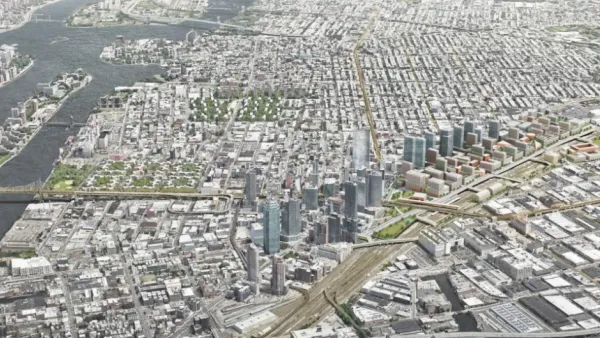
Details of the 12,000-Home Sunnyside Yard Project
A proposed development project in Queens would be the largest housing project built in New York City since the 1970s.
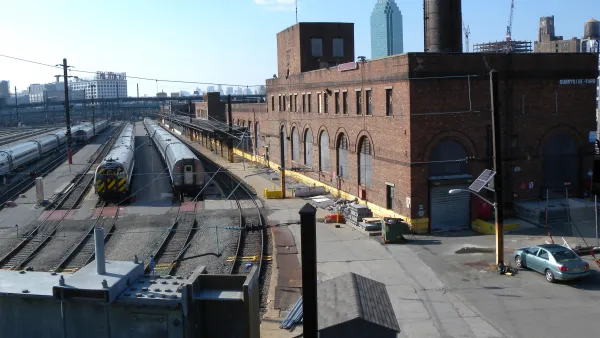
Mamdani Proposes Reviving Sunnyside Yard Project in Meeting With Trump
A proposed redevelopment in Trump’s native Queens could create as many as 12,000 new housing units.
$1 Billion Redevelopment Planned for a Former Mall in Cutler Bay, Florida
Mall not making money like it used to? How would a $1 billion redevelopment sound?

Planetizen Federal Action Tracker
A weekly monitor of how Trump’s orders and actions are impacting planners and planning in America.

The state-sanctioned urbicide of Austin
People don’t kill cities. Freeways do.

US to reduce Colorado River water deliveries to Mexico
A new Colorado Treaty amendment reduces Mexico’s Colorado River water allocation by 250,000 acre feet.

5 New England states march closer to 800 megawatt wind energy project
Securing federal approval for the project may be complicated under the Trump administration, which has historically been hostile towards domestic wind power.

Baltimore to break ground on $50 million Transit Priority Project
The project will bring faster bus trips, safer streets and better bike connections to Baltimore.

Airbnb launches $250 million 'last-dollar financing' housing accelerator, makes first investment in Austin
The company will put $6.4 million towards affordable housing development in Texas’ capital.

FREE Course: Walkable City 1: Why Walkability?
After describing his path towards focusing on walkability as the essence of good planning, Jeff Speck marches through his five principal reasons for making more walkable places.
Reinventing Malls: Planning Alchemy—Turning Gray Fields Into Gold
The course focuses on the opportunities and imperatives that shape reinvention of mall sites.

Eagle County Government
Harvard University Graduate School of Design
Nashville Planning Department
The Architects Foundation
University of Cincinnati Online
The Pocatello Development Authority
The Urban Renewal Agency of the City of Pocatello
Journal of the American Planning Association