After a 19-year hiatus, the city is restarting its traffic calming program to combat the growing pedestrian death crisis.


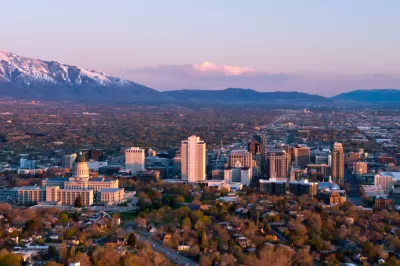
Almost two decades after Salt Lake City’s last traffic calming projects, a rise in pedestrian deaths has prompted the city to revive its traffic calming program. Jordan Miller details the city’s plan in an article for the Salt Lake Tribune.
A 2019 study assessed the city’s most dangerous roads and potential solutions for improving traffic safety. “The study’s final report identified 403.5 miles of roadway within Salt Lake City for possible improvements and divided those streets into 113 prioritized zones — based on crash data, speed data, demographics and community assets like schools.”
Program components include three versions of speed bumps, raised crosswalks to improve pedestrian visibility, pedestrian refuge islands, and roundabouts. Many of these treatments function best when combined: pedestrian refuge islands and raised crosswalks, for example, provide the most added safety when combined with other speed deflection measures.
See the source article for projected costs and more details on each type of project, the extent of which will depend on future funding.
FULL STORY: In Salt Lake City, here’s what kind of ‘traffic-calming’ projects could be coming to your street

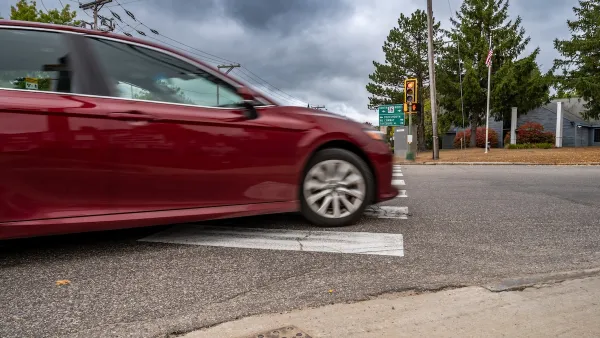
Banning Right Turns on Red Just One Step Toward Vision Zero
Experts caution that blanket bans on right turns on red make only a slight contribution to reducing fatal crashes, and other interventions are needed to bring down traffic fatalities.
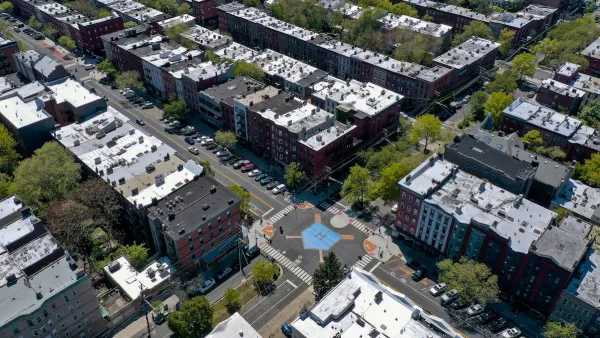
Vision Zero at Work: Hoboken Celebrates Seven Years of Zero Traffic Deaths
The New Jersey city implemented simple yet impactful changes to eliminate traffic fatalities.
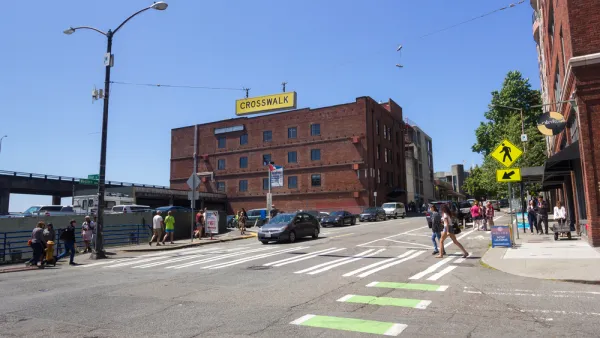
Washington Focuses Road Safety Efforts on Individuals, Neglecting Design
Legislative efforts to reduce traffic deaths could move the needle toward Vision Zero, but state leaders failed to commit infrastructure funds to making structural improvements.

Planetizen Federal Action Tracker
A weekly monitor of how Trump’s orders and actions are impacting planners and planning in America.

The state-sanctioned urbicide of Austin
People don’t kill cities. Freeways do.

US to reduce Colorado River water deliveries to Mexico
A new Colorado Treaty amendment reduces Mexico’s Colorado River water allocation by 250,000 acre feet.

5 New England states march closer to 800 megawatt wind energy project
Securing federal approval for the project may be complicated under the Trump administration, which has historically been hostile towards domestic wind power.

Baltimore to break ground on $50 million Transit Priority Project
The project will bring faster bus trips, safer streets and better bike connections to Baltimore.

Airbnb launches $250 million 'last-dollar financing' housing accelerator, makes first investment in Austin
The company will put $6.4 million towards affordable housing development in Texas’ capital.

FREE Course: Walkable City 1: Why Walkability?
After describing his path towards focusing on walkability as the essence of good planning, Jeff Speck marches through his five principal reasons for making more walkable places.
Reinventing Malls: Planning Alchemy—Turning Gray Fields Into Gold
The course focuses on the opportunities and imperatives that shape reinvention of mall sites.

Eagle County Government
Harvard University Graduate School of Design
Nashville Planning Department
The Architects Foundation
University of Cincinnati Online
The Pocatello Development Authority
The Urban Renewal Agency of the City of Pocatello
Journal of the American Planning Association