Legislative efforts to reduce traffic deaths could move the needle toward Vision Zero, but state leaders failed to commit infrastructure funds to making structural improvements.


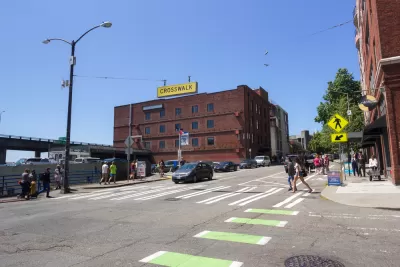
A legislative push to improve traffic safety in Washington state is focusing on enforcement and education, largely ignoring the impacts of road design and infrastructure on traffic deaths, writes Gregory Quetin in The Urbanist.
At a press conference held by state legislative leaders and Washington Governor Jay Inslee, “Leaders claimed that addressing behavior could turn the tide of road deaths. However, the absence of funding priority and urgency around fundamentally redesigning our streets suggests their effort will come up short.”
Quetin warns that “the emphasis on law enforcement with the attendant risk of unequal treatment based on race and socioeconomics and after a major infrastructure spending bill containing numerous road expansion projects whose underlying goal is car speed and throughput, both key aspects of road design that make them unsafe and undermines spending on safety in the bill.”
The article describes legislation currently proposed at the state level, efforts which would boost law enforcement presence, lower the blood alcohol limit, ban right turns on red, and implement other measures that could improve safety but fall short of redesigning dangerous roads.
Traffic safety advocates have criticized the Texas Department of Transportation (TxDOT) for taking a similar approach, arguing that transportation agencies should do more to eliminate dangerous road conditions that lead to deadly crashes and reduce the chance of death and serious injury when crashes do occur.
Read the full story: State Road Safety Push Overlooks Design, Dwells on Enforcement

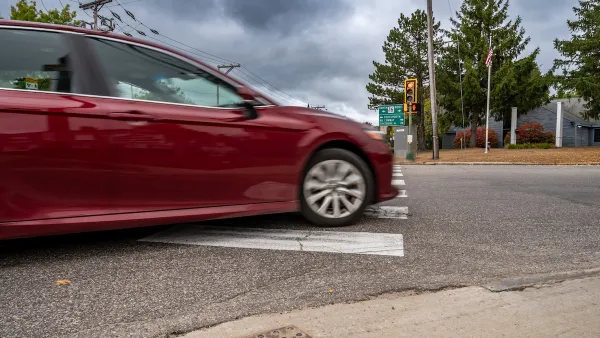
Banning Right Turns on Red Just One Step Toward Vision Zero
Experts caution that blanket bans on right turns on red make only a slight contribution to reducing fatal crashes, and other interventions are needed to bring down traffic fatalities.
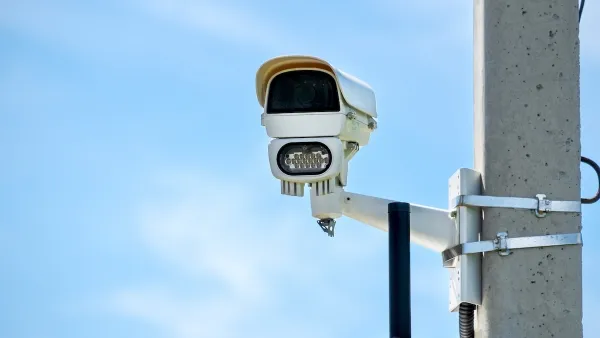
Philly Speed Camera Program Cuts Fatalities in Half
Excessive speeding along dangerous segments of Roosevelt Boulevard dropped by 90 percent after the city installed automated enforcement cameras.
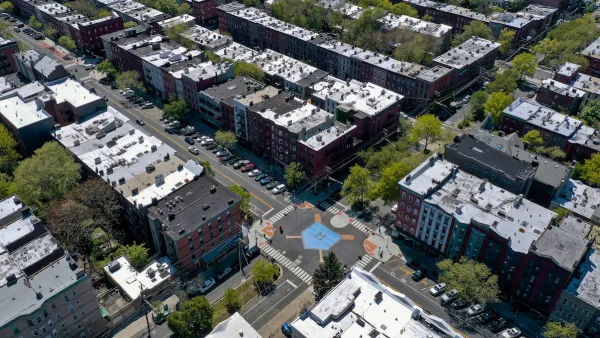
Vision Zero at Work: Hoboken Celebrates Seven Years of Zero Traffic Deaths
The New Jersey city implemented simple yet impactful changes to eliminate traffic fatalities.

Planetizen Federal Action Tracker
A weekly monitor of how Trump’s orders and actions are impacting planners and planning in America.

California plans to bury El Niño’s downpour
If the state plays its cards right, it may be able to store a billion acre-feet of El Niño’s water in aquifers.

Chicago breaks ground on $3 billion megadevelopment
The new neighborhood, titled Foundry Park, will one day host 3,700 residences.

Satanic place names
From streams and lakes to valleys and canyons, I mapped more than 1,000 places named after the Devil.

California High-Speed Rail Authority CEO resigns after $600,000 scandal
Under Ian Choudri, the authority used taxpayer dollars to fund first class flights and trips to nightclubs.

Want to study the Missouri River? Soon, you may need unanimous approval from 10 states
Legislation would require 10 governors’ permission to study or build projects moving water outside the basin.

FREE Course: Walkable City 1: Why Walkability?
After describing his path towards focusing on walkability as the essence of good planning, Jeff Speck marches through his five principal reasons for making more walkable places.
Reinventing Malls: Planning Alchemy—Turning Gray Fields Into Gold
The course focuses on the opportunities and imperatives that shape reinvention of mall sites.

City of Rosemead
Rutgers University, Edward J. Bloustein School of Planning and Public Policy
One Hundred Miles
Hunter College, City University of New York (CUNY)
The Architects Foundation
University of Cincinnati Online
City of Cambridge
Montrose County
The Pocatello Development Authority