The city’s complete streets manager answers questions about the city’s plans for improving its bike lane network.


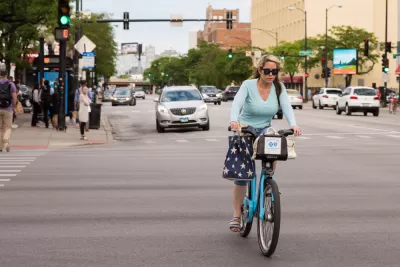
In an interview with Courtney Kueppers of the Chicago Sun-Times, David Smith, complete streets manager at the Chicago Department of Transportation, answers questions about the city’s bike lane network. “Smith’s team at CDOT handles the bulk of the planning and design work around bike lanes, pedestrian improvements, transit projects and overall traffic safety,” Kueppers notes.
According to Smith, His department “started with a ground-up approach, identifying the places that people need to get to within the neighborhood and then from there worked with folks in the community to figure out which streets make the most sense to connect people to those places.” Answering a question about how the city is maintaining and improving existing bike infrastructure, Smith says, “We restriped existing bike lanes and things like the delineators [the flexible posts that cordon off some bike lanes] get replaced if those are damaged. We’re doing things on certain streets like ... installing [a] concrete curb to provide a bit more separation from people biking and people driving.”
Addressing concerns about the lack of east-west bike lanes in the city, Smith says “Our vision is to have a connected network across the entire city so you can go north, south, east, west. East-west there are some kind of unique barriers in the river and the expressway that provide some challenges and connectivity issues.” As far as the future goes, Smith is optimistic. “The number of low-stress routes, protected bike lanes plus neighborhood greenways is increasing dramatically. We’ve never done more than we are right now and that trend is going to continue.”
Read the full story: How does the city decide where to put new bike lanes?
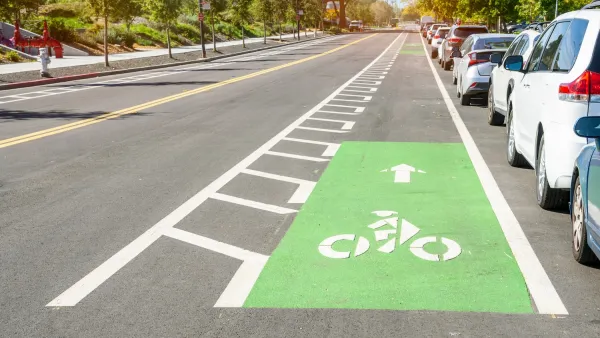
Why Bike Lanes Are Good: An Explainer for the US Transportation Secretary
Sean Duffy says there’s no evidence that bike lanes have benefits. Streetsblog — and federal agencies’ own data — beg to differ.
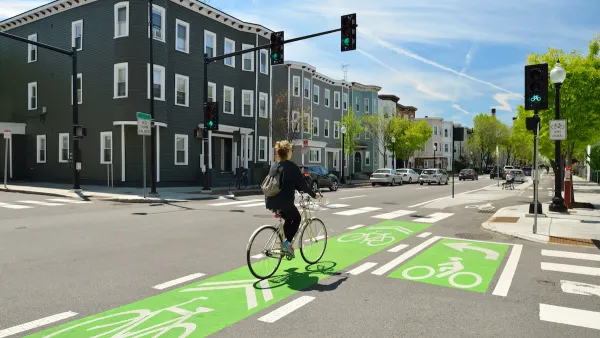
NACTO Releases Updated Urban Bikeway Guide
The third edition of the nationally recognized road design guide includes detailed design advice for roads that prioritize safety and accessibility for all users.
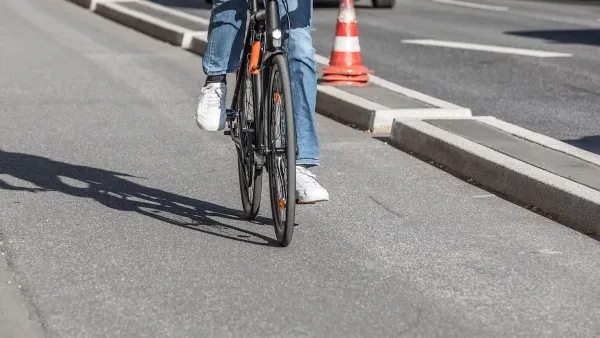
Southeast LA Road Safety Advocates Call for Improved Infrastructure
Streets in southeastern Los Angeles County have a severe lack of protected bike lanes and traffic safety measures, leading to high numbers of fatalities in a community where many residents depend on walking and biking for daily needs.

Planetizen Federal Action Tracker
A weekly monitor of how Trump’s orders and actions are impacting planners and planning in America.

California plans to bury El Niño’s downpour
If the state plays its cards right, it may be able to store a billion acre-feet of El Niño’s water in aquifers.

Desperate measures: Advocates weigh draining Lake Powell to fill Colorado River
Draining the reservoir could reduce evaporation losses by a couple hundred thousand acre-feet.

In Texas, data centers are swallowing promised parkland
Residents who moved to Taylor, Texas for a rural community now have to contend with three data centers in their backyard.

How a Chicago-sized wind farm beat the odds and powered on
The project spanned five presidential administrations and a standoff with a U.S. military base.

MTA gives itself 30 days to transform pit into basketball court
The site has been under construction since 2022; the city originally estimated it would finish the court in 2024.

FREE Course: Walkable City 1: Why Walkability?
After describing his path towards focusing on walkability as the essence of good planning, Jeff Speck marches through his five principal reasons for making more walkable places.
Reinventing Malls: Planning Alchemy—Turning Gray Fields Into Gold
The course focuses on the opportunities and imperatives that shape reinvention of mall sites.

City of Rosemead
Rutgers University, Edward J. Bloustein School of Planning and Public Policy
One Hundred Miles
Hunter College, City University of New York (CUNY)
The Architects Foundation
University of Cincinnati Online
City of Cambridge
Montrose County
The Pocatello Development Authority