Proponents of increased oil drilling in the U.S. to replace banned Russian oil argue that it will decrease prices at the pump. A Texas reporter examined the claim with a University of Texas energy analyst. If only it was that simple.


After wavering between banning imports of Russian oil to punish President Vladimir Putin for invading Ukraine and protecting American motorists from more pain at the pump, President Biden acted on March 8 in favor of the former. Ukraine President Volodymyr Zelenskyy thanked him for taking the bold action that, as President Biden noted, will likely cause world crude oil prices to go higher.
Withholding Russian oil imports, which constituted "3 percent of U.S. foreign imports of crude oil, and about 1 percent of the U.S. supply overall" last year, fourth largest after Canada, Mexico, and Saudi Arabia, according to The Hill (March 8), does create a shortfall in the world's highest oil-consuming nation that will likely "push prices at the gas pump higher when inflation is already rapid," warned Biden last Tuesday.
"Republicans, including Gov. Greg Abbott, have suggested an increase in oil production in Texas could help bring those gas prices down and help the U.S. become energy independent," writes Maggie Glynn, KXAN's capitol correspondent in Austin on March 8.
Abbott tweeted this week, “Instead of begging other countries for oil, Biden can stop hindering the U.S. energy sector. Texas can easily produce enough oil to reduce gas prices if his Administration would get out of the way.”
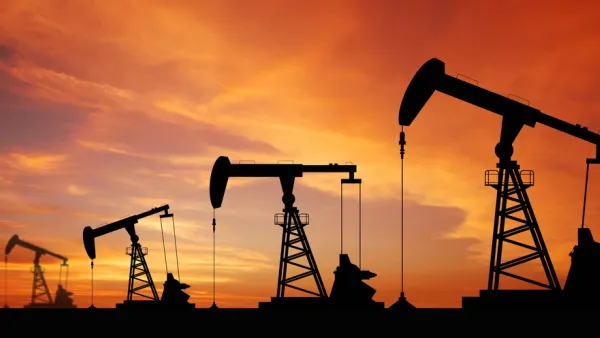
Oil production and refining
Glynn fact-checks Abbott's assertion with Dr. Joshua D. Rhodes, a research associate with the Webber Energy Group at the University of Texas at Austin.
"We do produce a lot of oil domestically. Just because we get it out of the ground doesn’t mean we can actually refine it," energy analyst Josh Rhodes said Tuesday.
Rhodes shed light on the industry that turns crude into fuel, specifically the types of crude oil that refineries use, and why Russian oil can't simply be replaced by American oil.
"A lot of our refiners, particularly in the gulf coast of Texas are built for this lower quality crude that comes from the Middle East and Russia and Canada. And the crude that we produce is typically higher quality. Counterintuitively, it’s harder for us to actually turn that better crude into gasoline and diesel than it is for the lower quality crude."
However, ramping up oil production in Texas as well as in other states will mitigate the increase in fuel prices, just not in the way Gov. Abbott suggested, particularly if more countries follow in the path set by the U.S. and ban Russian oil imports.
"We can produce more and potentially send more to Europe where they actually are more tooled to process that sweet crude. And so that might be helpful in the short term," Rhodes said.
Not just Republicans
Taking an even more aggressive posture toward increasing American fossil fuel production is Fareed Zakaria, a foreign affairs columnist for The Washington Post and host of GPS on CNN. His column was published on March 3, five days before Biden announced the Russian oil embargo.
Biden should announce that he is going to respond to this massive challenge to the international order by expediting as much production and export of U.S. petroleum as possible to replace Russian energy. With natural gas, he should urge his regulators to facilitate production and he should help more with the financing of liquefied natural gas, so that it can be sent to Europe. He should also encourage countries such as Japan and South Korea to divert more of their liquefied natural gas to Europe. (They have alternative energy sources.) Some of this will take time, but markets will react to the signals and new supplies — and prices will fall.
Comparison to 1979 Iranian oil embargo
"On November 12, 1979, President Jimmy Carter responds to a potential threat to national security by stopping the importation of petroleum from Iran," begins History.com's description of one aspect of the 1979 Oil Shock. But President Biden's position in the current energy crisis that developed after Russia invaded Ukraine on Feb. 24 is far different than Carter's position in 1979, asserts Zakaria.
Today, the United States is the largest producer of oil and gas in the world. It can ramp up production and exports and help open the spigots in other countries. President Biden is worried that he is going to look like former president Jimmy Carter, when his power position is actually more like that of the king of Saudi Arabia.
Related in Planetizen:
- Banning Russian Oil, March 10, 2022
- The Missing Sanctions on Russia, March 6, 2022
- Biden Orders Release from Strategic Petroleum Reserve: What's the Emergency?, Nov. 29, 2021
- New Oil Refineries Queuing Up in Texas, August 1, 2017
- Oil Export Ban Lifted—After 42 Years, December 17, 2015
Read the full story: Why increasing Texas oil production wouldn’t immediately bring down gas prices

Sanctioning Russian Energy Exports
European leaders chose not to join the U.S. in an embargo of Russian energy products largely because of dependence on natural gas. Similarly, the world needs the 11% of crude oil that Russia exports. What can the U.S. do to lessen this dependence?
Banning Russian Oil
President Biden announced a ban on the importation of Russian energy on Tuesday in response to Russian President Vladimir Putin's invasion of Ukraine. He warned that gasoline prices will go even higher as a result. Europe will not be joining the ban.

Has the Rug Been Pulled Out From Under Environmentalists?
Robinson Meyer, a climate reporter for The Atlantic, writes about the awkward place American environmentalists find themselves due in part to the war in Europe that has created an international energy crisis and historically high fuel prices at home.

Planetizen Federal Action Tracker
A weekly monitor of how Trump’s orders and actions are impacting planners and planning in America.

California plans to bury El Niño’s downpour
If the state plays its cards right, it may be able to store a billion acre-feet of El Niño’s water in aquifers.

Chicago breaks ground on $3 billion megadevelopment
The new neighborhood, titled Foundry Park, will one day host 3,700 residences.

California High-Speed Rail Authority CEO resigns after $600,000 scandal
Under Ian Choudri, the authority used taxpayer dollars to fund first class flights and trips to nightclubs.

Want to study the Missouri River? Soon, you may need unanimous approval from 10 states
Legislation would require 10 governors’ permission to study or build projects moving water outside the basin.

Desperate measures: Advocates weigh draining Lake Powell to fill Colorado River
Draining the reservoir could reduce evaporation losses by a couple hundred thousand acre-feet.

FREE Course: Walkable City 1: Why Walkability?
After describing his path towards focusing on walkability as the essence of good planning, Jeff Speck marches through his five principal reasons for making more walkable places.
Reinventing Malls: Planning Alchemy—Turning Gray Fields Into Gold
The course focuses on the opportunities and imperatives that shape reinvention of mall sites.

City of Rosemead
Rutgers University, Edward J. Bloustein School of Planning and Public Policy
One Hundred Miles
Hunter College, City University of New York (CUNY)
The Architects Foundation
University of Cincinnati Online
City of Cambridge
Montrose County
The Pocatello Development Authority