Light rail transit only recently arrived in its contemporary form to the San Gabriel Valley—first to Pasadena in 2003 before heading further east into the valley in 2016. The future of public transit modes in the region are still under negotiation.


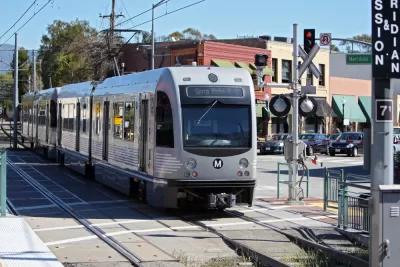
The San Gabriel Valley Council of Governments, the regional planning authority for a sprawling, populous swatch of Southern California, is ramping up its transit planning efforts, with the recent release of a "San Gabriel Valley Transit Feasibility Strategy" that includes 15 possible mass transit routes through the region.
Kristopher Fortin broke the news of the proposed transit alternatives for Streetsblog LA and provided a summary of the strategy's proposals. The strategy proposes eight potential east-west routes and seven north-south routes. "The modes being considered include a rapid bus that runs in mixed traffic lanes, express bus, bus rapid transit (BRT), light rail, and commuter rail," according to Fortin.
Fortin reported on the feasibility strategy in December 2020, when the work emerged from the ashes of a failed proposal to extend a light rail line (the L Line née Gold Line) along an alignment shared by State Highway 60, which connects Downtown Los Angeles to destinations farther east.
The Metro Board instead chose the Washington Boulevard alignment, but also "allocated $1.5 million toward the feasibility study, expected to determine how to spend $635 million in Measures M funds that had been set aside for the SGV L Line extension, but could shift to other SGV transit projects."
As noted by Fortin, the feasibility strategy is soliciting public feedback, although the survey does not ask questions specifically about the 15 route alternatives.
Read the full story: Study Maps 15 Alternatives for New San Gabriel Valley Transit Investment

Rail Redundancy Shouldn't Be Self-Destructive
Los Angeles Metro's new Gold Line light rail extension is attracting riders from the regional Metrolink commuter rail line that serves San Bernardino. The editorial board of the Daily Bulletin suggests that's not necessarily a problem.
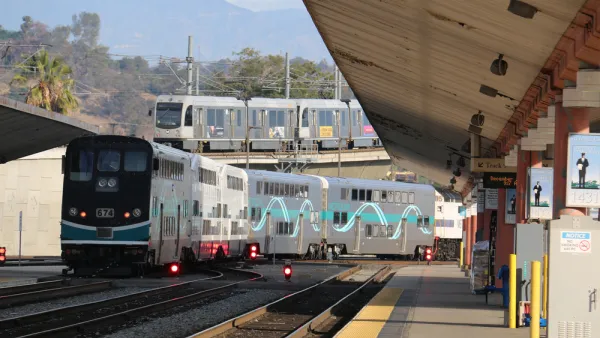
Light Rail Cannibalizing Commuter Rail in Southern California
New transit lines are usually intended to provide an alternative to driving. But what happens when a new train line provides an alternative to an older train line?
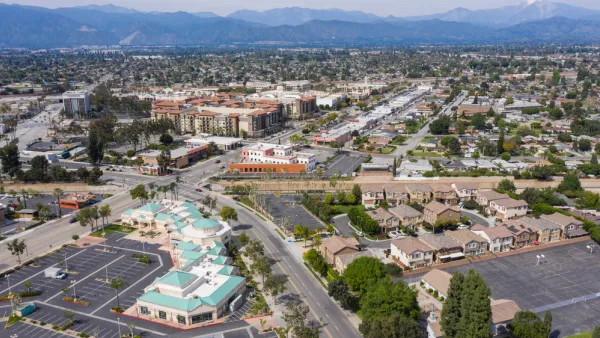
Southern California Officials Slow to Accept Complete Streets
Proposed changes to the Los Angeles County Transportation Authority's highway program would allow local governments the flexibility to implement complete street elements with new projects. The proposition has been a surprisingly tough sell.

Planetizen Federal Action Tracker
A weekly monitor of how Trump’s orders and actions are impacting planners and planning in America.

Colorado’s Largest Data Center Could Rise Next to Homes — Without a Public Hearing
The proposed campus would consume 11 times the power of Denver International Airport; as it has across the country, opposition mounts.

US to reduce Colorado River water deliveries to Mexico
A new Colorado Treaty amendment reduces Mexico’s Colorado River water allocation by 250,000 acre feet.

'This is going to be painful:’ Virginia stares down $1.7 billion funding gap for highway maintenance
The state may address the deficit by shifting $290 million from its construction budget to maintenance projects.

Judges permit Denver to divert 77,000 acre feet from the Colorado River for reservoir expansion
Overuse and climate change have caused the Colorado River’s water levels to plummet.
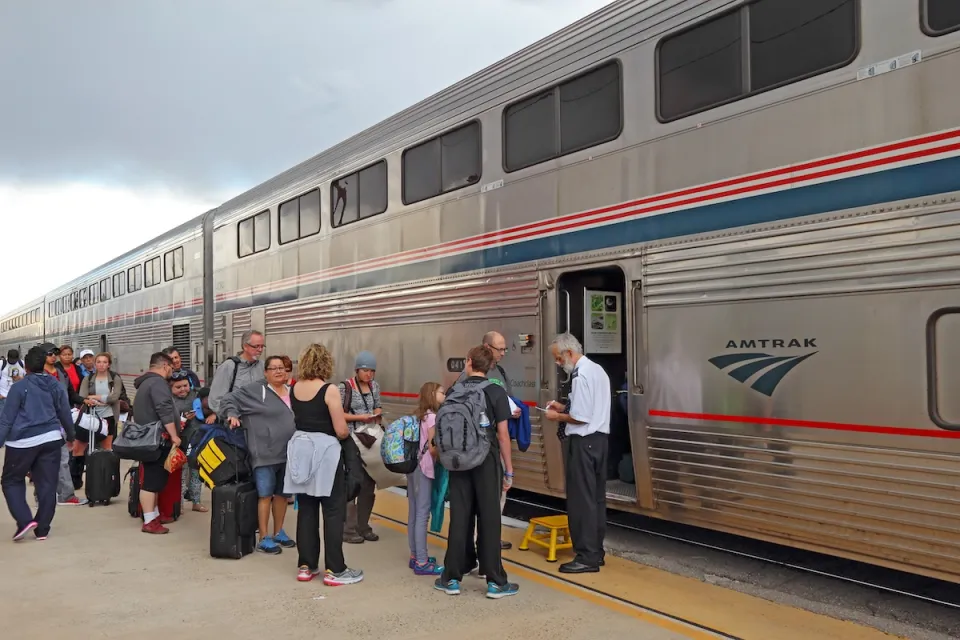
Amtrak, CN end decades-long dispute with eight-year agreement
The new operating agreement establishes an updated framework for the companies to work together, including processes to resolve disputes.

FREE Course: Walkable City 1: Why Walkability?
After describing his path towards focusing on walkability as the essence of good planning, Jeff Speck marches through his five principal reasons for making more walkable places.
Reinventing Malls: Planning Alchemy—Turning Gray Fields Into Gold
The course focuses on the opportunities and imperatives that shape reinvention of mall sites.

KFH Group Inc.
Greater Baltimore Committee
Eagle County Government
The Architects Foundation
University of Cincinnati Online
The Pocatello Development Authority
The Urban Renewal Agency of the City of Pocatello