Proposed changes to the Los Angeles County Transportation Authority's highway program would allow local governments the flexibility to implement complete street elements with new projects. The proposition has been a surprisingly tough sell.


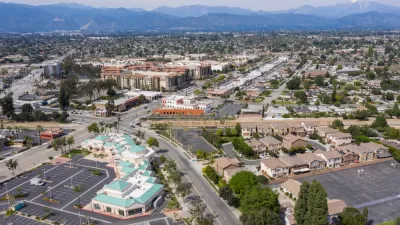
Joe Linton provides an update of the Los Angeles County Transportation Authority's (Metro) efforts to modernize its highway program to include complete streets features after encountering some resistance from the San Gabriel Valley Council of Governments.
Linton summarizes the changes sought by Metro:
Based on language voters approved in Measures R and M, the Metro Highway Program has been very strict about what features are allowed as part of “highway” projects. Note that while the title of the program is Highway, many projects are located on city streets. The Metro board is interested in allowing “highway” projects, where appropriate, to build complete streets. The proposed new project eligibility rules would allow allow cities the flexibility to incorporate multi-modal components – such as busways, bikeways, and sidewalks – but do not require they be included.
The proposed changes sparked a surprisingly contentious public hearing earlier in November. Harsh, vulgar words were exchanged, as reported by Linton in a previous article. Despite that episode, the San Gabriel Valley Council of Governments eventually decided to support that changes. Some of the officials critical of Metro at the previous hearing reversed stances. Linton provides a lot of detail on the bizarre world of transportation planning politics in the San Gabriel Valley.
In the meantime, the changes "are still being discussed by the various Councils of Governments throughout L.A. County, and are expected to come to a vote at the Metro board early next year," according to Linton.
FULL STORY: San Gabriel Valley Council of Governments Votes to Support Metro Highway Program Flexibility

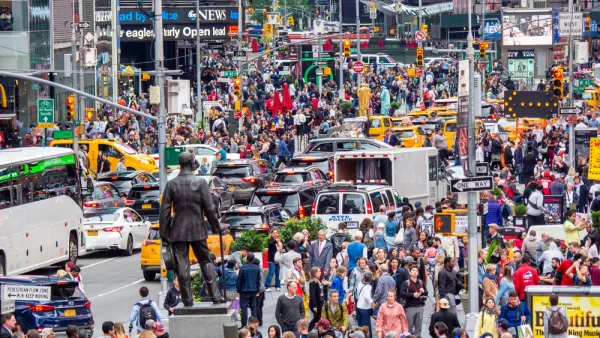
Redesigning Streets for Livability: A Global View
An excerpt from the introduction of the recent book, “Streets For All: 50 Strategies for Shaping Resilient Cities,” edited by Vinayak Bharne and Shyam Khandekar.
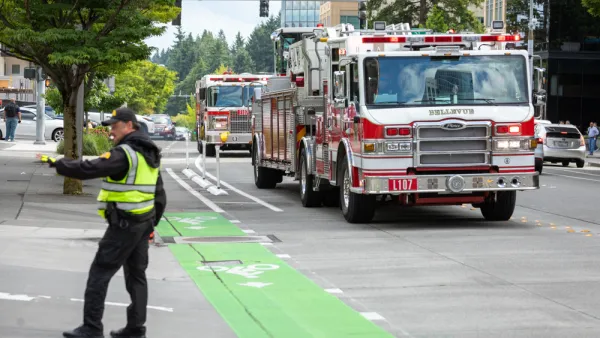
Washington State Moving Ahead With Complete Streets
Move Ahead Washington, a law approved by the Washington State Legislature earlier this year, is expected to have a huge effect on transportation planning and engineering on state-controlled roads.

L.A. Metro Board Approves Changes to Highway Program
The updated language clarifies that projects can include Complete Streets features, items supported by the county's voters through Measure M.

Planetizen Federal Action Tracker
A weekly monitor of how Trump’s orders and actions are impacting planners and planning in America.

The state-sanctioned urbicide of Austin
People don’t kill cities. Freeways do.

US to reduce Colorado River water deliveries to Mexico
A new Colorado Treaty amendment reduces Mexico’s Colorado River water allocation by 250,000 acre feet.

5 New England states march closer to 800 megawatt wind energy project
Securing federal approval for the project may be complicated under the Trump administration, which has historically been hostile towards domestic wind power.

Baltimore to break ground on $50 million Transit Priority Project
The project will bring faster bus trips, safer streets and better bike connections to Baltimore.

Airbnb launches $250 million 'last-dollar financing' housing accelerator, makes first investment in Austin
The company will put $6.4 million towards affordable housing development in Texas’ capital.

FREE Course: Walkable City 1: Why Walkability?
After describing his path towards focusing on walkability as the essence of good planning, Jeff Speck marches through his five principal reasons for making more walkable places.
Reinventing Malls: Planning Alchemy—Turning Gray Fields Into Gold
The course focuses on the opportunities and imperatives that shape reinvention of mall sites.

Eagle County Government
Harvard University Graduate School of Design
Nashville Planning Department
The Architects Foundation
University of Cincinnati Online
The Pocatello Development Authority
The Urban Renewal Agency of the City of Pocatello
Journal of the American Planning Association