A New York Times op-ed calls on the city to add landfill development on Manhattan's southern shoreline, claiming it would increase affordability and protect the city from rising sea levels.


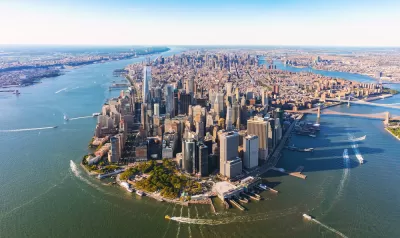
In an opinion piece in the New York Times, Jason M. Barr argues that physically expanding Manhattan Island into New York Harbor would help solve two urgent crises at once: New York City's rampant housing shortage and the threats posed by rising sea levels to the island.
Barr proposes adding 1,760 acres of landfill development to Manhattan's southern shore, which would create an area larger than the Upper West Side. Barr recommends a similar density to that neighborhood, which could mean up to 180,000 new housing units.
With demand for housing growing faster than supply, New Mannahatta, as Barr calls the proposed addition to the city, could offer "the possibility to realize the goal of adding a significant number of new units, many of which can be made affordable for low-income households."
Meanwhile, the new land would fortify the city against the effects of climate change and add a buffer that would protect other vulnerable neighborhoods with protective ecologies like wetlands.
On the economic side, Barr believes the construction of the new neighborhood would "pay for itself through sales or long-term land leases," and envisions extended public transportation including ferries that would serve New Mannahatta's residents and visitors. For Barr, this proposal could help ensure the city's continued success by making it safer and more affordable.
FULL STORY: 1,760 Acres. That’s How Much More of Manhattan We Need.

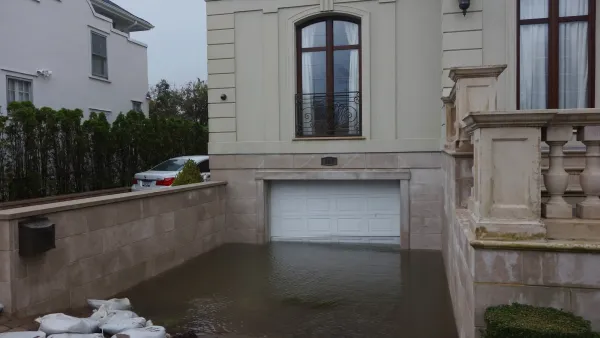
Over 500 NYC ‘Blue Zones’ at Risk of More Destructive Floods
High-risk flood zones cover roughly 20% of the city’s land.
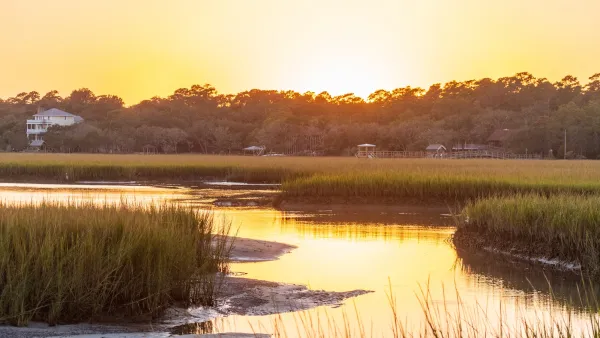
South Carolina Mapping Tool Tracks Marsh Migration From Sea Level Rise
The movement of South Carolina’s coastal salt marshes is an early harbinger of the path of future floods.
Average Manhattan Rent Topped $5,400 This Year
The borough’s vacancy rate is just aboe 2 percent.

Planetizen Federal Action Tracker
A weekly monitor of how Trump’s orders and actions are impacting planners and planning in America.

The state-sanctioned urbicide of Austin
People don’t kill cities. Freeways do.

US to reduce Colorado River water deliveries to Mexico
A new Colorado Treaty amendment reduces Mexico’s Colorado River water allocation by 250,000 acre feet.

Mamdani overhauls NYC's Vision Zero plan with 100 new policy goals
The overhaul aims to reduce traffic deaths and make streets safer for pedestrians, cyclists and drivers through lower speed limits, new safety infrastructure and more.

Amtrak not solely to blame for New Jersey commuter rail's unreliability, report finds
A new study from the Garden State Initiative found that NJ Transit’s budget grew 20% across a 4 year period, but reliability declined significantly over the same period.

EPA erases limits on planet-warming pollution from power plants
Under Monday’s plan, power plants would still have some limits on how much mercury, arsenic and other contaminants they can emit.

FREE Course: Walkable City 1: Why Walkability?
After describing his path towards focusing on walkability as the essence of good planning, Jeff Speck marches through his five principal reasons for making more walkable places.
Reinventing Malls: Planning Alchemy—Turning Gray Fields Into Gold
The course focuses on the opportunities and imperatives that shape reinvention of mall sites.

Eagle County Government
Harvard University Graduate School of Design
Nashville Planning Department
The Architects Foundation
University of Cincinnati Online
The Pocatello Development Authority
The Urban Renewal Agency of the City of Pocatello
Journal of the American Planning Association