A lawsuit brought by local lawmakers and community groups claims the plan failed to conduct a comprehensive environmental review.



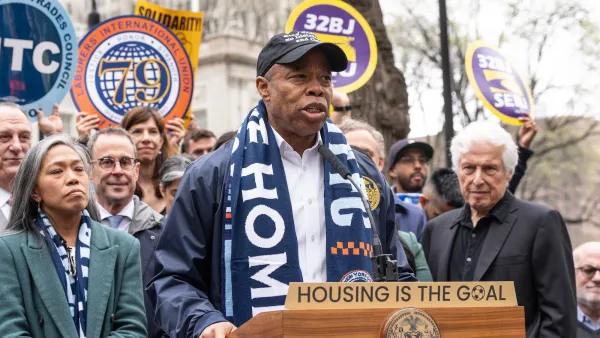
The long-debated City of Yes zoning reform plan, championed by New York City Mayor Eric Adams, is facing a legal challenge from dozens of local legislators and community groups, according to a New York Post article by Craig McCarthy, Georgett Roberts, and Peter Senzamici.
The lawsuit argues that the administration did not conduct the necessary environmental reviews for the plan, which promotes increased density and transit-oriented development ot boost the city’s housing supply. The plan aims to support the building of 80,000 new housing units over the next 15 years — a number lower than the plan’s original goal.
As the authors explain, “The pro-development City of Yes had three environmental reviews but they were conducted as if City of Yes was three separate initiatives — carbon neutrality, economic opportunity and housing opportunity.” The suit argues that separating the reviews avoided the potential negative results of one comprehensive review.
The plan is primarily opposed by lawmakers and groups from less dense neighborhoods who argue that their infrastructure may not be able to support denser development and larger buildings. “The changes were approved by the council in December on a 31-20 vote after lengthy negotiations, which led to a partially scaled-back plan.”
FULL STORY: Eric Adams’ City of Yes housing plan in crisis after dozens of pols, community groups sue to end initiative

What Actually Got Built Under Eric Adams’ ‘Pro-Housing’ Administration
The outgoing mayor claims credit for hundreds of thousands of new homes. The truth is more complicated.

NYC Council Approves Brooklyn Rezoning Plan
The Atlantic Avenue Mixed Use Plan includes infrastructure investments and could bring 4,600 new housing units to parts of Brooklyn.

San Francisco Mayor’s ‘Family Zoning’ Plan Faces Pushback, Displacement Concerns
Newly proposed legislation aims to protect long-term tenants from displacement caused by Mayor Lurie’s proposed zoning reform plan, which would allow for more housing construction in parts of the city.

The state-sanctioned urbicide of Austin
People don’t kill cities. Freeways do.

US to reduce Colorado River water deliveries to Mexico
A new Colorado Treaty amendment reduces Mexico’s Colorado River water allocation by 250,000 acre feet.

New Jersey’s second-largest city bans standalone data centers
Jersey City will continue to allow co-location facilities, such as those meant for research institutions that store their own data.

Amtrak not solely to blame for New Jersey commuter rail's unreliability, report finds
A new study from the Garden State Initiative found that NJ Transit’s budget grew 20% across a 4 year period, but reliability declined significantly over the same period.

EPA erases limits on planet-warming pollution from power plants
Under Monday’s plan, power plants would still have some limits on how much mercury, arsenic and other contaminants they can emit.

Phoenix announces new on-demand transit service, more frequent RAPID buses
Both new services will launch in October, and are part of Phoenix's Project Effective Access Solutions for Easing Congestion.

FREE Course: Walkable City 1: Why Walkability?
After describing his path towards focusing on walkability as the essence of good planning, Jeff Speck marches through his five principal reasons for making more walkable places.
Reinventing Malls: Planning Alchemy—Turning Gray Fields Into Gold
The course focuses on the opportunities and imperatives that shape reinvention of mall sites.

Eagle County Government
Harvard University Graduate School of Design
Nashville Planning Department
The Architects Foundation
University of Cincinnati Online
The Pocatello Development Authority
The Urban Renewal Agency of the City of Pocatello
Journal of the American Planning Association