With its rapid economic growth, dynamic cities, and increasingly diverse population, Texas could offer a model for the future of the United States.


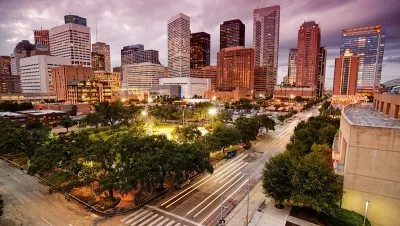
In an opinion piece for The New York Times, Steven Pedigo argues that Texas is the country's "bellwether state," offering "a glimpse into the country’s economic future and engines of growth as well as its political fault lines in the long run."
Pedigo points to the 2020 Census as well as economic and demographic data from the last two decades, which show that "Texas is urbanizing even faster than California." And as a majority-minority state, "[i]ts present brand of politics may offer clues to the future of struggles across the country between a grasping after mythology and the shifting demographics of America."
Texas, writes Pedigo, "added 4.2 million residents between 2000 and 2010, and another four million in the last decade for a growth rate of almost 40 percent — double that of the country as a whole." Of the new Texans moving to the state since 2010, "over 95 percent of them have been people of color." Close to 70 percent of Texans live in four major metropolitan areas, which are all growing at a rapid rate.
Pedigo credits the state's business-friendly climate and "limited government" with luring major corporations to its cities. "Texas is no longer just about big oil and cattle; we have one of the most diversified economies in the country."
But Pedigo sees a problem with Governor Greg Abbott's "top-down policy agenda that is backward-looking, excludes huge swaths of Texas’s citizenry and runs against the grain of many of its new stakeholders’ values." According to polls, Texans are "deeply concerned about climate change" and "appalled by the G.O.P.’s divisive agenda." What is important to future growth, says Pedigo, is preserving "[t]he Texas model of public-private cooperation with its mutual focus on growth."
Read the full story: Texas Is the Future of America

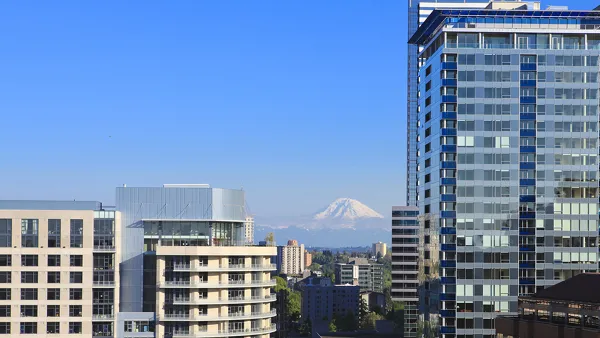
2020 Population Growth Rates for the 50 Biggest U.S. Cities
The Census Bureau released new data on May 27 that includes the first four months of the pandemic. Seattle tops the growth rate at 2.2% from July 1, 2019, to July 1, 2020, while Baltimore and San Francisco land at the bottom with -1.4%.

A Look at Houston's Demographic Future
Using the Urban Institute's Mapping America's Futures tool, the Kinder Institute overviews likely racial demographics in Texas and elsewhere by 2030.
America's Expanding Cities
Nate Berg explains why recent headlines about the rise of the country's urban population shouldn't have smart growth advocates claiming victory just yet.

Planetizen Federal Action Tracker
A weekly monitor of how Trump’s orders and actions are impacting planners and planning in America.

Amtrak, CN end decades-long dispute with eight-year agreement
The new operating agreement establishes an updated framework for the companies to work together, including processes to resolve disputes.

Colorado’s Largest Data Center Could Rise Next to Homes — Without a Public Hearing
The proposed campus would consume 11 times the power of Denver International Airport; as it has across the country, opposition mounts.

Community feedback ushers in changes to NYC’s Park Avenue redesign
New aspects of the design include a two-way bike lane and separate paths for cyclists and pedestrians.

Road safety in Charlotte, NC, a 'public health crisis'
Twelve serious or fatal crashes happen in the region every week. Since 2021, over 900 people have been killed in accidents.

Federal judge strikes down DOE orders to keep Michigan power plant open past retirement date
The decision is one of the first successful legal challenges to President Trump’s “national energy emergency” ruling, which instructs federal agencies to use emergency powers to increase fossil fuel production.

FREE Course: Walkable City 1: Why Walkability?
After describing his path towards focusing on walkability as the essence of good planning, Jeff Speck marches through his five principal reasons for making more walkable places.
Reinventing Malls: Planning Alchemy—Turning Gray Fields Into Gold
The course focuses on the opportunities and imperatives that shape reinvention of mall sites.

KFH Group Inc.
Greater Baltimore Committee
Eagle County Government
The Architects Foundation
University of Cincinnati Online
The Pocatello Development Authority
The Urban Renewal Agency of the City of Pocatello