When cars first started proliferating on American roads, it led to increased sprawl and flight from central cities. What can we do now to prevent the same problem as AVs become more widespread?


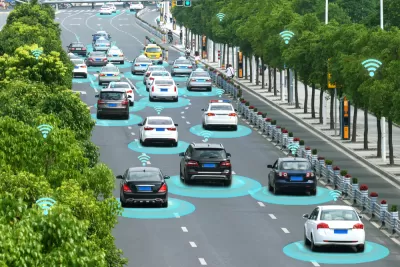
According to a new study, autonomous vehicles "unleash a second wave of suburban sprawl that makes cities inhospitable to people outside cars in new ways — unless governments adopt policies to soften their impact now," reports Kea Wilson. Such policies could, in fact, "also curb the worst impacts of manual car dependency."
When technology researcher Carlos Ignacio Gutierrez took on the question of "what the rise of robocars might mean for land use, city revenues, and the ways that people live outside their automobiles," he used historical data to evaluate what could happen as AVs gain prominence on American roads. According to Gutierrez, widespread use of autonomous vehicles, especially "if cities decide to focus on shared options — or at least very cheap ones," could drive mega-sprawl and "create flight incentives" in the same way that the proliferation of cars in the early 20th century drove many–especially white–Americans to the suburbs.
As commutes to central cities became faster and more convenient("at least until the highways started to clog"), people fled to the periphery. "They wanted a larger home, they wanted a better ambiance for their families, and the government incentivized them to get those things cheaply." Meanwhile, low-income households of color "were largely redlined out of that suburban exodus and concentrated into over-policed and under-resourced neighborhoods."
Gutierrez recommends ways that cities can get ahead of this second looming 'carpocalypse.'
Getting rid of parking minimums now and allowing developers to redevelop existing parking, for instance, is a smart way to prepare for a future where a small number of driverless vehicles circle the city and only stop to pick up their passengers now and then. Implementing congestion charges, cordon tolls, and other pricing schemes that disincentivize driving between cities and suburbs can help, too — especially if the autono-bus gets a break on the fees.
"[E]ven good old-fashioned zoning reform" could increase the supply of '15-minute neighborhoods' and "encourage residents to stay put in dense areas, rather than zipping away in their driverless vehicles to parts unknown." These simple strategies, according to Gutierrez, should be implemented now, before robocars take over the road. If cities take steps to build out "strong public transportation infrastructure," says Gutierrez, society could "benefit enormously" from autonomous vehicles.
FULL STORY: What Would Our Cities Look Like If AVs Ruled the Roads?

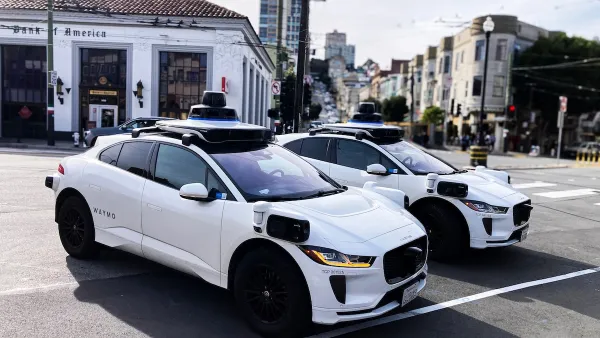
How Autonomous Cars Can Induce Sprawl and Sabotage Climate Goals
Robotaxis can lead to longer, more frequent trips and are projected to increase VMT by as much as 83 percent.
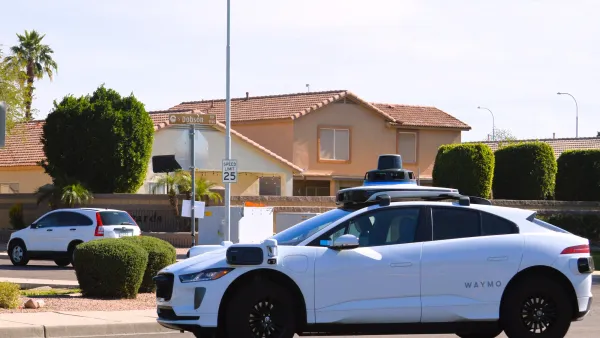
Uber and Waymo part ways in Phoenix
The companies ended a three-year pilot program, with Waymo saying it plans to keep its Phoenix robotaxi fleet available through its own app.
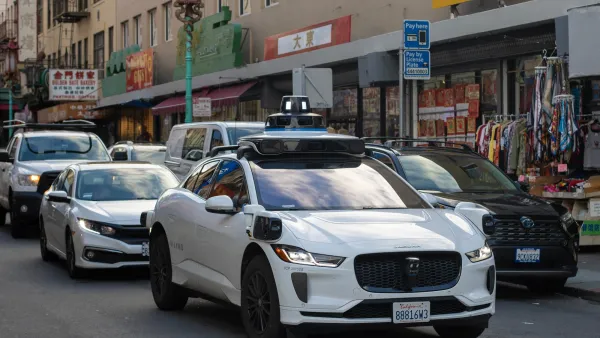
Luxury condo owners fight robotaxis in the most San Francisco conflict ever
Waymos parking in a condo building's garage are causing headaches as they get stuck and block other cars from exiting.

Planetizen Federal Action Tracker
A weekly monitor of how Trump’s orders and actions are impacting planners and planning in America.

The state-sanctioned urbicide of Austin
People don’t kill cities. Freeways do.

US to reduce Colorado River water deliveries to Mexico
A new Colorado Treaty amendment reduces Mexico’s Colorado River water allocation by 250,000 acre feet.

5 New England states march closer to 800 megawatt wind energy project
Securing federal approval for the project may be complicated under the Trump administration, which has historically been hostile towards domestic wind power.

Baltimore to break ground on $50 million Transit Priority Project
The project will bring faster bus trips, safer streets and better bike connections to Baltimore.

Airbnb launches $250 million 'last-dollar financing' housing accelerator, makes first investment in Austin
The company will put $6.4 million towards affordable housing development in Texas’ capital.

FREE Course: Walkable City 1: Why Walkability?
After describing his path towards focusing on walkability as the essence of good planning, Jeff Speck marches through his five principal reasons for making more walkable places.
Reinventing Malls: Planning Alchemy—Turning Gray Fields Into Gold
The course focuses on the opportunities and imperatives that shape reinvention of mall sites.

Eagle County Government
Harvard University Graduate School of Design
Nashville Planning Department
The Architects Foundation
University of Cincinnati Online
The Pocatello Development Authority
The Urban Renewal Agency of the City of Pocatello
Journal of the American Planning Association