Long, onerous environmental review processes focused on public input can cause major delays and cost increases for infrastructure and transportation projects.


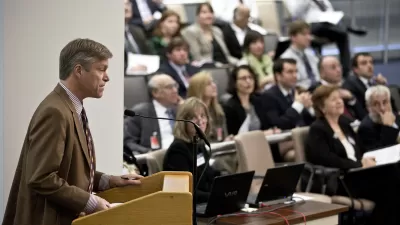
Pointing to New York City's congestion pricing project as an example of a proposal delayed by community engagement, Jake Blumgart describes the pitfalls of drawn-out environmental review processes that can delay or kill infrastructure projects. "Everything from individual housing projects to bike lanes to major new infrastructure like subway lines is subject to rigorous community engagement programs."
"You might say it's good to be careful about public policies," says Katherine Levine Einstein, professor of political science at Boston University. "The problem is when we delay things, we make them super expensive and it has real environmental consequences." Einstein and her colleagues "conducted research around participation in community meetings about housing and zoning" in the Boston metropolitan area. They found that participants "were more likely to be white, even in areas with small white populations, and they were even more likely to be older than the average resident and far more likely to be homeowners." According to Einstein, "meetings about infrastructure and transportation projects are likely to have similarly distorted results as those about housing and zoning."
To Einstein, outdated environmental review requirements "don’t take into account the overwhelming urgency of addressing climate change and the huge role that a car-centric development and policy have played in warming the planet." Designed to evaluate the impacts of projects to protect the environment and public health, "California’s Environmental Quality Act," for example, "has been weaponized by white homeowners to delay neighboring development to death."
While "innovations in public outreach during the pandemic may have reshaped some of the inequities of public engagement," according to Einstein's research, "Zoom and webinars have not changed who attends public meetings, at least in the case of Boston metropolitan area zoning meetings." Meanwhile, due to the 16-month environmental review process for New York's congestion pricing, badly needed funds for transit upgrades won't start flowing until 2023.
"There is not an easy answer to the question of how to balance community input against the cost of delay, especially as the need to fight climate change becomes ever more imperative." Einstein recommends reforms that could make public meetings more efficient without sacrificing community input, "such as focus groups for only renters or transit-dependent people" and increased accountability for local politicians. But Einstein isn't optimistic. "[F]undamentally, by their structure, public meetings will always attract an unrepresentative group of people with intense preferences."
Read the full story: Cities Struggle With the Dark Side of Community Engagement

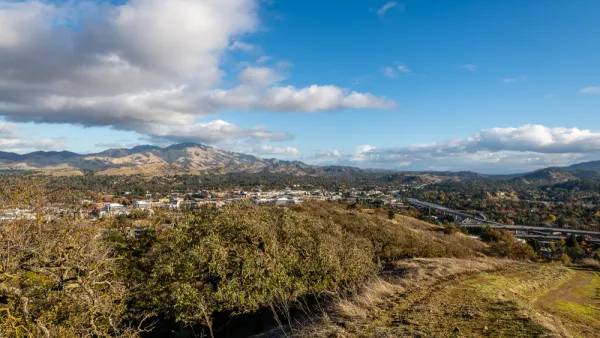
Infamous 315-Unit Lafayette Housing Development Finally Approved
In a dramatic sign of how far zoning reform has come in the state of California, CEQA wasn’t enough to stop a 315-unit apartment development first proposed 12 years ago in the city of Lafayette.
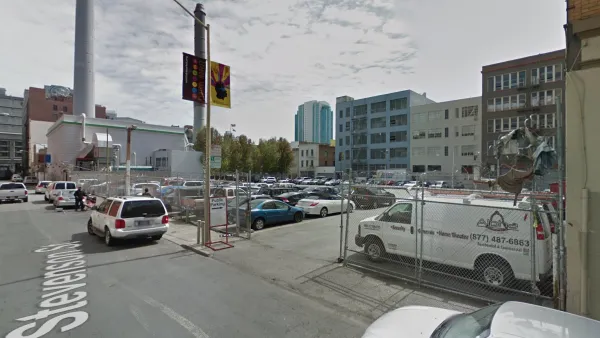
Court Ruling a Setback for California’s ‘Builder’s Remedy’
A state court has ruled in favor of the San Francisco Board of Supervisors’ efforts to block a development project despite the state’s efforts to intervene.
Report: CEQA Lawsuits Challenge Almost Half of All Housing Development in California
A new report details the reach of California’s controversial environmental regulation, and warns of more consequences to come.

Planetizen Federal Action Tracker
A weekly monitor of how Trump’s orders and actions are impacting planners and planning in America.

Amtrak, CN end decades-long dispute with eight-year agreement
The new operating agreement establishes an updated framework for the companies to work together, including processes to resolve disputes.

Judges permit Denver to divert 77,000 acre feet from the Colorado River for reservoir expansion
Overuse and climate change have caused the Colorado River’s water levels to plummet.

Alabama scores up to $2.5 billion federal loan for largest infrastructure project in state’s history
The Mobile River Bridge and Bayway Project aims to ease congestion at Alabama’s worst bottleneck.

Trump is considering data centers on 6 states' public land — some state officials say they had no idea
If the administration approves the proposed projects, data center and data center-related developments will cover 17,600 acres of public land.

Despite court ruling, Trump is keeping nearly all wind projects in the US on hold
At least 110 wind energy projects have not heard from the government since a federal judge ruled that the Trump administration's freeze on wind turbine clearances was likely illegal.

FREE Course: Walkable City 1: Why Walkability?
After describing his path towards focusing on walkability as the essence of good planning, Jeff Speck marches through his five principal reasons for making more walkable places.
Reinventing Malls: Planning Alchemy—Turning Gray Fields Into Gold
The course focuses on the opportunities and imperatives that shape reinvention of mall sites.

KFH Group Inc.
Greater Baltimore Committee
Eagle County Government
The Architects Foundation
University of Cincinnati Online
The Pocatello Development Authority
The Urban Renewal Agency of the City of Pocatello