A debate over one Queens 'open street' project illustrates the challenges of maintaining open streets.


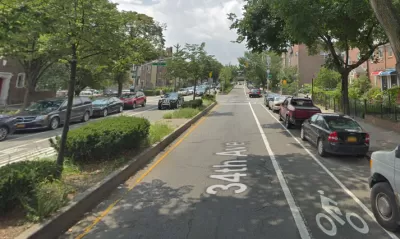
Each day at 8 a.m., New York's 34th Avenue becomes off-limit to cars (with some exceptions). As Winnie Hu details in the New York Times, this 26-blocks stretch anchors a network of dozens of miles of open streets across the city that was created in response to the outbreak and provides a tantalizing glimpse of a future of traffic-free streets."
But "a push to make 34th Avenue into a 'linear park,' where cars would be permanently restricted, has provoked a backlash from some residents and drivers over what they see as an experiment gone too far," causing gridlock and making it "harder to find parking and get deliveries and services in a neighborhood where many depend on cars." A resident group called 34 Compromise seeks to scale back the open street program, in part by reducing the hours.
In New York City, "[t]he streets make up about 27 percent of the city’s total land area." According to urban planner Mike Lydon, "[p]rogramming them so they are not just mobility corridors is absolutely a lesson of the pandemic" and should remain at the heart of planning policy. 34th Avenue now plays host to social events, picnics, and performances that could continue to connect neighbors well beyond the pandemic. "[T]he battle over 34th Avenue goes beyond whether cars or people should have priority to a debate over how an open street adds to — or detracts from — a neighborhood’s rhythms."
FULL STORY: The Pandemic Gave New York City ‘Open Streets.’ Will They Survive?

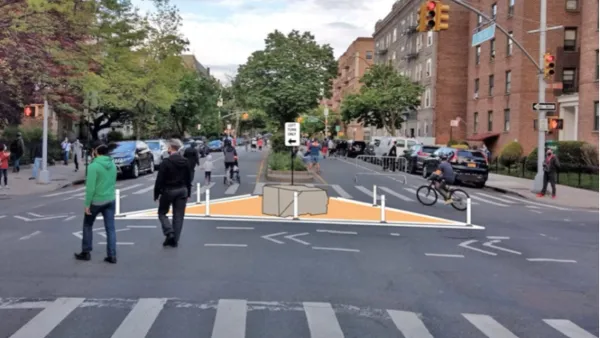
More Evidence That Open Streets Improve Safety
An analysis of New York's 34th Avenue shows substantial reductions in crashes and injuries, strengthening the body of evidence supporting car-free streets.
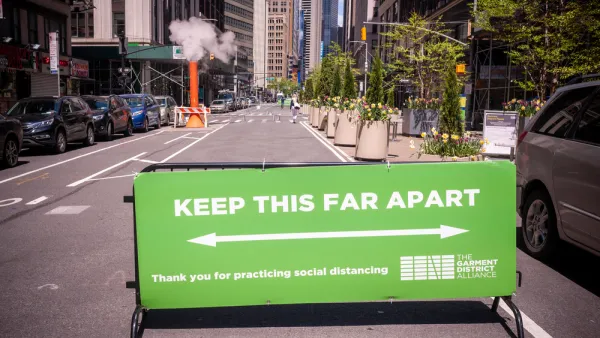
How to Maintain Open Streets After the Pandemic
With more people getting back in their cars, can pedestrian-oriented open streets survive?
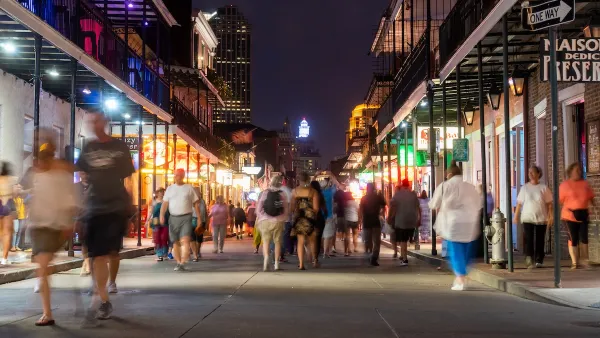
Bourbon Street Could Be a Model for Pedestrian Spaces
The conversation around pedestrianizing public streets isn’t new — think Times Square. Could one of America’s oldest streets lead the way in a revival of the pedestrian mall?

The state-sanctioned urbicide of Austin
People don’t kill cities. Freeways do.

US to reduce Colorado River water deliveries to Mexico
A new Colorado Treaty amendment reduces Mexico’s Colorado River water allocation by 250,000 acre feet.

New Jersey’s second-largest city bans standalone data centers
Jersey City will continue to allow co-location facilities, such as those meant for research institutions that store their own data.

Amtrak not solely to blame for New Jersey commuter rail's unreliability, report finds
A new study from the Garden State Initiative found that NJ Transit’s budget grew 20% across a 4 year period, but reliability declined significantly over the same period.

EPA erases limits on planet-warming pollution from power plants
Under Monday’s plan, power plants would still have some limits on how much mercury, arsenic and other contaminants they can emit.

Phoenix announces new on-demand transit service, more frequent RAPID buses
Both new services will launch in October, and are part of Phoenix's Project Effective Access Solutions for Easing Congestion.

FREE Course: Walkable City 1: Why Walkability?
After describing his path towards focusing on walkability as the essence of good planning, Jeff Speck marches through his five principal reasons for making more walkable places.
Reinventing Malls: Planning Alchemy—Turning Gray Fields Into Gold
The course focuses on the opportunities and imperatives that shape reinvention of mall sites.

Eagle County Government
Harvard University Graduate School of Design
Nashville Planning Department
The Architects Foundation
University of Cincinnati Online
The Pocatello Development Authority
The Urban Renewal Agency of the City of Pocatello
Journal of the American Planning Association