The city's roadways were built to prioritize fast-moving traffic, not safety. With a new Vision Zero plan, that could change.


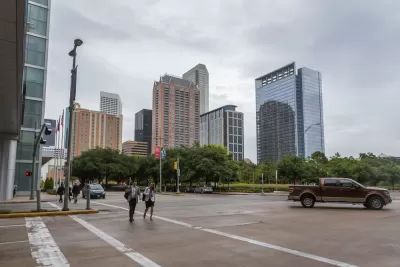
Why does Houston have so many pedestrian deaths? "[A]ccording to Houston’s chief transportation planner, David Fields, it’s because Houston roadways weren’t built primarily to protect pedestrians," reports Kirkland An. "'Historically, Houston has built its transportation to move people fast,' Fields said. 'And what that means is, we have not prioritized safety.'" Based on data from the city, "60% of traffic deaths and serious injuries occur on only 6% of its roads."
"Last year, Houston Mayor Sylvester Turner announced a Vision Zero plan: to reduce all traffic deaths—including pedestrian deaths—to zero by 2030," joining over 40 other cities that have taken a similar Vision Zero pledge. The plan "includes a citywide campaign on street safety, designing streets to support safer speeds and constructing sidewalks and bicycle facilities." In addition to speed limits and new safety infrastructure, "[t]he city also considers planning elements like 'corner radius, the width of the street, the width of each lane, and where you put parking,'" Fields told the Houston Chronicle.
Like in other cities around the country, "[t]hose affected [in Houston] were more likely to be part of low-income and minority communities." According to Fields, "[t]his tells us we have not invested equitably in safe transportation across the city." While the Vision Zero plan may seem ambitious for such a car-centric city, he says, "every life saved on the path to zero is valuable."
Read the full story: Why are Houston's roads so dangerous and unwalkable? We prioritized driving fast.

Pedestrian Deaths Spike in King County Cities
Eight cities in Washington’s King County saw sharp increases in traffic fatalities, signaling a need for more robust road safety and traffic calming policies.
Banning Right Turns on Red Just One Step Toward Vision Zero
Experts caution that blanket bans on right turns on red make only a slight contribution to reducing fatal crashes, and other interventions are needed to bring down traffic fatalities.
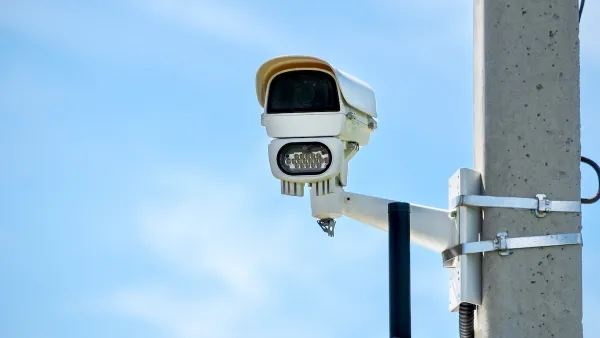
Philly Speed Camera Program Cuts Fatalities in Half
Excessive speeding along dangerous segments of Roosevelt Boulevard dropped by 90 percent after the city installed automated enforcement cameras.

Planetizen Federal Action Tracker
A weekly monitor of how Trump’s orders and actions are impacting planners and planning in America.

Amtrak, CN end decades-long dispute with eight-year agreement
The new operating agreement establishes an updated framework for the companies to work together, including processes to resolve disputes.
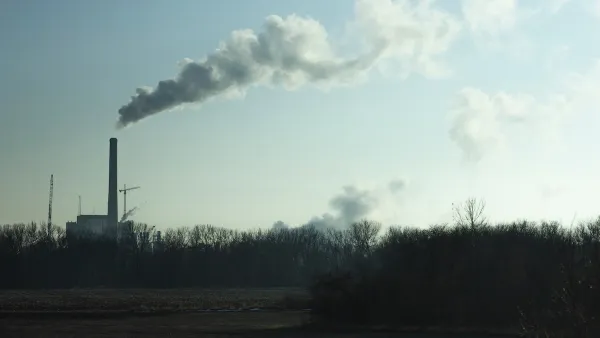
Nation's most wind-powered state turns to coal as data centers increase energy demand
For the first time in decades, Iowa has increased its generation of coal power.

Alabama scores up to $2.5 billion federal loan for largest infrastructure project in state’s history
The Mobile River Bridge and Bayway Project aims to ease congestion at Alabama’s worst bottleneck.

Trump is considering data centers on 6 states' public land — some state officials say they had no idea
If the administration approves the proposed projects, data center and data center-related developments will cover 17,600 acres of public land.

Despite court ruling, Trump is keeping nearly all wind projects in the US on hold
At least 110 wind energy projects have not heard from the government since a federal judge ruled that the Trump administration's freeze on wind turbine clearances was likely illegal.

FREE Course: Walkable City 1: Why Walkability?
After describing his path towards focusing on walkability as the essence of good planning, Jeff Speck marches through his five principal reasons for making more walkable places.
Reinventing Malls: Planning Alchemy—Turning Gray Fields Into Gold
The course focuses on the opportunities and imperatives that shape reinvention of mall sites.

KFH Group Inc.
Greater Baltimore Committee
Eagle County Government
The Architects Foundation
University of Cincinnati Online
The Pocatello Development Authority
The Urban Renewal Agency of the City of Pocatello