Eight cities in Washington’s King County saw sharp increases in traffic fatalities, signaling a need for more robust road safety and traffic calming policies.



Pedestrian fatalities in eight cities in South King County, Washington have almost tripled in the last decade, reports Andrew Engelson for The Urbanist.
According to Engelson, “The trend has been on the rise consistently over ten years, hitting a peak of 97 in 2019 and dipping slightly to 70 during the pandemic year of 2020.” The pattern mirrors statewide statistics.
Some cities are using federal traffic safety grants to analyze dangerous streets and implement enforcement, education, and infrastructural fixes. Auburn revised its traffic calming plan to “take a more robust approach to reducing speeds at intersections and increasing safety for pedestrians and cyclists,” while Tukwila issued a plan focused on reducing driving speeds near schools and in residential areas.
But “the more difficult work of redesigning streets, roads, and highways for pedestrian safety is an expensive project that falls to an array of jurisdictions,” Engelson explains, causing bigger, more expensive projects to fall by the wayside. For example, “One especially dangerous road in South King County, according to Sara Wood, King County’s coordinator for the Washington Traffic Safety commission, is State Highway 99,” a hotspot of crashes involving pedestrians. But improvements such as adding stoplights and crosswalks to stretches of the highway “sometimes fall down the priority scale because of cost.”
Read the full story: South King County Sees Alarming Jump in Pedestrian Fatalities

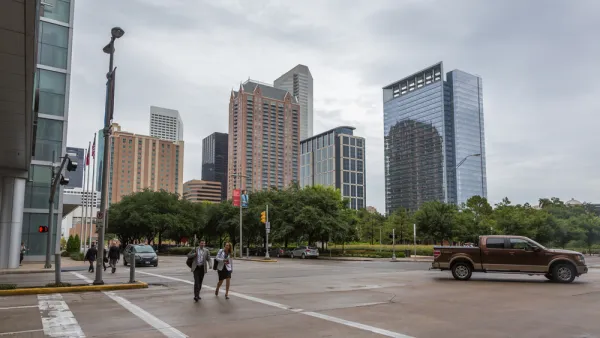
Houston's Pedestrian Death Problem, Explained
The city's roadways were built to prioritize fast-moving traffic, not safety. With a new Vision Zero plan, that could change.
Banning Right Turns on Red Just One Step Toward Vision Zero
Experts caution that blanket bans on right turns on red make only a slight contribution to reducing fatal crashes, and other interventions are needed to bring down traffic fatalities.
Philly Speed Camera Program Cuts Fatalities in Half
Excessive speeding along dangerous segments of Roosevelt Boulevard dropped by 90 percent after the city installed automated enforcement cameras.

Planetizen Federal Action Tracker
A weekly monitor of how Trump’s orders and actions are impacting planners and planning in America.

The state-sanctioned urbicide of Austin
People don’t kill cities. Freeways do.
Colorado’s Largest Data Center Could Rise Next to Homes — Without a Public Hearing
The proposed campus would consume 11 times the power of Denver International Airport; as it has across the country, opposition mounts.

Judges permit Denver to divert 77,000 acre feet from the Colorado River for reservoir expansion
Overuse and climate change have caused the Colorado River’s water levels to plummet.
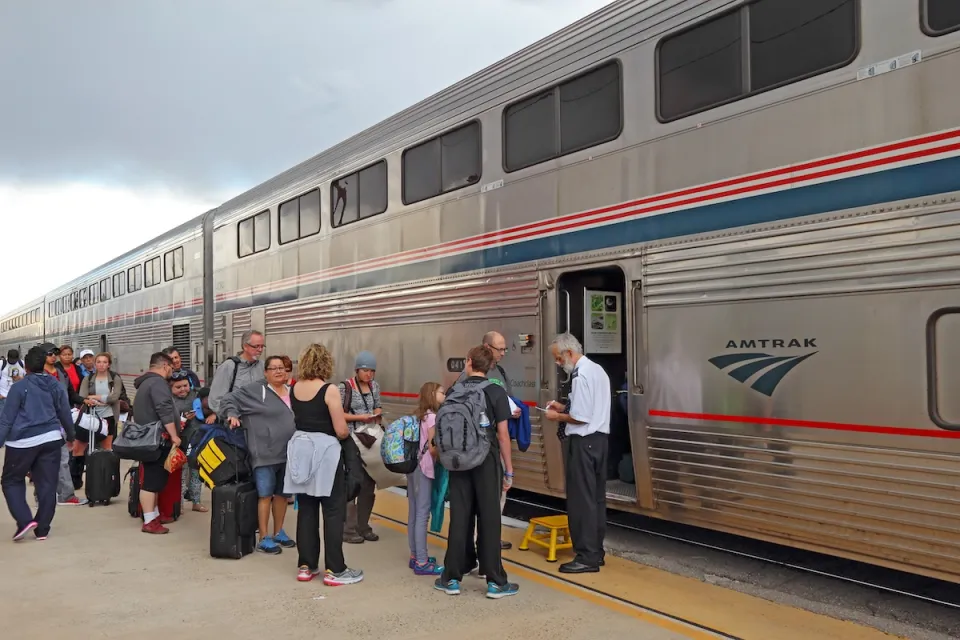
Amtrak, CN end decades-long dispute with eight-year agreement
The new operating agreement establishes an updated framework for the companies to work together, including processes to resolve disputes.
Raised interest rates may kill financially vulnerable construction projects
The chief economist at ConstructConnect warns that if construction project owners are negatively impacted by the raised rates, it could result in delayed payments to contractors.

FREE Course: Walkable City 1: Why Walkability?
After describing his path towards focusing on walkability as the essence of good planning, Jeff Speck marches through his five principal reasons for making more walkable places.
Reinventing Malls: Planning Alchemy—Turning Gray Fields Into Gold
The course focuses on the opportunities and imperatives that shape reinvention of mall sites.

KFH Group Inc.
Greater Baltimore Committee
Eagle County Government
The Architects Foundation
University of Cincinnati Online
The Pocatello Development Authority
The Urban Renewal Agency of the City of Pocatello