Larger vehicles are proving deadlier for pedestrians–and are more popular than ever.


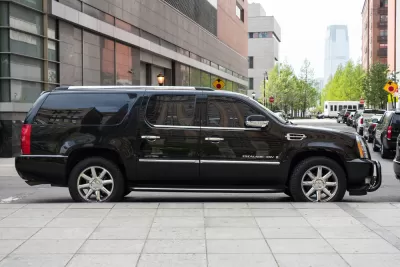
"According to a recent study published in Economics of Transportation, as the number of SUVs on the street tripled from 2000 to 2019, pedestrian deaths surged nationwide by 30 percent," reports Christopher Robbins. "In 2020, SUVs and 'crossovers' accounted for 50 percent of automobile purchases; 20 percent of new vehicles bought were pickup trucks." Justin Tyndall, the study's author, wrote in a tweet: "In the paper, I use the value of a statistical life and recommend a schedule of taxes to address the external safety risks imposed by large vehicles in the US. The external cost of driving a light truck rather than a car on pedestrian death risk alone is ~$100 per year."
Larger vehicles "are deadlier for pedestrians because they weigh more and have poor visibility," Robbins writes. "According to the Insurance Institute for Highway Safety, drivers behind the wheel of these heavier vehicles are two to three times more likely to kill a pedestrian in a collision."
Justin Tyndall, the study's author, says "[g]iven strict federal regulation of vehicle-safety standards, it is perhaps surprising that there is limited legislation that restricts the overall size and body type of vehicles with the intent of improving pedestrian safety."
FULL STORY: Study: America’s SUV Spree Spurred Pedestrian-Death Surge

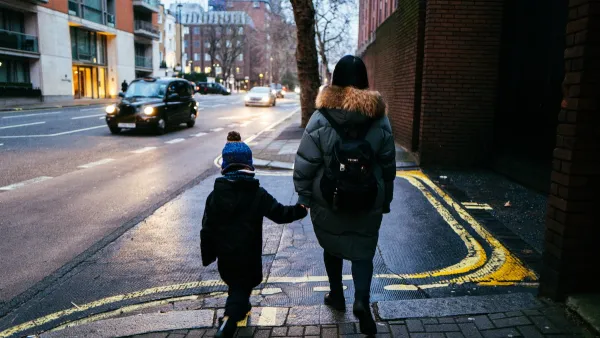
Study: Large SUVs Double Risk of Death for Children Under 10
New research from the United Kingdom reveals the higher risk of larger vehicles for pedestrians and cyclists.
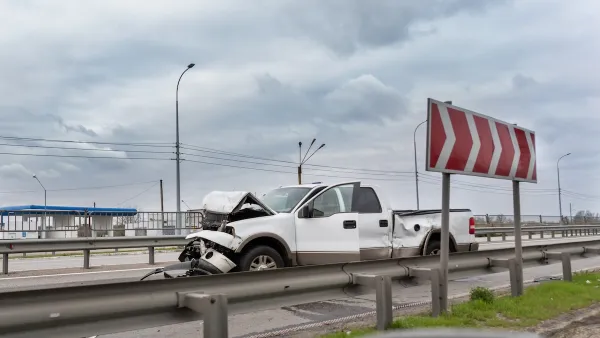
Proposed NHTSA Rule Takes Aim at Dangerously Large Trucks and SUVs
Nearly half of pedestrians who died after being hit by the front of a vehicle were struck by SUVs or trucks.
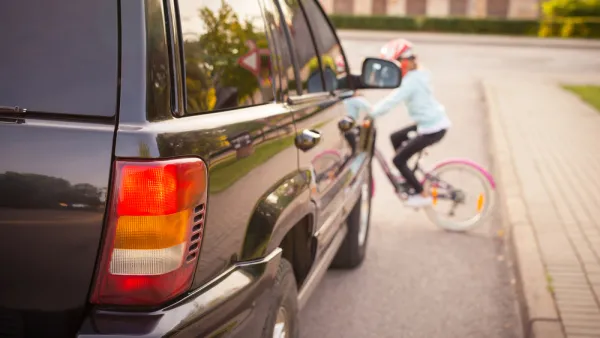
Congress Introduces Bill to Limit Size of SUVs and Trucks
Lawmakers want the federal government to set standards for vehicle height and visibility to combat the sharp rise in pedestrian deaths over the past decade.

The state-sanctioned urbicide of Austin
People don’t kill cities. Freeways do.

US to reduce Colorado River water deliveries to Mexico
A new Colorado Treaty amendment reduces Mexico’s Colorado River water allocation by 250,000 acre feet.

New Jersey’s second-largest city bans standalone data centers
Jersey City will continue to allow co-location facilities, such as those meant for research institutions that store their own data.

Amtrak not solely to blame for New Jersey commuter rail's unreliability, report finds
A new study from the Garden State Initiative found that NJ Transit’s budget grew 20% across a 4 year period, but reliability declined significantly over the same period.

EPA erases limits on planet-warming pollution from power plants
Under Monday’s plan, power plants would still have some limits on how much mercury, arsenic and other contaminants they can emit.

Phoenix announces new on-demand transit service, more frequent RAPID buses
Both new services will launch in October, and are part of Phoenix's Project Effective Access Solutions for Easing Congestion.

FREE Course: Walkable City 1: Why Walkability?
After describing his path towards focusing on walkability as the essence of good planning, Jeff Speck marches through his five principal reasons for making more walkable places.
Reinventing Malls: Planning Alchemy—Turning Gray Fields Into Gold
The course focuses on the opportunities and imperatives that shape reinvention of mall sites.

Eagle County Government
Harvard University Graduate School of Design
Nashville Planning Department
The Architects Foundation
University of Cincinnati Online
The Pocatello Development Authority
The Urban Renewal Agency of the City of Pocatello
Journal of the American Planning Association