The Census Bureau released new data on May 27 that includes the first four months of the pandemic. Seattle tops the growth rate at 2.2% from July 1, 2019, to July 1, 2020, while Baltimore and San Francisco land at the bottom with -1.4%.


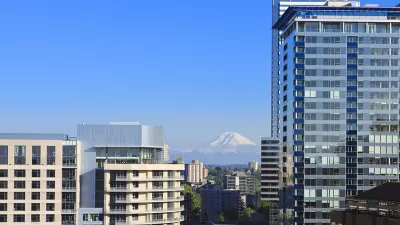
Gene Balk, The Seattle Times' FYI Guy, delved into the excel spreadsheets accessible in the Census Bureau's May 27 release, "New Vintage 2020 Population Estimates Available for Cities and Towns..." His column includes two charts: the five fastest-growing cities from July 1, 2019, to July 1, 2020, and the five cities that had the highest rates of population loss. Fifteen of the fifty largest cities (30%) saw their populations decline during this time period.
Throughout the pandemic, we’ve been reading stories about people fleeing big cities for the suburbs, smaller towns, and rural areas. And, of course, here in Seattle, a lot of folks have talked about our city dying.
Yet the Emerald City outpaced its sunbelt counterparts. "Fort Worth, Texas, ranks No. 2, followed by Mesa, Arizona; Austin; and Tampa." Even more remarkable, Balk notes that Seattle's growth rate was even higher than the preceding year, 2018 to 2019, and also the fastest-growing city of the past decade.
Population losses
California dominates the bottom five, with San Francisco (-1.4%), San Jose (-1.3%) and Long Beach (-0.8%). Los Angeles was also among the 15 large cities that lost population (-0.3%). However, Sacramento, Oakland, Fresno, and San Diego eked out small gains.
Note that more recent, year-end 2020 population estimates are available from the California Department of Finance (posted here).
Biggest numerical losers
After Baltimore, San Francisco, and San Jose, New York City saw the highest rate of population loss (-0.8%), seeing a decrease of almost 90,000 people.
Wendell Cox also reported on the new census data, making these observations on the Big Apple for New Geography:
With 8,253,000 residents in 2020, the city of New York had its lowest annual reported population since 2010. Its 90,000 loss in 2019-2020 was the greatest sustained during the decade, while its gain over the entire decade was only 61,000. According to the Census Bureau estimates, New York’s population had peaked at 8,469,000 in 2016 and fallen by more than 200,000 over the past four years.
Chicago saw the second greatest loss, almost 14,000 people (-0.5%). It remains the third most populous city with almost 2.68 million, after Los Angeles with 3.97 million.
Tips on the data
"The figures published May 27 by the Census Bureau are part of the agency’s annual population estimates, and are not from last year’s official every-decade population count," notes John Egan at the end of his report on the data and how it relates to America's second-fastest-growing large city for CultureMap Fort Worth. He adds:
Meanwhile, the populations of Dallas and Houston barely budged from 2019 to 2020. Each city saw its population grow by less than 1 percent, with Dallas’ population inching up by just 74 people and Houston’s by only 400. On July 1, 2020, Dallas’ population was 1,343,266 and Houston’s was 2,316,120 [fourth largest city after Chicago], according to the Census Bureau estimates.
Balk of The Seattle Times notes that "[t]he Census Bureau data doesn’t include any of the components of population change."
In other words, we can’t see how much of Seattle’s growth was due to in-migration vs. out-migration, and we don’t know how many moved to the city from within Washington, from other states, or from other countries. The data also doesn’t show “natural growth” numbers — births vs. deaths.
That makes it a little tricky to understand how Seattle bucked the trend and had a healthy growth rate during the pandemic — or, to be specific, through the early months of the pandemic. If there was a turnaround in Seattle’s population growth after July 1, this data wouldn’t capture it.
Speaking of the pandemic
It can't go unsaid that Seattle was the original epicenter of the pandemic before it shifted to the New York metropolitan area. Unlike New York, In Seattle, the city, King County, and the state government were credited with handling the health emergency well from the onset.
Adding to the pandemic enigma of Seattle's growth spurt, Balk notes that the fastest growing city in Washington last year was the Seattle suburb of Kirkland (2.6%), the site of the first deadly coronavirus cluster in the United States.
More on Seattle from Gene Balk in Planetizen:
- Office Demand in Seattle Suddenly Back and Bigger Than Ever, May 10, 2021
- Seattle Leads the Nation in Reducing Car Ownership, November 4, 2019
- Where Demographic Trends Tilt More White in Seattle, September 20, 2019
- A Little Baby Boom in Seattle, April 16, 2019
- New Levels of Car Dependence Follow Seattle's Growth, August 10, 2017
- Waking Up to Seattle's New Density, February 9, 2016
FULL STORY: Surprise! Seattle was the fastest-growing big U.S. city in 2020

Beware of Energy Rankings for Cities
In a special "Energy for Tomorrow" report, The New York Times looks at "clean city rankings" of energy efficiency and land use. But ranking cities is no easy task—"winners on one list may appears as sinners on another."
Austin Scores Highest on Pandemic Recovery; Bay Area and Baltimore Lowest
The Bay Area Council and CBRE created an economic tracker to measure how well the nation's 25 largest metropolitan areas have recovered from the public health restrictions imposed on their regions at the onset of the pandemic.

Where Millennials are Moving To and Leaving From
Apartment List has published research showing the top destination cities for those 19 to 35 years of age based on ten years of census data from 2005-2010. Among the top 10 destinations, only three were on East and West coasts.

The state-sanctioned urbicide of Austin
People don’t kill cities. Freeways do.

US to reduce Colorado River water deliveries to Mexico
A new Colorado Treaty amendment reduces Mexico’s Colorado River water allocation by 250,000 acre feet.

New Jersey’s second-largest city bans standalone data centers
Jersey City will continue to allow co-location facilities, such as those meant for research institutions that store their own data.

Amtrak not solely to blame for New Jersey commuter rail's unreliability, report finds
A new study from the Garden State Initiative found that NJ Transit’s budget grew 20% across a 4 year period, but reliability declined significantly over the same period.

EPA erases limits on planet-warming pollution from power plants
Under Monday’s plan, power plants would still have some limits on how much mercury, arsenic and other contaminants they can emit.

Phoenix announces new on-demand transit service, more frequent RAPID buses
Both new services will launch in October, and are part of Phoenix's Project Effective Access Solutions for Easing Congestion.

FREE Course: Walkable City 1: Why Walkability?
After describing his path towards focusing on walkability as the essence of good planning, Jeff Speck marches through his five principal reasons for making more walkable places.
Reinventing Malls: Planning Alchemy—Turning Gray Fields Into Gold
The course focuses on the opportunities and imperatives that shape reinvention of mall sites.

Eagle County Government
Harvard University Graduate School of Design
Nashville Planning Department
The Architects Foundation
University of Cincinnati Online
The Pocatello Development Authority
The Urban Renewal Agency of the City of Pocatello
Journal of the American Planning Association