Seattle has achieved unparalleled success in allowing residents the option to choose not to own a car.


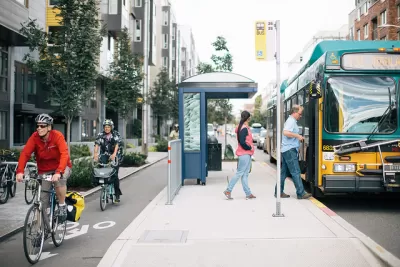
"When it comes to car ownership, Seattle has finally turned a corner," according to an article by Gene Balk.
"Census data released last month shows the city’s car-ownership rate has dropped dramatically in the past several years. In the new estimates, about 81% of Seattle households owned at least one vehicle in 2018 — that’s the lowest rate since the 1980s," reports Balk.
The city of Seattle's drop in car-ownership is the biggest among the 50-most populous cities in the country, and by a wide margin, according to Balk. Granted, U.S. cities are setting a low bar of performance on this metric: only 11 of those 50 cities achieved any decline since 2010.
A follow up article by Patrick Taylor calls the news about Seattle's declining rate of car ownership a "victory for the urbanist vision."
FULL STORY: Seattle’s rate of car ownership saw the biggest drop among big U.S. cities — by far

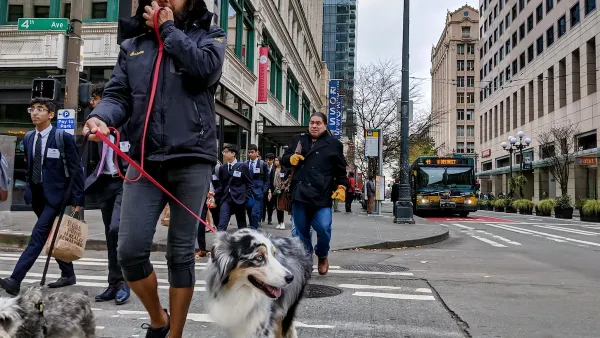
Now 20% Car-Free, Seattle's Population is Growing. Its Traffic is Not.
Since 2017, the number of cars in the city has stayed roughly the same, even as the population continues to grow.
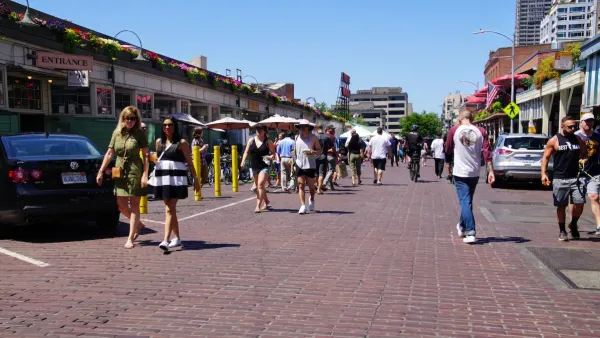
Report: One-Fifth of Seattle Households Are Car-Free
According to one local writer, the city’s low rate of car ownership should encourage officials to support public transit and reduce parking minimums.

AI and Downtown Recovery: Missing the Mark in Seattle?
In his fourth GeekWire article on downtown recovery, Chuck Wolfe reviews the use of AI imagery in a section of the Seattle Downtown Activation Plan and suggests how it may have missed the mark.

The state-sanctioned urbicide of Austin
People don’t kill cities. Freeways do.

US to reduce Colorado River water deliveries to Mexico
A new Colorado Treaty amendment reduces Mexico’s Colorado River water allocation by 250,000 acre feet.

New Jersey’s second-largest city bans standalone data centers
Jersey City will continue to allow co-location facilities, such as those meant for research institutions that store their own data.

Amtrak not solely to blame for New Jersey commuter rail's unreliability, report finds
A new study from the Garden State Initiative found that NJ Transit’s budget grew 20% across a 4 year period, but reliability declined significantly over the same period.

EPA erases limits on planet-warming pollution from power plants
Under Monday’s plan, power plants would still have some limits on how much mercury, arsenic and other contaminants they can emit.

Phoenix announces new on-demand transit service, more frequent RAPID buses
Both new services will launch in October, and are part of Phoenix's Project Effective Access Solutions for Easing Congestion.

FREE Course: Walkable City 1: Why Walkability?
After describing his path towards focusing on walkability as the essence of good planning, Jeff Speck marches through his five principal reasons for making more walkable places.
Reinventing Malls: Planning Alchemy—Turning Gray Fields Into Gold
The course focuses on the opportunities and imperatives that shape reinvention of mall sites.

Eagle County Government
Harvard University Graduate School of Design
Nashville Planning Department
The Architects Foundation
University of Cincinnati Online
The Pocatello Development Authority
The Urban Renewal Agency of the City of Pocatello
Journal of the American Planning Association