According to one local writer, the city’s low rate of car ownership should encourage officials to support public transit and reduce parking minimums.


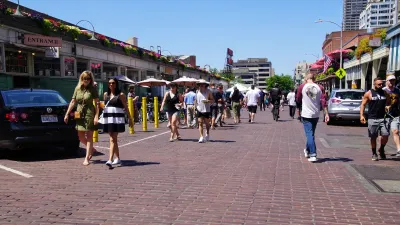
Over 20 percent of Seattle households do not own a car, according to a report from the Seattle Times. According to Seattle Bike Blog’s Tom Fucoloro, this signals that the city should be investing in transit and eliminating parking requirements that drive up the cost of housing.
Fucoloro notes that “The car-free households tend to be concentrated in dense neighborhoods with quality transit service like Capitol Hill, downtown and especially the U District and the International District.” But too many Seattle transit lines end service early in the day, and many trails lack nighttime lighting.
Fucoloro also suggests thinking outside the urban box and vastly expanding programs such as King County Metro’s Trailhead Direct, which helps people access outdoor recreation opportunities without a car. “Expanding rural transit across the state will not only provide service to people who live in those communities, but it will also help the increasing number of car-free residents access more places.”
FULL STORY: Balk: Car ownership keeps dropping in Seattle

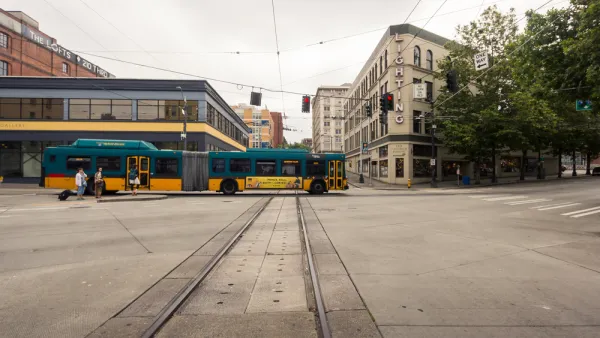
A ‘Playbook’ for Better Bus Service, From King County Metro
King County Metro operates one of the nation’s busiest transit systems—without running any trains. The agency recently released a playbook as a guide to transit service.
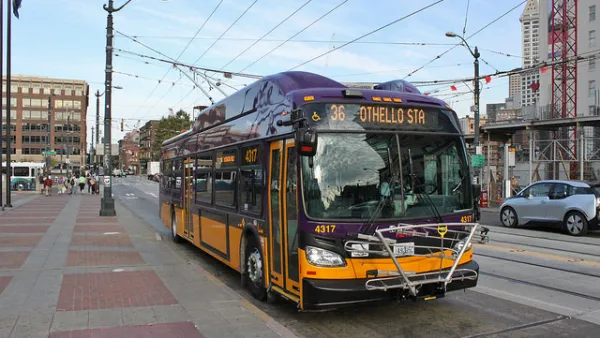
King County Postpones August Target for Transit Sales Tax Initiative
King County, home to Seattle, will wait to ask voters to approve a 0.2% sales tax for funding transit until a time both when transit use is higher, and people aren’t facing waves of sudden unemployment.
Pushing for Cameras to Enforce Bus-Only Lanes
Scofflaws are common and enforcement difficult in the 40 miles of surface street bus-only lanes in King County, Washington. Transit officials are hoping cameras can help fill the gap.

The state-sanctioned urbicide of Austin
People don’t kill cities. Freeways do.

US to reduce Colorado River water deliveries to Mexico
A new Colorado Treaty amendment reduces Mexico’s Colorado River water allocation by 250,000 acre feet.

New Jersey’s second-largest city bans standalone data centers
Jersey City will continue to allow co-location facilities, such as those meant for research institutions that store their own data.

Amtrak not solely to blame for New Jersey commuter rail's unreliability, report finds
A new study from the Garden State Initiative found that NJ Transit’s budget grew 20% across a 4 year period, but reliability declined significantly over the same period.

EPA erases limits on planet-warming pollution from power plants
Under Monday’s plan, power plants would still have some limits on how much mercury, arsenic and other contaminants they can emit.

Phoenix announces new on-demand transit service, more frequent RAPID buses
Both new services will launch in October, and are part of Phoenix's Project Effective Access Solutions for Easing Congestion.

FREE Course: Walkable City 1: Why Walkability?
After describing his path towards focusing on walkability as the essence of good planning, Jeff Speck marches through his five principal reasons for making more walkable places.
Reinventing Malls: Planning Alchemy—Turning Gray Fields Into Gold
The course focuses on the opportunities and imperatives that shape reinvention of mall sites.

Eagle County Government
Harvard University Graduate School of Design
Nashville Planning Department
The Architects Foundation
University of Cincinnati Online
The Pocatello Development Authority
The Urban Renewal Agency of the City of Pocatello
Journal of the American Planning Association