King County, home to Seattle, will wait to ask voters to approve a 0.2% sales tax for funding transit until a time both when transit use is higher, and people aren’t facing waves of sudden unemployment.


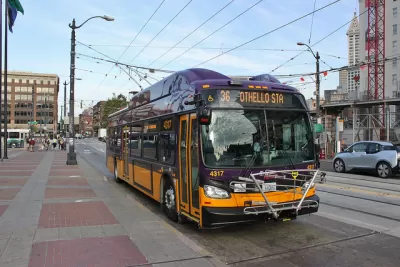
Doug Trumm reports that the King County Council will no longer hold an August vote on a proposed a transit package ballot measure. “Since the measure was to be funded by a 0.2% sales tax, there was a fear it would exacerbate economic hardship from the novel coronavirus (COVID-19) outbreak,” according to Trumm.
“Leaders also worried the countywide measure wouldn’t pass,” according to Trumm, as social distancing is implemented by many in the county, and as unemployment spikes.
Just a few weeks ago, the county announced a “transit investment concepts for a countywide ballot measure,” according to a March 4 article by Trumm. “The measure could jumpstart King County Metro’s efforts to electrify its fleet or it could focus on expanding conventional transit service. Either way, at $160 million per year, it would be a significant new revenue source for transit.”
It’s possible that Seattle could take up a similar cause for a citywide effort without the county, but for the time being, the political calculus is likely to be the same for the city as it is for the county--though Seattle Mayor Jenny Durkan did recently indicate a willingness to go it alone on the issue.
FULL STORY: King County Council Shelves Transit Ballot Measure Plans Amid Coronavirus Worries

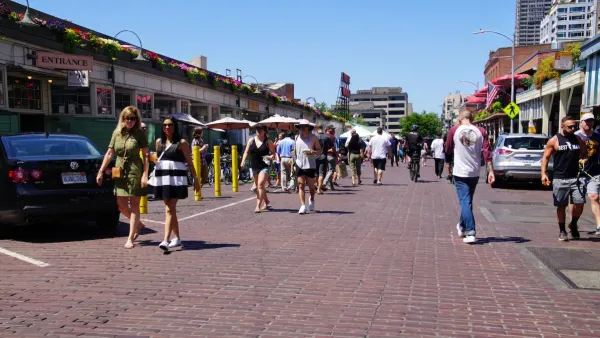
Report: One-Fifth of Seattle Households Are Car-Free
According to one local writer, the city’s low rate of car ownership should encourage officials to support public transit and reduce parking minimums.
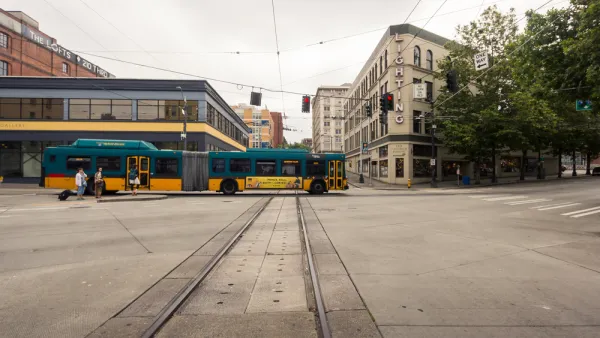
A ‘Playbook’ for Better Bus Service, From King County Metro
King County Metro operates one of the nation’s busiest transit systems—without running any trains. The agency recently released a playbook as a guide to transit service.
Pushing for Cameras to Enforce Bus-Only Lanes
Scofflaws are common and enforcement difficult in the 40 miles of surface street bus-only lanes in King County, Washington. Transit officials are hoping cameras can help fill the gap.

Planetizen Federal Action Tracker
A weekly monitor of how Trump’s orders and actions are impacting planners and planning in America.

The state-sanctioned urbicide of Austin
People don’t kill cities. Freeways do.

US to reduce Colorado River water deliveries to Mexico
A new Colorado Treaty amendment reduces Mexico’s Colorado River water allocation by 250,000 acre feet.

5 New England states march closer to 800 megawatt wind energy project
Securing federal approval for the project may be complicated under the Trump administration, which has historically been hostile towards domestic wind power.

Baltimore to break ground on $50 million Transit Priority Project
The project will bring faster bus trips, safer streets and better bike connections to Baltimore.

Airbnb launches $250 million 'last-dollar financing' housing accelerator, makes first investment in Austin
The company will put $6.4 million towards affordable housing development in Texas’ capital.

FREE Course: Walkable City 1: Why Walkability?
After describing his path towards focusing on walkability as the essence of good planning, Jeff Speck marches through his five principal reasons for making more walkable places.
Reinventing Malls: Planning Alchemy—Turning Gray Fields Into Gold
The course focuses on the opportunities and imperatives that shape reinvention of mall sites.

Eagle County Government
Harvard University Graduate School of Design
Nashville Planning Department
The Architects Foundation
University of Cincinnati Online
The Pocatello Development Authority
The Urban Renewal Agency of the City of Pocatello
Journal of the American Planning Association