Census data shows that Seattle jumped Baltimore to become the country's tenth most densely populated city. Is Seattle on the cusp of a changing of the guard when it comes to density and population growth?


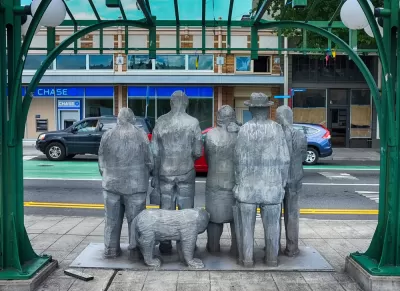
"Analysis of census data shows that Seattle — for the first time in its history — ranks among the top 10 most densely populated big cities in the U.S.," according to an article by Gene Balk.
"With 7,962 people per square mile in 2014, Seattle leapfrogged Baltimore into the No. 10 spot among the 50 most populous cities in the country. Seattle’s population density has increased by nearly 10 percent since the 2010 Census. And if current growth rates continue, we’ll bypass No. 9 Los Angeles within five years," adds Balk.
Balk places the new density figures in context of the city's ongoing development controversies, which erupted most publicly with the Housing Affordability and Livability Agenda (HALA) last year. Balk speaks extensively with Branden Born, associate professor of urban design and planning at the University of Washington, about the "D" word (density)—how the public perceives it and how they misperceive it. Born looks around the city and notes examples of density done right, as well as some example of how new development has changed the character of neighborhoods. Born predicts "a changing of the guard is under way when it comes to density and growth."
Read the full story: Seattle among top 10 most densely populated big cities in the U.S. for first time ever
Beware of Energy Rankings for Cities
In a special "Energy for Tomorrow" report, The New York Times looks at "clean city rankings" of energy efficiency and land use. But ranking cities is no easy task—"winners on one list may appears as sinners on another."
Yet again, Seattle’s density zoning update is hit with delays
The city must now examine the ‘maximum possible development’ under a future zoning scenario, rather than the ‘maximum likely development.’
Seattle upzoning proposal seeks to boost density, support eco-friendly building materials
A city committee advanced the plan to target areas already open to multifamily development for additional density and encourage passive house and mass timber construction.

Planetizen Federal Action Tracker
A weekly monitor of how Trump’s orders and actions are impacting planners and planning in America.

California plans to bury El Niño’s downpour
If the state plays its cards right, it may be able to store a billion acre-feet of El Niño’s water in aquifers.

Desperate measures: Advocates weigh draining Lake Powell to fill Colorado River
Draining the reservoir could reduce evaporation losses by a couple hundred thousand acre-feet.

Housing is the top priority of Seattle’s sole new councilmember
Jenks campaigned on building 1,000 new units of affordable housing.

New tax cuts may slash $1.5 billion in funding for Miami transit, public parks
Amendment 3 will save Miami-Dade homeowners $2,700 in 2028.

Arizona, Wisconsin, Pennsylvania hope to finally advance climate goals post-midterms
The three states have spent years under Republican or divided control.

FREE Course: Walkable City 1: Why Walkability?
After describing his path towards focusing on walkability as the essence of good planning, Jeff Speck marches through his five principal reasons for making more walkable places.
Reinventing Malls: Planning Alchemy—Turning Gray Fields Into Gold
The course focuses on the opportunities and imperatives that shape reinvention of mall sites.

City of Rosemead
Rutgers University, Edward J. Bloustein School of Planning and Public Policy
One Hundred Miles
University of Michigan School for Environment and Sustainability (SEAS)
Hunter College, City University of New York (CUNY)
The Architects Foundation
City of Cambridge
Montrose County
The Pocatello Development Authority