A controversial road diet has faced disapproval from local business owners, but data shows a significant reduction in crashes and a minimal increase in congestion.


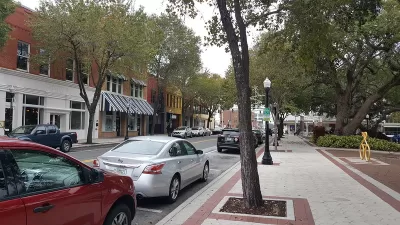
After implementing a controversial road diet, the city of Lakeland, Florida has seen a 12% drop in crashes in the area, reports Staci DaSilva for WFLA. Last September, the city reduced one mile of South Florida Avenue to three lanes (down from four) and widened the remaining lanes to the industry-standard 11 feet, placing temporary concrete buffers between the sidewalk and traffic lanes.
Some local business owners have expressed disapproval for the redesigned street, claiming that they are losing customers frustrated by increased congestion and expressing concern about access for emergency vehicles. City officials say that, according to the data, the road diet has only added an average of 60 seconds to the time it takes to traverse the affected stretch of road, and the number of vehicles passing through the area on a daily basis hasn't changed. Other locals support the project, arguing that "the new setup is not only safer, but actually good for business." In a phenomenon dubbed "good congestion," a mild slowdown "allows drivers to pay attention to local storefronts."
The city will accept public suggestions for how to utilize the buffer space and make the changes permanent.
FULL STORY: Lakeland ‘road diet’ leads to fewer crashes, more congestion, city officials say

US Traffic Deaths Fell by 12% in One Year. How Did it Happen?
Biden-era investment in safe streets, shifts in travel patterns brought on by the pandemic, and increased traffic enforcement are all possible reasons why traffic deaths dropped significantly between 2024 and 2025.

Regulatory Agency Delays Pedestrian-Oriented Car Safety Rating Updates
Under pressure from automakers, the National Highway Traffic Safety Administration is delaying the implementation of new vehicle ratings based on safety features that reduce risks to people outside the car.

Jacksonville Completes Park Street Road Diet
The half-mile corridor now features new bike lanes and sidewalks, as well as roundabouts and new landscaping.

Planetizen Federal Action Tracker
A weekly monitor of how Trump’s orders and actions are impacting planners and planning in America.

The state-sanctioned urbicide of Austin
People don’t kill cities. Freeways do.

US to reduce Colorado River water deliveries to Mexico
A new Colorado Treaty amendment reduces Mexico’s Colorado River water allocation by 250,000 acre feet.

5 New England states march closer to 800 megawatt wind energy project
Securing federal approval for the project may be complicated under the Trump administration, which has historically been hostile towards domestic wind power.

Baltimore to break ground on $50 million Transit Priority Project
The project will bring faster bus trips, safer streets and better bike connections to Baltimore.

Airbnb launches $250 million 'last-dollar financing' housing accelerator, makes first investment in Austin
The company will put $6.4 million towards affordable housing development in Texas’ capital.

FREE Course: Walkable City 1: Why Walkability?
After describing his path towards focusing on walkability as the essence of good planning, Jeff Speck marches through his five principal reasons for making more walkable places.
Reinventing Malls: Planning Alchemy—Turning Gray Fields Into Gold
The course focuses on the opportunities and imperatives that shape reinvention of mall sites.

Eagle County Government
Harvard University Graduate School of Design
Nashville Planning Department
The Architects Foundation
University of Cincinnati Online
The Pocatello Development Authority
The Urban Renewal Agency of the City of Pocatello
Journal of the American Planning Association