Parking scofflaws beware: your neighbor could soon have a financial incentive to notice your hijinks.


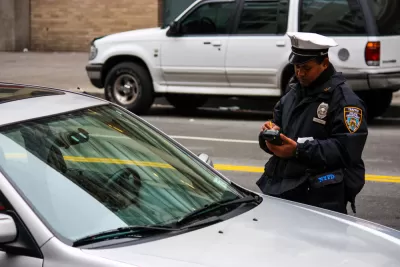
A bill under consideration by the New York City Council would launch a program to reward residents who inform authorities of illegally parked vehicles. An article by Caroline Spivack makes liberal use of the word "snitch" and its derivations to describe the kinds of actions that would earn financial reward if the bill is approved.
The bill will set up an online portal for New Yorkers to report scofflaw drivers illegally parking in bike lanes, bus lanes, and crosswalks and on sidewalks," reports Spivack, with fines potentially costing as much as $175. The informant would receive 25 percent of that penalty.
Spivak wonder whether New Yorkers are likely to rat on their neighbors enough to make the program effective. It turns out there is a precedent for the idea: The scheme…it riffs on another city program run by the Department of Environmental Protection (DEP) that encourages New Yorkers to tattle on idling truck or bus drivers spewing engine exhaust for more than three minutes."
So far this year, "the city has paid nearly $183,000 to the public for 1,600 idling violations (that’s out of 9,000 complaints) made to DEP (and more cases are working their way through the system)." So, yes, New Yorkers are willing to tattle.
Read the full story: Should Parking Snitches Get Riches?
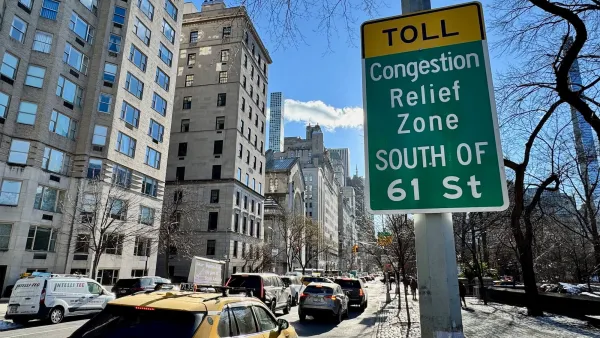
Study: NYC congestion pricing didn't impact parking demand
A city report shows that free parking, not congestion pricing, is the main driver of limited parking demand in the city.

Manhattan Waterfront Parking Lot to Become Public Park
A lot that has served as parking for decades will add a much-needed public amenity to the East River waterfront.
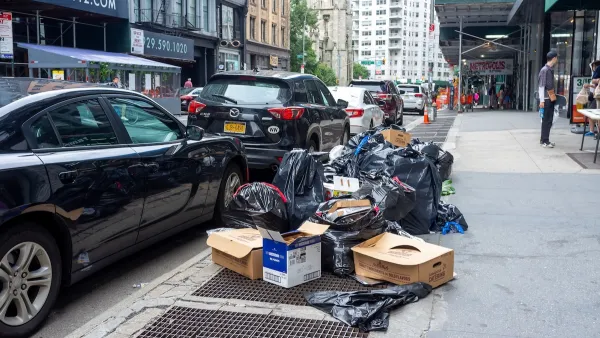
NYC Launches ‘Smart Curbs’ Program
The pilot program on the Upper West Side will remove some curbside parking spots to replace them with public seating, bike racks, and delivery zones.

Planetizen Federal Action Tracker
A weekly monitor of how Trump’s orders and actions are impacting planners and planning in America.

California plans to bury El Niño’s downpour
If the state plays its cards right, it may be able to store a billion acre-feet of El Niño’s water in aquifers.

Desperate measures: Advocates weigh draining Lake Powell to fill Colorado River
Draining the reservoir could reduce evaporation losses by a couple hundred thousand acre-feet.

Los Angeles just elected an urban planner as its mayor
Transportation analysts are optimistic that Raman will be more aggressive in addressing transit issues than Bass.

Mamdani’s pied-à-terre tax survives legal challenge
A panel of judges found that the plaintiffs failed to demonstrate injury as a result of New York City's implementation of the tax.

Eastern Nebraska is running out of electricity
Data centers and electrification are straining eastern Nebraska’s grid, throttling economic development.

FREE Course: Walkable City 1: Why Walkability?
After describing his path towards focusing on walkability as the essence of good planning, Jeff Speck marches through his five principal reasons for making more walkable places.
Reinventing Malls: Planning Alchemy—Turning Gray Fields Into Gold
The course focuses on the opportunities and imperatives that shape reinvention of mall sites.

City of Rosemead
Rutgers University, Edward J. Bloustein School of Planning and Public Policy
One Hundred Miles
University of Michigan School for Environment and Sustainability (SEAS)
Hunter College, City University of New York (CUNY)
The Architects Foundation
City of Cambridge
Montrose County
The Pocatello Development Authority