The pilot program on the Upper West Side will remove some curbside parking spots to replace them with public seating, bike racks, and delivery zones.


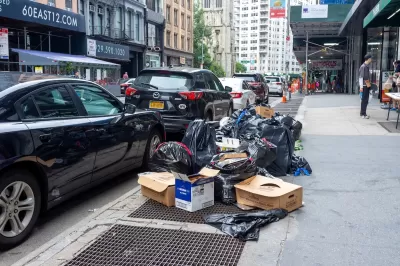
A plan to realign priorities for curb space in New York City’s Upper West Side will bring new public seating and bike racks while reducing the number of parking spaces for vehicles, reports Ramsey Khalifeh in Gothamist.
The Smart Curbs program is aimed at modernizing curb management and designating curb space for deliveries, ride-hailing services, and other uses. “New zones for trucks and commercial vehicles loading or unloading during daytime hours will be implemented in six different locations. The transportation department has sought to make the so-called ‘last mile’ of package deliveries more efficient through cargo bikes and dedicated ‘microhub’ distribution zones.”
According to UCLA professor and parking guru Donald Shoup, the city should be “much more ambitious” in its parking reform. “On every street there should be loading zones. They should be charged by the minute,” Shoup said.
Read the full story: Curb space makeover on Upper West Side will bring new bike racks, more public seating
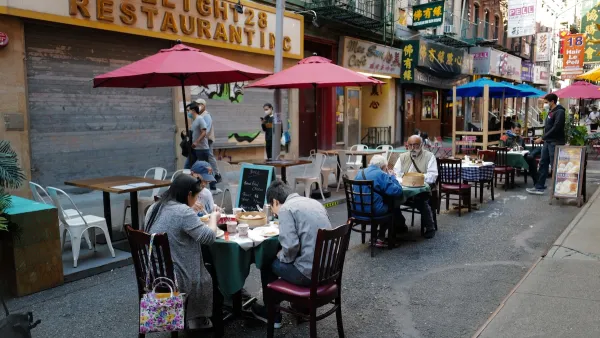
NYC Losing Many Outdoor Dining Areas Due to Expensive New Regulations
Restaurant owners say the city’s new outdoor dining program makes it too difficult and expensive to operate al fresco setups.
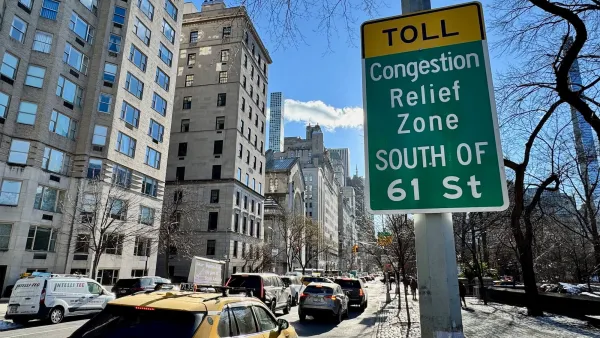
Study: NYC congestion pricing didn't impact parking demand
A city report shows that free parking, not congestion pricing, is the main driver of limited parking demand in the city.
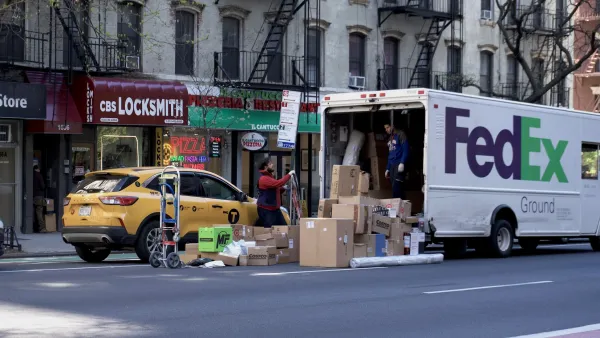
NYC launches curb management office to rein in delivery, parking chaos
New York has roughly 3 million curbside parking spots.

Planetizen Federal Action Tracker
A weekly monitor of how Trump’s orders and actions are impacting planners and planning in America.

Eastern Nebraska is running out of electricity
Data centers and electrification are straining eastern Nebraska’s grid, throttling economic development.

Study reveals best places in the U.S. for cycling, walking
New research from Streetlight Data examines bicycle and pedestrian miles per capita in the 100 largest U.S. cities by population.

Illinois considers spending $1 billion in taxpayer money on data center
A quantum computing campus and data center are currently under construction in Chicago.

As development costs rise, Boston moves to lessen affordable housing requirements
The Boston Zoning Commission and the City Council still need to approve Boston Mayor Michelle Wu’s proposed changes

Washington state charge fee to drivers with fuel-efficient cars
Revenue from the fee will go towards supporting the state’s highways.

FREE Course: Walkable City 1: Why Walkability?
After describing his path towards focusing on walkability as the essence of good planning, Jeff Speck marches through his five principal reasons for making more walkable places.
Reinventing Malls: Planning Alchemy—Turning Gray Fields Into Gold
The course focuses on the opportunities and imperatives that shape reinvention of mall sites.

City of Charlotte
City of Rosemead
Rutgers University, Edward J. Bloustein School of Planning and Public Policy
University of Michigan School for Environment and Sustainability (SEAS)
Hunter College, City University of New York (CUNY)
The Architects Foundation
City of Cambridge
The Pocatello Development Authority
The Urban Renewal Agency of the City of Pocatello