The Biden administration and effects of time will erase some of the consequences of the Trump administration's methodical dismantling of the nation's environmental regulation. But climate change will be around longer than any of it.


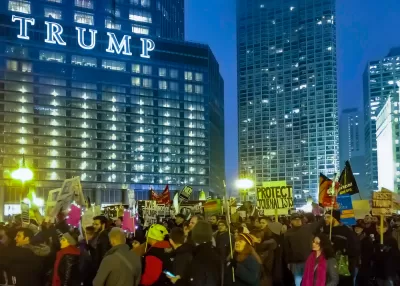
"[T]he damage done by the greenhouse gas pollution unleashed by President Trump’s rollbacks may prove to be one of the most profound legacies of his single term," according to an article by Carol Davenport.
President-elect is likely to spend much of the next four years undoing the sweeping environmental regulation rollbacks implement during the Trump administration, but not before a significant amount of emissions, pollution, and irreversible marks are left on the country's public lands.
The legacy of those changes will outlive the policies, but on varying timelines, depending on the kind of pollution in question," according to Davenport.
Pollutants like industrial soot and chemicals can have lasting health effects, especially in minority communities where they are often concentrated. But air quality and water clarity can be restored once emissions are put back under control.
That is not true for the global climate. Greenhouse pollution accumulates in the atmosphere, so the heat-trapping gases emitted as a result of loosened regulations will remain for decades, regardless of changes in policy.
A study released in September quantified the amount of emissions enabled by the Trump administration's anti-regulatory actions. In total, the Trump administration's environmental rollbacks will emit an additional 1.8 billion metric tons of climate emissions equivalent to carbon dioxide by 2035.
But as Davenport points out, these are emissions are coming at a critical movement.
"Over the past four years, the global level of greenhouse gases in the atmosphere crossed a long-feared threshold of atmospheric concentration. Now, many of the most damaging effects of climate change, including rising sea levels, deadlier storms, and more devastating heat, droughts and wildfires, are irreversible."
FULL STORY: What Will Trump’s Most Profound Legacy Be? Possibly Climate Damage

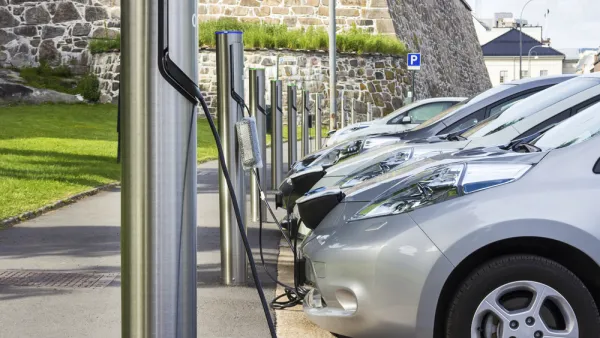
How Far, How Fast, Will Electric Car Policies Go?
The federal government, and even some automakers, seemed poised to nudge the country toward a future of electric vehicles. But the American preference for large trucks will be an obstacle to those plans.
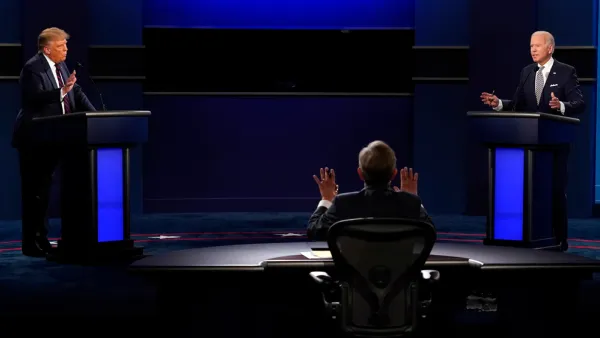
What Biden's Win Could Mean for Land Use, Transportation, and Climate
Campaign in poetry and govern in prose, the saying goes. Now that the reality of a Biden presidency is settling in, what does it mean for how the United States plans its future?
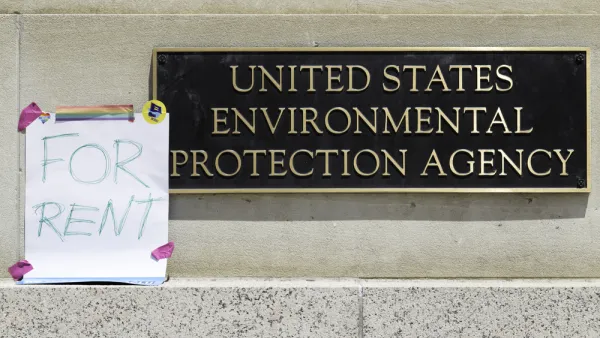
U.S. Officially Withdraws From the Paris Climate Accord
An even set in motion years ago by the Trump administration came to fruition on November 4 while most Americans were paying attention to the election.

Planetizen Federal Action Tracker
A weekly monitor of how Trump’s orders and actions are impacting planners and planning in America.

The state-sanctioned urbicide of Austin
People don’t kill cities. Freeways do.

US to reduce Colorado River water deliveries to Mexico
A new Colorado Treaty amendment reduces Mexico’s Colorado River water allocation by 250,000 acre feet.

Mamdani overhauls NYC's Vision Zero plan with 100 new policy goals
The overhaul aims to reduce traffic deaths and make streets safer for pedestrians, cyclists and drivers through lower speed limits, new safety infrastructure and more.

Amtrak not solely to blame for New Jersey commuter rail's unreliability, report finds
A new study from the Garden State Initiative found that NJ Transit’s budget grew 20% across a 4 year period, but reliability declined significantly over the same period.

EPA erases limits on planet-warming pollution from power plants
Under Monday’s plan, power plants would still have some limits on how much mercury, arsenic and other contaminants they can emit.

FREE Course: Walkable City 1: Why Walkability?
After describing his path towards focusing on walkability as the essence of good planning, Jeff Speck marches through his five principal reasons for making more walkable places.
Reinventing Malls: Planning Alchemy—Turning Gray Fields Into Gold
The course focuses on the opportunities and imperatives that shape reinvention of mall sites.

Eagle County Government
Harvard University Graduate School of Design
Nashville Planning Department
The Architects Foundation
University of Cincinnati Online
The Pocatello Development Authority
The Urban Renewal Agency of the City of Pocatello
Journal of the American Planning Association