What's more surprising is seeing who is making the proposal and why. The first step would be to have the concept included in Plan Bay Area 2050.


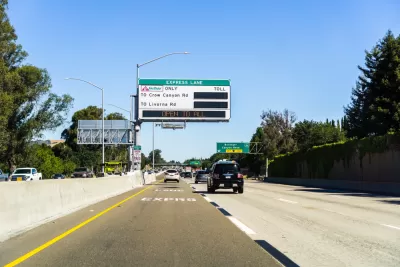
Express or high-occupancy toll (HOT) lanes that apply congestion pricing to solo-occupant vehicles are found throughout Northern and Southern California and many other states. While controversial, they almost always can be found adjacent to general purpose, or unmanaged, unpriced lanes, an exception being the 66 Express Lanes Inside the Beltway in Northern Virginia, and then only during peak hours when all lanes are "HOT," providing solo motorists the option of paying for a faster trip or "travel as usual."
An exclusive report from Zachary Clark of the San Mateo Daily Journal indicates that highway paradigm could change for freeways with "robust transit options" if operators of Bay Area Express Lanes in Alameda, San Francisco, San Mateo, and Santa Clara counties agree with a letter from the Metropolitan Transportation Commission (MTC) asking that the "concept" be included in a regional planning process known as Plan Bay Area 2050 [italics added]:
According to a letter dated Aug. 1, the Metropolitan Transportation Commission wants to eventually implement congestion pricing on all lanes of many if not most Bay Area freeways...To lower greenhouse gas emissions, MTC envisions the “eventual transition to congestion pricing on all freeway lanes in corridors with robust transit options,” according to the letter and adds “express lanes can be a stepping stone to more extensive congestion pricing strategies.”
Transportation is far and away the primary source of greenhouse gas emissions in California, responsible for 41 percent of emissions according to the latest California Greenhouse Gas Emission Inventory, having increased for the fifth consecutive year in 2017.
MTC is asking the nine Bay Area counties to sign off on the letter, including the above plan for freeway tolling so it can be included in the Plan Bay Area 2050 draft blueprint. For most major transportation projects to proceed from conception to implementation, inclusion in that plan is a key requirement.
The MTC letter can be found in the Aug. 14, 2020, meeting notice [pdf] for the San Mateo County Express Lanes Joint Powers Authority (SMCEL-JPA). (See agenda item 5.3: "Authorize the Executive Council to sign off a letter to the Metropolitan Transportation Commission supporting the Bay Area Express Lanes Project Performance Strategies as included in Plan Bay Area 2050 Draft Blueprint. Action, page 10.")
Omitted in the source article is the general prohibition on the imposition of tolls on existing federal-aid highways with exceptions for new lanes and conversions of existing carpool lanes. In December 2018, the Oregon Department of Transportation submitted an application to the Federal Highway Administration to toll all lanes on portions of two Portland metro area interstates under a federal pilot program for value pricing tolling. Metro, the metropolitan planning organization for the Portland region, "is collecting information to determine if congestion pricing can reduce traffic and greenhouse gas emissions and increase safety and equity" as part of its regional congestion pricing study.
Correspondent's note: A big thank you to Clark, the Daily Journal reporter, for emailing the link to the SMCEL-JPA meeting notice so readers can verify that there really is a proposal, of sorts, from a U.S. metropolitan planning organization to turn freeways into tollways in order to reduce greenhouse gas emissions.
Related in Planetizen:
-
Plan Bay Area 2050 Draft Released, July 23, 2020
-
Wyoming Legislation Would Add Tolls to Interstate 80, January 17, 2020
-
Managed Lanes Coming to the San Francisco Peninsula, March 13, 2019
-
Interstate Highway Tolling Takes Major Step Forward in Pacific Northwest, December 9, 2018
FULL STORY: New highway tolling eyed in Bay Area

Congestion Pricing in the San Francisco Bay Area
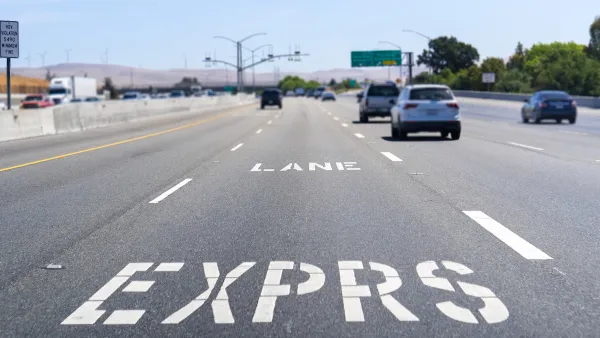
Planners call them “express lanes,” but make no mistake, they are congestion pricing in action, and they're successful. The Bay Area network of what the Federal Highway Administration calls “high-occupancy toll (HOT) lanes” is growing.
Tolling All Lanes
Bay Area transportation planners are studying a radical idea to reduce traffic congestion and fund driving alternatives: tolling all lanes on a freeway. Even more radical, the plan considers tolling parallel roads.
Bay Area Express Lanes Turn a Profit
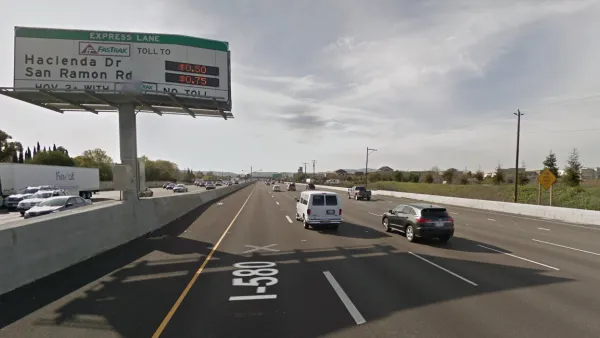
Not all of them, just the I-580 lanes. One of the reasons is that most users are actually paying, unlike the other two express lanes where a majority of users are clean-air vehicles or carpools, neither of which pay.

The state-sanctioned urbicide of Austin
People don’t kill cities. Freeways do.

US to reduce Colorado River water deliveries to Mexico
A new Colorado Treaty amendment reduces Mexico’s Colorado River water allocation by 250,000 acre feet.

New Jersey’s second-largest city bans standalone data centers
Jersey City will continue to allow co-location facilities, such as those meant for research institutions that store their own data.

Amtrak not solely to blame for New Jersey commuter rail's unreliability, report finds
A new study from the Garden State Initiative found that NJ Transit’s budget grew 20% across a 4 year period, but reliability declined significantly over the same period.

EPA erases limits on planet-warming pollution from power plants
Under Monday’s plan, power plants would still have some limits on how much mercury, arsenic and other contaminants they can emit.

Phoenix announces new on-demand transit service, more frequent RAPID buses
Both new services will launch in October, and are part of Phoenix's Project Effective Access Solutions for Easing Congestion.

FREE Course: Walkable City 1: Why Walkability?
After describing his path towards focusing on walkability as the essence of good planning, Jeff Speck marches through his five principal reasons for making more walkable places.
Reinventing Malls: Planning Alchemy—Turning Gray Fields Into Gold
The course focuses on the opportunities and imperatives that shape reinvention of mall sites.

Eagle County Government
Harvard University Graduate School of Design
Nashville Planning Department
The Architects Foundation
University of Cincinnati Online
The Pocatello Development Authority
The Urban Renewal Agency of the City of Pocatello
Journal of the American Planning Association