In Nick Demarsh and Rick Banks' opinion, defunding the police requires cities to reconsider car culture.


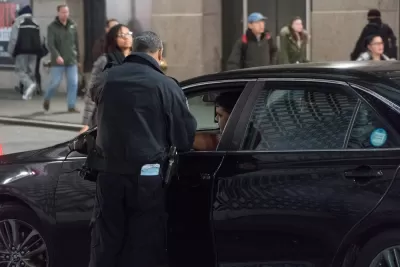
Nick Demarsh and Rick Banks say that the conversation about police defunding or abolition requires consideration of the role of the personal vehicle in American life. On average, police spend 15% of their time on traffic enforcement, they say. Investing in infrastructure that could reduce the need for traffic enforcement is a great step toward divesting from police and avoiding situations that are disproportionately dangerous for Black and brown Americans, opine Demarsh and Banks:
If we understand the relation of policing and cars and the antidote – public transit – re-investing funding from police agencies to transit systems demonstrates a possible remedy to the dual threat of violence from policing and cars. By transitioning resources from police departments to transit agencies, cities could both reduce the need to protect communities from reckless driving and increase racial equity in our cities.
The article draws a poignant connection between increase in policing and the mass incarceration of the prison industrial complex. Similarly, Demarsh and Banks point to the rise of the personal vehicle as an ultimate source of police enforcement hours and the construction of freeways as destructive forces in communities of color.
sets out a reminder of this history of police by the desire to enforce mass incarceration and the prison industrial complex, drawing connections between the rise of the police force with the rise of the personal vehicle.
"Understanding the history of the growth of policing during the rise of the car provides important insight for our discussion about the role of policing today," remind Demarsh and Banks, arguing for the allocation of police budget to public transit investment.
Recognizing the potential of increased policing on transit (ACLU found that 9 of 10 Cleveland BRT Healthline stops were of Black riders), Demarsh and Banks suggest that free fare could reduce the need for police and be funded by police department budgets.
FULL STORY: Can We Abolish the Police Without Challenging the Status Quo of Car Culture?

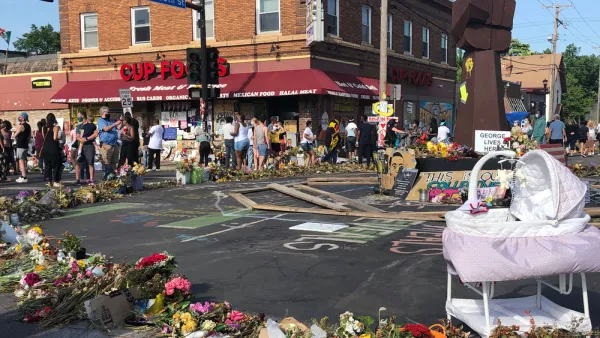
Oklahoma House Approves Protections for Drivers Who Hit Protestors
A heated debate and a party line vote in Oklahoma.
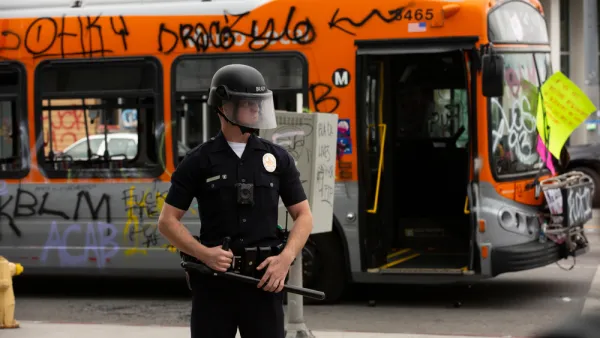
Planners Call for Deep Police Reforms
A letter signed by over 600 planners calls on the American Planning Association to advocate for fundamental police reforms, in other words, to defund the police.

Generation Z Is Driving Less, But History Indicates It Won’t Last
Think Generation Z will usher in the long-awaited post-car future of transit advocates’ dreams? Think again (about the example set by the Millennials).

The state-sanctioned urbicide of Austin
People don’t kill cities. Freeways do.

US to reduce Colorado River water deliveries to Mexico
A new Colorado Treaty amendment reduces Mexico’s Colorado River water allocation by 250,000 acre feet.

New Jersey’s second-largest city bans standalone data centers
Jersey City will continue to allow co-location facilities, such as those meant for research institutions that store their own data.

Amtrak not solely to blame for New Jersey commuter rail's unreliability, report finds
A new study from the Garden State Initiative found that NJ Transit’s budget grew 20% across a 4 year period, but reliability declined significantly over the same period.

EPA erases limits on planet-warming pollution from power plants
Under Monday’s plan, power plants would still have some limits on how much mercury, arsenic and other contaminants they can emit.

Phoenix announces new on-demand transit service, more frequent RAPID buses
Both new services will launch in October, and are part of Phoenix's Project Effective Access Solutions for Easing Congestion.

FREE Course: Walkable City 1: Why Walkability?
After describing his path towards focusing on walkability as the essence of good planning, Jeff Speck marches through his five principal reasons for making more walkable places.
Reinventing Malls: Planning Alchemy—Turning Gray Fields Into Gold
The course focuses on the opportunities and imperatives that shape reinvention of mall sites.

Eagle County Government
Harvard University Graduate School of Design
Nashville Planning Department
The Architects Foundation
University of Cincinnati Online
The Pocatello Development Authority
The Urban Renewal Agency of the City of Pocatello
Journal of the American Planning Association