Biden is amping up his campaign promises to leverage the federal government in the fight to reduce greenhouse emissions in the U.S. economy.


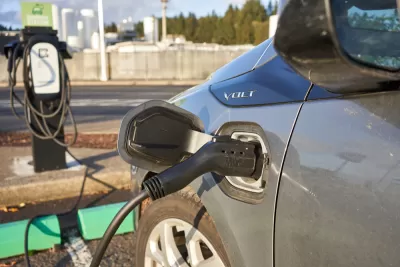
"On Tuesday, Biden unveiled a new climate plan that expands on his initial proposal by spending $2 trillion over four years instead of $1.7 over a decade," reports Zoya Teirstein.
"It calls for getting rid of all emissions from the electricity sector by 2035, creating a million new jobs building electric vehicles and charging stations, retrofitting existing buildings and constructing new ones to make the housing sector energy efficient, and ensuring that 40 percent of the benefits of this spending on green initiatives goes to disadvantaged communities," explains Teirstein.
Among some smaller pieces of the climate plan are several programs intersecting with the interest of planners, including promises to invest in plans and infrastructure that prioritizes bikes, pedestrians, and micromobility.
Additional news coverage of Biden's new climate plan is available at Smart Cities Dive, NPR, New York Magazine, and the Associated Press. An opinion piece saying the plan would be a disaster for workers and the economy needs the kinds of deregulation pursued by the Trump Administration, is available on Fox Business.
Read the full story: 3 unexpected ways Joe Biden plans to tackle climate change


Town Hall Spotlights Democrats' Climate Change Proposals
Critics of the earliest Democratic candidate debates have noted a conspicuous lack of substantive and concentrated discussion on one of the great existential threats of the era: climate change. Neglect of the subject could change soon.

Trump Attacks Environmental Rules Amid Flurry of Executive Orders
Several executive orders signed on Monday seek to repeal Obama- and Biden-era environmental regulations and roll back goals to encourage the shift to electric vehicles.
California Voters to Decide on Major Climate Funding in November
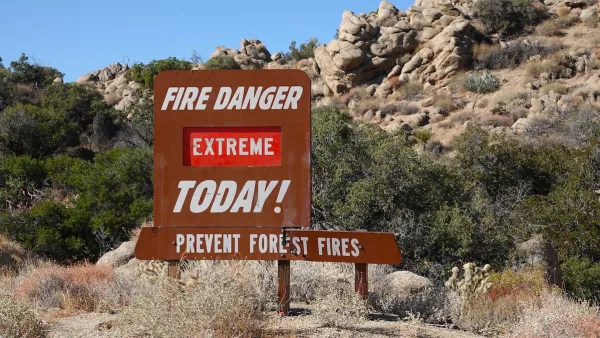
Californians will determine whether to approve a $10 billion bond for climate and environmental projects, which seeks to address critical issues such as wildfire prevention, safe drinking water, and protection of disadvantaged communities.

Planetizen Federal Action Tracker
A weekly monitor of how Trump’s orders and actions are impacting planners and planning in America.

California plans to bury El Niño’s downpour
If the state plays its cards right, it may be able to store a billion acre-feet of El Niño’s water in aquifers.

Chicago breaks ground on $3 billion megadevelopment
The new neighborhood, titled Foundry Park, will one day host 3,700 residences.

Move over, LA: St. Louis gears up for Olympics, invests millions in downtown redevelopment
The Missouri city will host the 2028 Olympic soccer group stage and knockout matches.

Satanic place names
From streams and lakes to valleys and canyons, I mapped more than 1,000 places named after the Devil.

California High-Speed Rail Authority CEO resigns after $600,000 scandal
Under Ian Choudri, the authority used taxpayer dollars to fund first class flights and trips to nightclubs.

FREE Course: Walkable City 1: Why Walkability?
After describing his path towards focusing on walkability as the essence of good planning, Jeff Speck marches through his five principal reasons for making more walkable places.
Reinventing Malls: Planning Alchemy—Turning Gray Fields Into Gold
The course focuses on the opportunities and imperatives that shape reinvention of mall sites.

City of Rosemead
Rutgers University, Edward J. Bloustein School of Planning and Public Policy
One Hundred Miles
Hunter College, City University of New York (CUNY)
The Architects Foundation
University of Cincinnati Online
City of Cambridge
Montrose County
The Pocatello Development Authority