The temporary measures of the coronavirus pandemic are being made permanent fixtures on 20 miles of streets in Seattle.


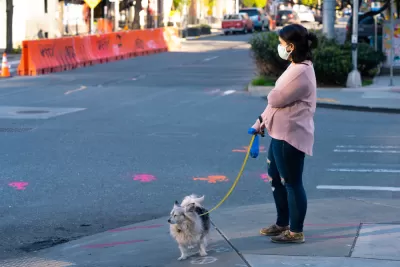
Michelle Baruchman reports: "Nearly 20 miles of Seattle streets will permanently close to most vehicle traffic by the end of May, Mayor Jenny Durkan announced Thursday."
The streets had been closed to most vehicle traffic after Governor jay Inslee implemented a statewide stay-at-home order in March, but the mayor is deciding the changes should stay in place after the order is lifted, making it the first U.S. city to make permanent street design changes implemented under the emergency conditions of the pandemic.
"The program, which has rolled out in phases, has been implemented in the Aurora-Licton Springs, Ballard, Central District, West Seattle, Greenwood, Othello, Rainier Beach and Beacon Hill neighborhoods," according to Baruchman.
Seattle Department of Transportation Director Sam Zimbabwe is quoted in the article introducing the possibility that additional changes to traffic flows could be implemented as the social distancing requirements of the pandemic linger.
FULL STORY: Seattle will permanently close 20 miles of residential streets to most vehicle traffic

How Oakland Is Fixing its Pandemic Planning Equity Problem
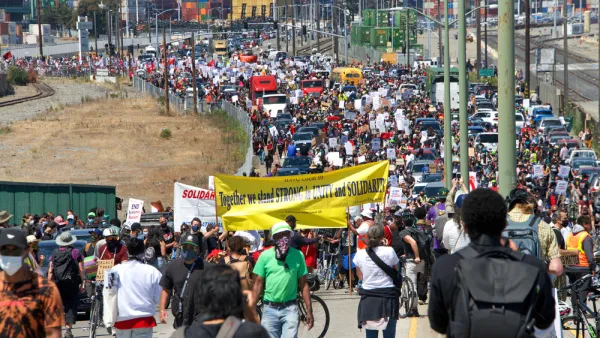
The Oakland Slow Streets program, one of the most controversial developments of the early pandemic, has evolved to become the Essential Places initiative, thanks to new planning practices and a commitment to equity in Oakland, California.
NACTO Releases Pandemic Streets Design Guide
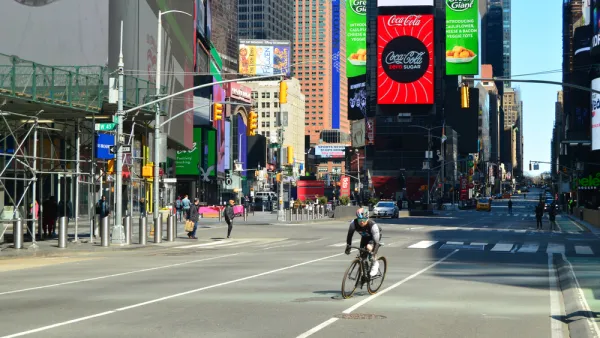
After three months of study and analysis, NACTO is providing authoritative guidance on new ways of thinking about rights of way now that the coronavirus has changed the way we live and work in cities.
Watch Oakland's Slow Streets Program in Action
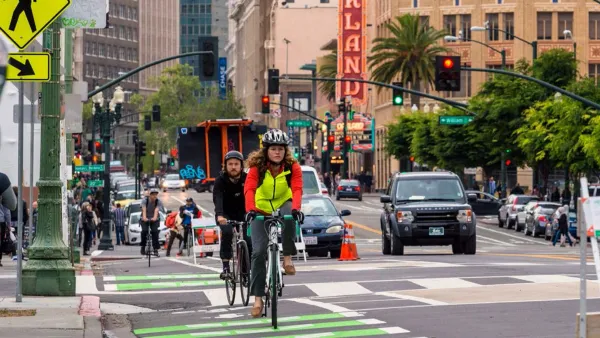
Oakland offers a model for other streets looking to provide new space for pedestrians and people on bikes to get exercise at a space physical distance.

Planetizen Federal Action Tracker
A weekly monitor of how Trump’s orders and actions are impacting planners and planning in America.

The state-sanctioned urbicide of Austin
People don’t kill cities. Freeways do.

US to reduce Colorado River water deliveries to Mexico
A new Colorado Treaty amendment reduces Mexico’s Colorado River water allocation by 250,000 acre feet.

5 New England states march closer to 800 megawatt wind energy project
Securing federal approval for the project may be complicated under the Trump administration, which has historically been hostile towards domestic wind power.

Baltimore to break ground on $50 million Transit Priority Project
The project will bring faster bus trips, safer streets and better bike connections to Baltimore.

Airbnb launches $250 million 'last-dollar financing' housing accelerator, makes first investment in Austin
The company will put $6.4 million towards affordable housing development in Texas’ capital.

FREE Course: Walkable City 1: Why Walkability?
After describing his path towards focusing on walkability as the essence of good planning, Jeff Speck marches through his five principal reasons for making more walkable places.
Reinventing Malls: Planning Alchemy—Turning Gray Fields Into Gold
The course focuses on the opportunities and imperatives that shape reinvention of mall sites.

Eagle County Government
Harvard University Graduate School of Design
Nashville Planning Department
The Architects Foundation
University of Cincinnati Online
The Pocatello Development Authority
The Urban Renewal Agency of the City of Pocatello
Journal of the American Planning Association