Seatback signage and reduced capacity will allow King County Metro to begin resuming bus service. In the wake of staff illness and depleted funding, the road to Metro's recovery could be quite long.


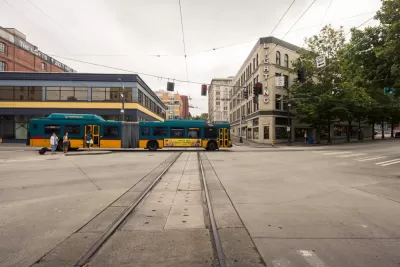
After three successive service cuts starting in mid-March, King County Metro announced Monday that some buses will resume service. The plan to restore service includes extra trips on several routes and fare-free rides through the month of May.
"Service cuts have primarily affected weekday service, resulting in nearly a 30% reduction of trips. The latest counts indicate that weekday bus ridership has somewhat stabilized at around a 73% drop over last year," writes Stephen Fesler. The most stable ridership since the onset of the pandemic has come from primarily low-income, urban communities that rely heavily on public transit day-to-day. Extra bust trips are prioritizing services in these areas where the coronavirus has least impacted ridership.
In addition to increased trips, signage will be installed in transit vehicles to promote the observance of social distancing mandates. Starting in the next two weeks, signage will include placards placed on seatbacks to enforce social distancing, "limiting capacity on buses to 12 riders on 40-foot buses and 18 riders on 60-foot buses." Metro will also continue to request that symptomatic riders to refrain from using their services and will require all riders to wear masks.
Despite these restrictions and requirements, several metro staff members have been exposed to the coronavirus and contracted COVID-19, including one operator who died from the disease. Given these concerns and financial distress due to the lack of federal assistance, Metro is expected to have a difficult time recovering from the decrease in ridership.
Read the full story: Metro Restoring Some Bus Trips To Meet Demand, Installing More Social Distancing Signage

King County Metro to Cut Bus Service
With hundreds of buses out of service and a mechanic shortage delaying repairs and maintenance, Seattle area bus riders will see significantly reduced service this summer.
The Realities of Pandemic Public Transit Service
Recent analysis by TransitCenter quantifies the effects of the pandemic for the 150 largest U.S. transit systems.
D.C. Metro Seeks Public Input on Proposed Service Cuts
D.C. Metro Seeks Public Input on Proposed Service Cuts

Planetizen Federal Action Tracker
A weekly monitor of how Trump’s orders and actions are impacting planners and planning in America.

California plans to bury El Niño’s downpour
If the state plays its cards right, it may be able to store a billion acre-feet of El Niño’s water in aquifers.

Desperate measures: Advocates weigh draining Lake Powell to fill Colorado River
Draining the reservoir could reduce evaporation losses by a couple hundred thousand acre-feet.

MTA gives itself 30 days to transform pit into basketball court
The site has been under construction since 2022; the city originally estimated it would finish the court in 2024.

Non-stop party: Chicago voters weigh permanent festival grounds
A stable place for bleachers, stages and drainage may streamline the setup and teardown of large events.

Metra may invest $9.1 billion in regional rail
The agency released a draft of a study examining potential ways to offer more frequent train service.

FREE Course: Walkable City 1: Why Walkability?
After describing his path towards focusing on walkability as the essence of good planning, Jeff Speck marches through his five principal reasons for making more walkable places.
Reinventing Malls: Planning Alchemy—Turning Gray Fields Into Gold
The course focuses on the opportunities and imperatives that shape reinvention of mall sites.

City of Rosemead
Rutgers University, Edward J. Bloustein School of Planning and Public Policy
One Hundred Miles
Hunter College, City University of New York (CUNY)
The Architects Foundation
University of Cincinnati Online
City of Cambridge
Montrose County
The Pocatello Development Authority