With ridership down to 10,000 people per night, and numerous homeless people taking up residence on the subway, New York will no longer run overnight subway service for the foreseeable future.


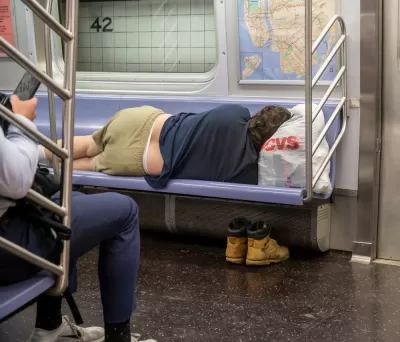
"The MTA will soon cease overnight subway service, an unprecedented disruption that will allow crews to disinfect trains more frequently to help slow the spread of coronavirus," reports Jake Offenhartz.
"In a joint press conference on Thursday, Governor Andrew Cuomo and Mayor Bill de Blasio said that subways will not run between the hours of 1 a.m. and 5 a.m. for the duration of the pandemic. The indefinite shutdown will begin the morning of May 6th."
The news comes as subway ridership has plummeted by 92 percent during the pandemic, and recent controversies have erupted over the MTA's handling of homeless people using the subway system for shelter during the pandemic. While announcing the service changes, Mayor de Blasio cited the homelessness issue as one challenge that would be easier to address by suspending overnight service.
To make up for the lost service, the "MTA will provide buses, for-hire vehicles and 'dollar vans' for essential workers traveling at night," according to Offenhartz.
FULL STORY: MTA Will End Overnight Subway Service For Duration Of Pandemic

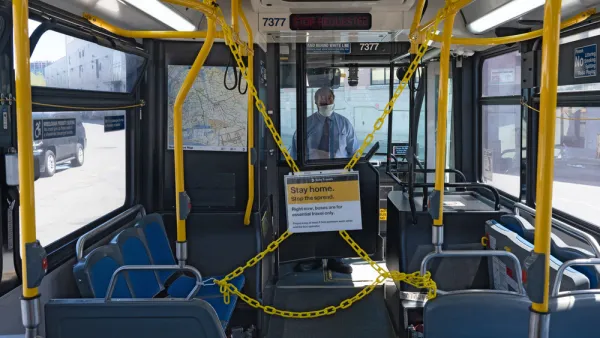
Ridership Up, Speeds Down for Buses in New York City
The new normal might be fleeting on buses in New York City, but it's already different than the normal routine during the early months of the pandemic.
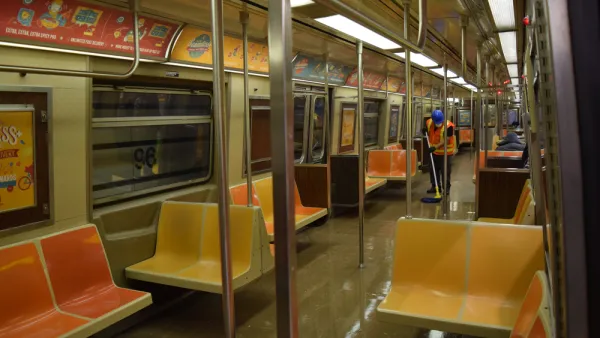
Subway Ridership Starting to Rise in New York City, but not as Quickly as Car Trips
A noticeable increase in subway ridership has been taking place on subway trains in New York City, but not enough to call it a comeback, yet.
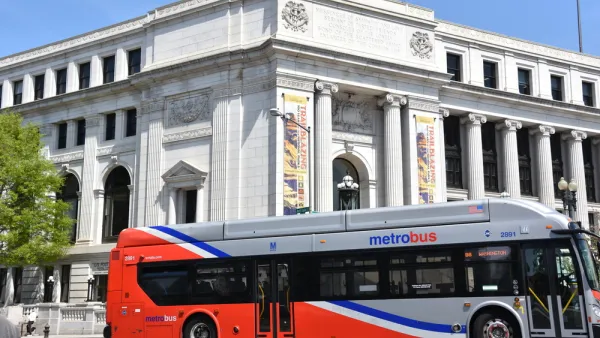
Free Rides, Overnight Service Considered for Metro Transit in D.C.
Washington, D.C. councilmembers are making a bold commitment to public transit.

The state-sanctioned urbicide of Austin
People don’t kill cities. Freeways do.

US to reduce Colorado River water deliveries to Mexico
A new Colorado Treaty amendment reduces Mexico’s Colorado River water allocation by 250,000 acre feet.

New Jersey’s second-largest city bans standalone data centers
Jersey City will continue to allow co-location facilities, such as those meant for research institutions that store their own data.

Amtrak not solely to blame for New Jersey commuter rail's unreliability, report finds
A new study from the Garden State Initiative found that NJ Transit’s budget grew 20% across a 4 year period, but reliability declined significantly over the same period.

EPA erases limits on planet-warming pollution from power plants
Under Monday’s plan, power plants would still have some limits on how much mercury, arsenic and other contaminants they can emit.

Phoenix announces new on-demand transit service, more frequent RAPID buses
Both new services will launch in October, and are part of Phoenix's Project Effective Access Solutions for Easing Congestion.

FREE Course: Walkable City 1: Why Walkability?
After describing his path towards focusing on walkability as the essence of good planning, Jeff Speck marches through his five principal reasons for making more walkable places.
Reinventing Malls: Planning Alchemy—Turning Gray Fields Into Gold
The course focuses on the opportunities and imperatives that shape reinvention of mall sites.

Eagle County Government
Harvard University Graduate School of Design
Nashville Planning Department
The Architects Foundation
University of Cincinnati Online
The Pocatello Development Authority
The Urban Renewal Agency of the City of Pocatello
Journal of the American Planning Association