Last year’s state ban ended a 13-year red-light enforcement program in Dallas. City officials say that intersections throughout the city are less safe without the cameras.



Dallas shut off its red-light cameras last year after Governor Greg Abbott signed a law banning them in the state.
"City transportation officials said that the red-light program made roads safer. They decreased T-bone collisions, which can lead to serious injuries or death because those tend to occur at faster speeds," write Hayat Norimine and Ariana Giorgi.
Crashes overall decreased at 19 of 29 intersections in the city where the cameras were installed, according to an analysis by the city’s Transportation Department.
In addition, the city will no longer have access to the funds collected from fines — almost $6 million in 2018 alone. Half of this funding went to traffic signal upgrades, and the ban will result in a loss of $2 million to $3.5 million annually, a substantial decrease that will hamper efforts to address infrastructure needs.
"The city has fallen behind on traffic signal maintenance. [Assistant City Manager Majed] Al-Ghafry said 60% of Dallas’ traffic signals are more than 20 years old, and the city will need up to $25 million over about two decades to systematically replace some of the oldest," report Norimine and Giorgi.
Read the full story: Red-light traffic cameras reduced crashes, and now they’re gone. What’s next for Dallas?

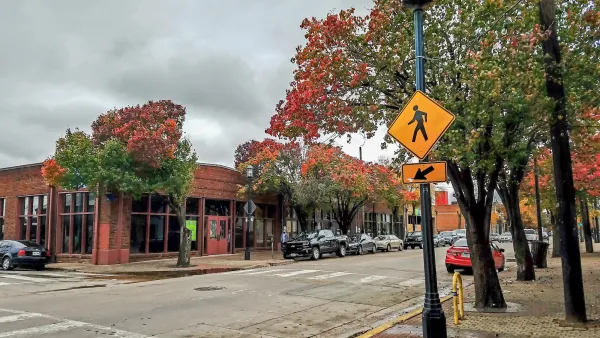
Dallas Cut Traffic Deaths Nearly in Half in 2025
The city saw 107 fatal crashes this year, down from 208 in 2024.
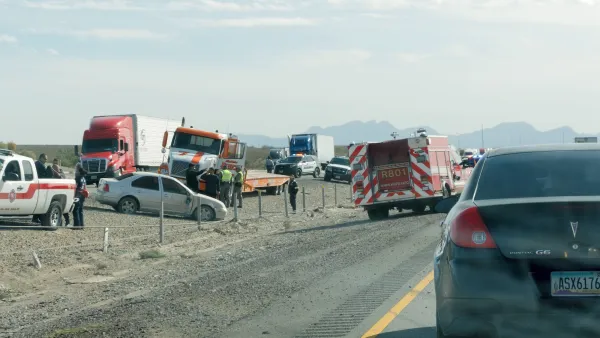
Texas AI study links disparate data sets to identify dangerous road segments
A new study combines multiple data sources to assess roadway risks.
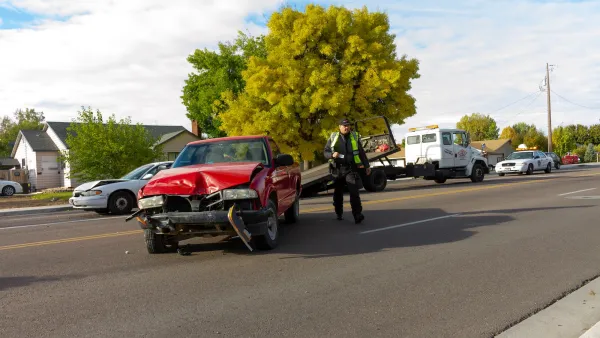
Video: Why are US roads so dangerous?
The CityNerd YouTube channel highlights key statistics from the 2026 Dangerous by Design report.

Planetizen Federal Action Tracker
A weekly monitor of how Trump’s orders and actions are impacting planners and planning in America.

California plans to bury El Niño’s downpour
If the state plays its cards right, it may be able to store a billion acre-feet of El Niño’s water in aquifers.

Chicago breaks ground on $3 billion megadevelopment
The new neighborhood, titled Foundry Park, will one day host 3,700 residences.

Satanic place names
From streams and lakes to valleys and canyons, I mapped more than 1,000 places named after the Devil.

California High-Speed Rail Authority CEO resigns after $600,000 scandal
Under Ian Choudri, the authority used taxpayer dollars to fund first class flights and trips to nightclubs.

Want to study the Missouri River? Soon, you may need unanimous approval from 10 states
Legislation would require 10 governors’ permission to study or build projects moving water outside the basin.

FREE Course: Walkable City 1: Why Walkability?
After describing his path towards focusing on walkability as the essence of good planning, Jeff Speck marches through his five principal reasons for making more walkable places.
Reinventing Malls: Planning Alchemy—Turning Gray Fields Into Gold
The course focuses on the opportunities and imperatives that shape reinvention of mall sites.

City of Rosemead
Rutgers University, Edward J. Bloustein School of Planning and Public Policy
One Hundred Miles
Hunter College, City University of New York (CUNY)
The Architects Foundation
University of Cincinnati Online
City of Cambridge
Montrose County
The Pocatello Development Authority