A small group of test subjects, enabled with the use of a chauffeur, increased driving distances by a collective 83 percent.


Aaron Gordon shares news of research that attempts to duplicate the effect of rolling out a worldwide fleet of self-driving cars available for use by anyone with the money to pay for a ride.
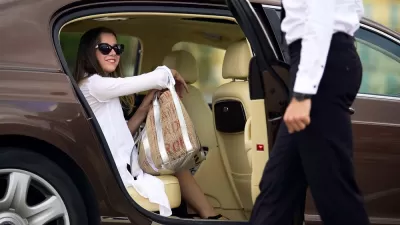
Mustapha Harb, a Ph.D. candidate at the University of California Berkeley’s Department of Civil and Environmental Engineering, duplicated an autonomous future by hiring a bunch of chauffeurs to drive people around. "The chauffeur…will do the driving for you. And, just like the most optimistic AV future of fully autonomous robot cars zooming around, you don’t even have to be in the car," explains Gordon.
"Using 13 volunteers (a very small sample size due to budgetary constraints) from the San Francisco Bay Area who owned cars, Harb and his team studied their travel patterns using GPS trackers on their cars and phones for one week, then gave them a chauffeur for a week who would drive the participants’ personal vehicles for them. Finally, the researchers observed the subjects for a final week to look for any changes returning to their chauffeur-less life."
As for the findings, the study reports that subjects "increased how many miles their cars covered by a collective 83 percent [pdf] when they had the chauffeur versus the week prior."
The article includes a lot more context, in the form of other historical innovations in transportation that changed the world, as well as discussion of what the study's findings could mean for an autonomous future, should self-driving cars finally become a viable product at scale.

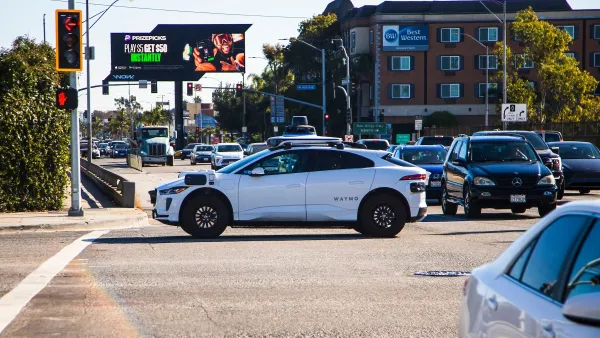
MIT study confirms robotaxis don't reduce traffic
Waymo data reveals that the cars spend close to half of their time 'deadheading' — driving around with no passengers.
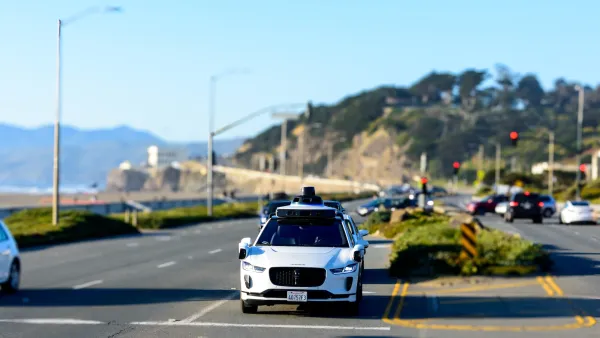
Study: Self-driving Cars Could Raise VMT by 6%, Increasing Congestion
The study contradicts early predictions that AVs would reduce driving miles.
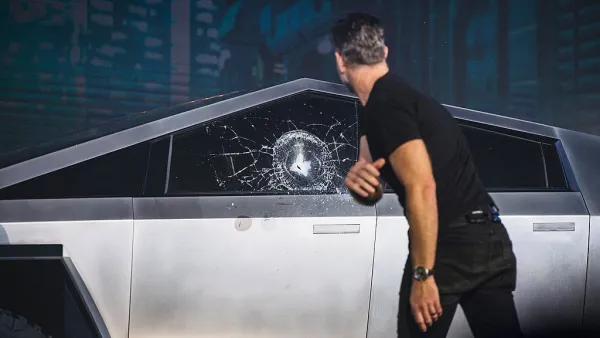
Opinion: Stop Trusting Elon Musk—on Tunnels, on Teslas, on Everything
Musk has leveraged social media intrigue and a hot streak on the market to become the standard bearer for autonomous vehicle technology. Trust Tesla at public peril, argues James Brasuell in this opinion piece.

The state-sanctioned urbicide of Austin
People don’t kill cities. Freeways do.

US to reduce Colorado River water deliveries to Mexico
A new Colorado Treaty amendment reduces Mexico’s Colorado River water allocation by 250,000 acre feet.

New Jersey’s second-largest city bans standalone data centers
Jersey City will continue to allow co-location facilities, such as those meant for research institutions that store their own data.

Amtrak not solely to blame for New Jersey commuter rail's unreliability, report finds
A new study from the Garden State Initiative found that NJ Transit’s budget grew 20% across a 4 year period, but reliability declined significantly over the same period.

EPA erases limits on planet-warming pollution from power plants
Under Monday’s plan, power plants would still have some limits on how much mercury, arsenic and other contaminants they can emit.

Phoenix announces new on-demand transit service, more frequent RAPID buses
Both new services will launch in October, and are part of Phoenix's Project Effective Access Solutions for Easing Congestion.

FREE Course: Walkable City 1: Why Walkability?
After describing his path towards focusing on walkability as the essence of good planning, Jeff Speck marches through his five principal reasons for making more walkable places.
Reinventing Malls: Planning Alchemy—Turning Gray Fields Into Gold
The course focuses on the opportunities and imperatives that shape reinvention of mall sites.

Eagle County Government
Harvard University Graduate School of Design
Nashville Planning Department
The Architects Foundation
University of Cincinnati Online
The Pocatello Development Authority
The Urban Renewal Agency of the City of Pocatello
Journal of the American Planning Association