An analysis of Lime bikeshare data from Boston suburbs is providing useful information about travel behavior and trends.



"The Metropolitan Area Planning Council facilitated contracts between multiple Boston suburbs and Lime, a bike-sharing company, and received anonymized data on 300,000 trips as part of an agreement with the company," reports Andy Metzger. MAPC released a research brief with analysis of the 18 months of data about dockless bikeshare in the metropolitan Boston area.
"According to the data, about 18 percent of miles traveled by Lime bikers were on stretches classified as 'very high stress' – roadways where the lane configurations and traffic make them especially risky for bike-car crashes," writes Metzger. The findings also indicate that about 44 percent of Lime trips are happening on multiuse paths, and riders’ destinations include a mix of urban centers, residential areas, and transit stops.
The agency says its analysis of Lime travel data will help guide future planning efforts and development of safe infrastructure and strategies to encourage non-auto travel. "Asserting that similar data-sharing arrangements should be standard for all new mobility forms – including scooters, autonomous vehicles, and drones – MAPC plans to keep crunching the numbers," adds Metzger.
FULL STORY: Lime riders traverse dangerous roadways

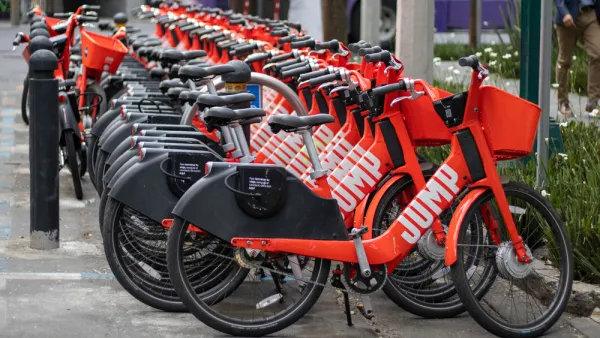
The Fall of JUMP Bikes
An exposé of the dramatic rise and fall of JUMP bikes under the ownership of Uber, in partnership with cities all over the United States.
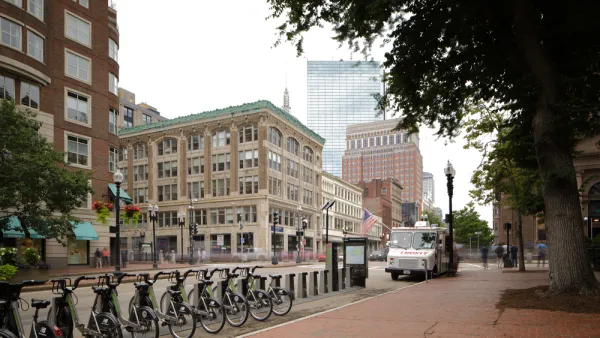
Boston's Bikeshare System Gets a New Partner, Rebranding
Blue Cross will pay $18 million for a six-year sponsorship of the Boston-area bikeshare system formerly known as Hubway.

Multiple Studies Find Ride-Hailing Contributes to Congestion and Transit Losses
Surveys on ride-hailing conducted by regional planning agencies, academic institutions, and public transit agencies throughout the U.S. reviewed by the Associated Press largely led to the same conclusion: more traffic and reduced use of transit.

Planetizen Federal Action Tracker
A weekly monitor of how Trump’s orders and actions are impacting planners and planning in America.

The state-sanctioned urbicide of Austin
People don’t kill cities. Freeways do.

US to reduce Colorado River water deliveries to Mexico
A new Colorado Treaty amendment reduces Mexico’s Colorado River water allocation by 250,000 acre feet.

5 New England states march closer to 800 megawatt wind energy project
Securing federal approval for the project may be complicated under the Trump administration, which has historically been hostile towards domestic wind power.

Baltimore to break ground on $50 million Transit Priority Project
The project will bring faster bus trips, safer streets and better bike connections to Baltimore.

Airbnb launches $250 million 'last-dollar financing' housing accelerator, makes first investment in Austin
The company will put $6.4 million towards affordable housing development in Texas’ capital.

FREE Course: Walkable City 1: Why Walkability?
After describing his path towards focusing on walkability as the essence of good planning, Jeff Speck marches through his five principal reasons for making more walkable places.
Reinventing Malls: Planning Alchemy—Turning Gray Fields Into Gold
The course focuses on the opportunities and imperatives that shape reinvention of mall sites.

Eagle County Government
Harvard University Graduate School of Design
Nashville Planning Department
The Architects Foundation
University of Cincinnati Online
The Pocatello Development Authority
The Urban Renewal Agency of the City of Pocatello
Journal of the American Planning Association