So many aspects of a transit system's fare system can make or break the rider experience and even the long-term viability of the system. A new report helps transit planners and service designers make sense of all the options.


Fare policy has huge implications for transit riders, according to the impetus behind a new report by TransitCenter. "When transit agencies grapple with changes to fare prices, payment systems, and collection methods, they make decisions that affect affordability, convenience, and even travel time."
The new report, titled "A Fare Framework" [pdf] examines case studies of rider-friendly principles at the San Francisco MTA, TriMet in Portland, and King County Metro in Seattle.
"The paper also outlines recommendations related to broader trends within fare policy, like decriminalizing fare evasion and the adoption of mobile payment methods," according to the article that explains and promotes the report.
The article also comes with the explainer video on fare policy that can be viewed above.
Read the full story: How Transit Agencies Are Getting Strategic About Fare Policy
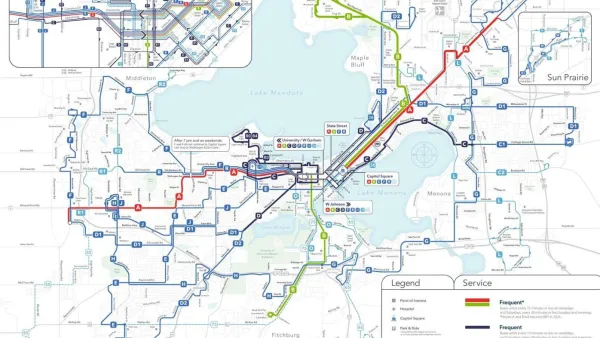
Madison Launches Redesigned Transit System
Transit riders in Madison, Wisconsin are navigating an entirely new system this week.
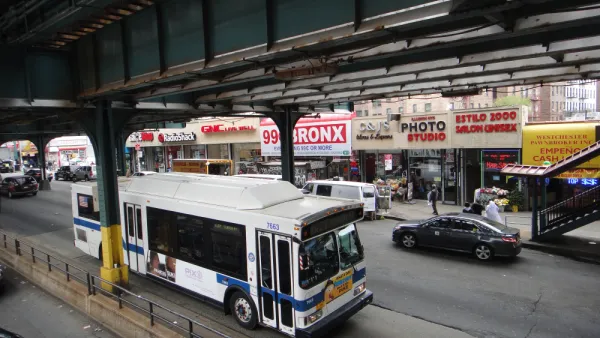
Changes to Local Service in the Bronx Benefit Bus Speeds, Ridership
Another example of how improving bus service design can benefit transit riders and transit systems emerges in New York City. More such local system redesigns are on the way soon in the Big Apple.
Equity and Transit Go Hand in Hand for the Pandemic Recovery
Equity illuminates the light at the end of the tunnel for U.S. transit agencies, according to a recent report by the Urban Institute.

Planetizen Federal Action Tracker
A weekly monitor of how Trump’s orders and actions are impacting planners and planning in America.

California plans to bury El Niño’s downpour
If the state plays its cards right, it may be able to store a billion acre-feet of El Niño’s water in aquifers.

Desperate measures: Advocates weigh draining Lake Powell to fill Colorado River
Draining the reservoir could reduce evaporation losses by a couple hundred thousand acre-feet.

Mamdani’s pied-à-terre tax survives legal challenge
A panel of judges found that the plaintiffs failed to demonstrate injury as a result of New York City's implementation of the tax.

Eastern Nebraska is running out of electricity
Data centers and electrification are straining eastern Nebraska’s grid, throttling economic development.

Seattle passes record-breaking transit services expansion
Proposition 1 will double the city’s transit tax to add 95,000 more bus trips and preserve 180,000 bus trips annually.

FREE Course: Walkable City 1: Why Walkability?
After describing his path towards focusing on walkability as the essence of good planning, Jeff Speck marches through his five principal reasons for making more walkable places.
Reinventing Malls: Planning Alchemy—Turning Gray Fields Into Gold
The course focuses on the opportunities and imperatives that shape reinvention of mall sites.

City of Rosemead
Rutgers University, Edward J. Bloustein School of Planning and Public Policy
One Hundred Miles
University of Michigan School for Environment and Sustainability (SEAS)
Hunter College, City University of New York (CUNY)
The Architects Foundation
City of Cambridge
Montrose County
The Pocatello Development Authority